
What Issues Should Be Noted When Using River Flow Meters in Different Field Conditions?
With the emergence of terms like "sponge city" and "smart city," the usage of flow meters has been increasing: ultrasonic Doppler flow meters, ADCP acoustic Doppler flow meters, radar flow meters, and other products have followed one after another. At this point, many customers face a pain point: which flow meter is truly suitable for your specific field conditions? Fuzhou Dayu Electronics has compiled practical methods for different field situations to help you judge and select the right flow meter. Details are as follows:
Ultrasonic Doppler single-point velocity channel flow meter: If the field has a flow velocity of only 3–4 cm/s, it can still be measured, with a maximum measurable velocity of 5 m/s. However, this type of channel flow meter uses pressure to measure water level, requiring the sensor to be placed as close to the channel bottom or riverbed as possible. Note: when placed near the riverbed, after some time of use, the measuring end of the Doppler flow meter is prone to being blocked by silt; because debris and floating matter in the water will inevitably cause this phenomenon. Therefore, it is necessary to periodically clean the entangled material from the sensor.
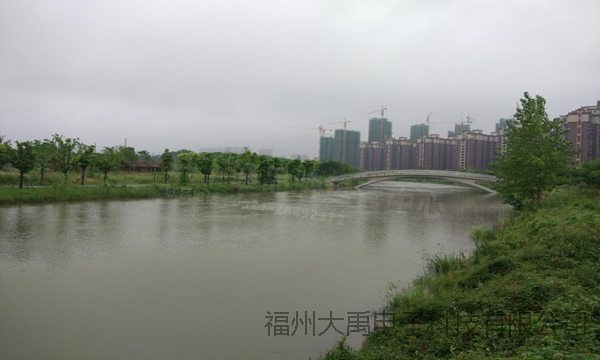
ADCP acoustic Doppler flow meter: If the field also has a flow velocity of only 3–4 cm/s, it can be measured, with a maximum measurable velocity of 7 m/s. Moreover, it can perform stratified measurement: from the bottom to the water surface, if each layer is 10 cm thick, a maximum of 25 layers can be measured, providing velocity data for each layer. The ADCP flow meter uses pressure to measure water level and similarly requires the sensor to be placed as close to the channel bottom or riverbed as possible. When placed near the riverbed for a period, blockage caused by debris and floating matter in the water must also be considered, so periodic cleaning of entangled material from the sensor is required.
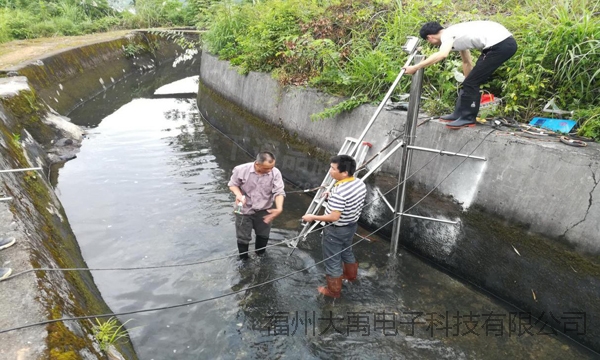
Radar flow meter: Suitable for wider field sites, but the maximum width is limited to 100 meters. Since both flow velocity and water level are measured using non-contact methods, maintenance is minimal. However, a flow velocity exceeding 20 cm/s is required for measurement. An overhead support frame is needed for installation; it can be installed at least 10 meters above the water surface to better guard against rising water levels.
After this introduction, do you know how to choose a flow meter based on your field conditions? If you still have questions, please feel free to contact us through the following methods.
Fuzhou Dayu Electronics – We are not only an ultrasonic application manufacturer, but also a flow meter production expert, always committed to providing customers with high-quality products and excellent service solutions. If you are interested in the above products or have any questions, please click to contact our online customer service QQ: 2187169532, or call the service hotline: 0591-28082552. Fuzhou Dayu Electronics – Your dedicated procurement consultant throughout the process!