
Dayu Electronics: How Does Measuring Liquid Level Through the Tank Wall Actually Work?
Recently, a customer came to us holding an external-mount liquid level sensor and asked a very practical question: "Does this sensor measure the reflective medium of the water through the tank wall? Can it be attached to both metal and non-metal surfaces? Does the thickness matter?"
Let's lay it all out today without jargon.
First, the principle is indeed "striking through the mountain."
The external-mount liquid level sensor is attached to the outside of the tank wall. The sound wave starts from the transducer, first penetrates the tank wall, then enters the water, hits the liquid surface (or the interface between water and another medium), and reflects back. The transducer receives the signal and calculates the distance. So essentially, it relies on water as the reflective medium to work. The tank wall in between is just a "necessary path" — as long as it's not an obstacle, it's fine.
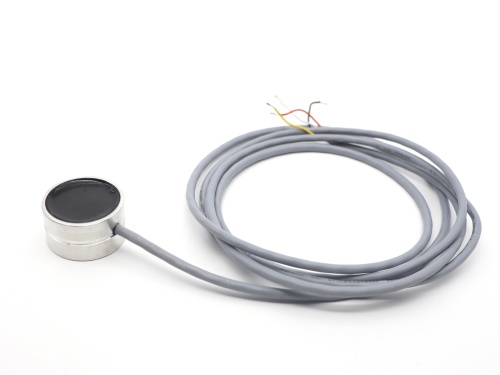
Second, both metal and non-metal materials generally work.
Many people think it can only be attached to metal tanks, but that's not true. As long as the sound wave can penetrate, plastic drums, acrylic sheets, PVC pipes — all of these work. We've seen installations on thickened chemical plastic drums and transparent acrylic tanks. As long as the coupling agent is applied properly and the sensor is attached firmly, the signal remains stable. Of course, differences in material density will cause some variation in attenuation. Non-metals are generally fine, but for very dense special alloys, we'd need to evaluate on a case-by-case basis.
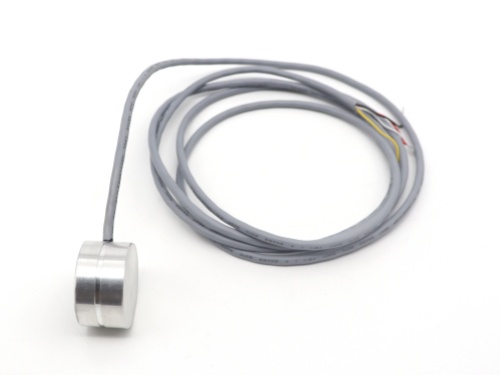
Third, thickness definitely matters.
Although the customer didn't provide specific numbers, we have to be honest: penetrating the tank wall with sound waves takes energy. The thicker the wall, the greater the signal attenuation. When the transducer can no longer receive a usable echo, measurement becomes impossible. So before selecting a sensor, it's best to tell us the material of the tank and its approximate thickness. If you're unsure, take a photo of the tank wall or send us a small sample — we'll test the attenuation, which is far more reliable than guessing.
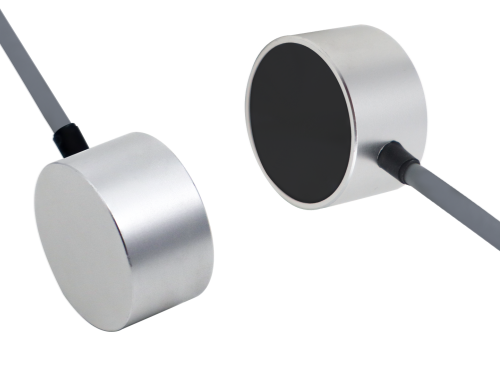
The advantage of the external-mount type is that it doesn't require opening the tank, no hot work, and no production shutdown — but the prerequisite is that "the sound wave can pass through." If you have an oddly shaped container you'd like to try, don't guess on your own. Just send a picture to Dayu Electronics' technical support team, and we'll help you evaluate it.