
Dayu Electronics: Reserve Range Margin for Ultrasonic Sand Measurement; Provide Medium Parameters Before Selection
Customers often ask us: Can your ultrasonic distance sensor monitor the height of sand in a silo or container?
The answer is yes, it can be measured. But unlike measuring clear water or solid flat surfaces, measuring sand has a very practical problem—sand "absorbs" sound waves.
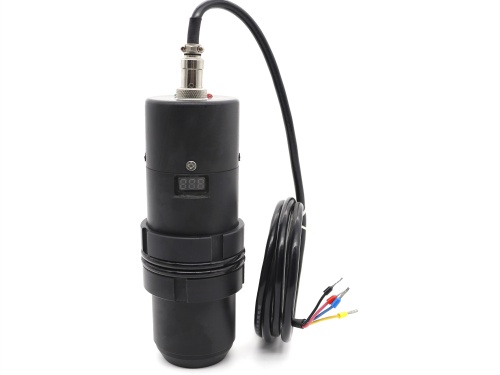
Ultrasonic distance measurement relies on emitting sound waves and then receiving the echo. When encountering a water surface or a flat hard wall, most of the sound waves are reflected back, resulting in a strong signal. However, sand is a granular bulk solid with a loose and porous surface, which has a very strong ability to absorb sound waves. When the sound wave hits the sand surface, a large portion of the energy is absorbed or scattered by the sand particles, and only a small part of the signal actually returns along the original path to the transducer.
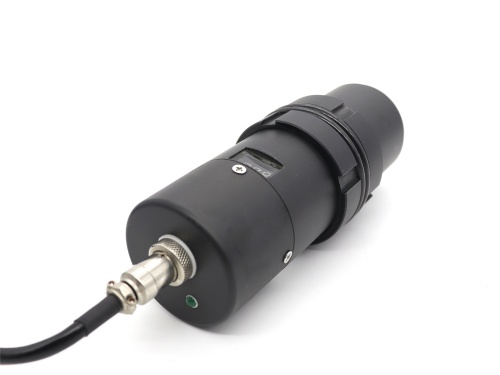
This leads to a direct consequence: the range required for measuring sand needs to be much larger than the actual silo height.
For example, if your silo is 5 meters high and you use a 5-meter range sensor to measure sand, it is likely that you will get no data. Because the sound wave is "absorbed" too much by the sand, the echo is too weak for the device to detect. In general, we need to reserve sufficient range margin for the sensor based on the characteristics and stacking state of the sand, which is what industry professionals often call "increasing the range multiple."
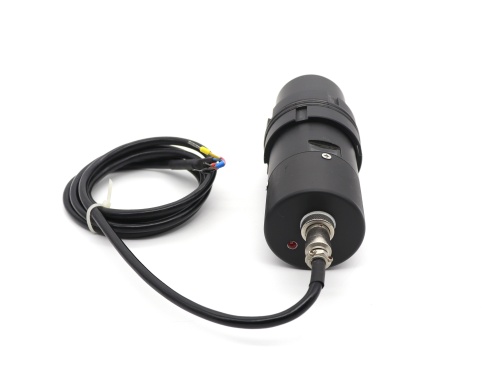
Therefore, before selecting the model, you need to provide two key pieces of data: first, the approximate height of the sand in the container, and second, the diameter of the sand particles. Knowing the height allows us to calculate the basic range requirement; knowing the sand particle diameter allows us to estimate the degree of sound wave attenuation—the finer the sand, the more obvious the absorption tends to be. With this information, our technical team can accurately determine the appropriate range multiple and recommend the most suitable model for you, ensuring a stable and reliable echo.
If you are struggling with sand level monitoring, don't rush to order a standard product. Instead, contact Dayu Electronics' technical support and tell us the "temperament" of the sand. Let's work together to define the right measurement solution.