
Dayu Electronics: What Is Transducer Ringing? How Does It Relate to the Blind Zone?
When working with ultrasonic measurement products, many customers come across the term "ringing." What exactly does it mean? And what impact does it have on measurement?
In simple terms, ringing is the physical inertia of the transducer that "cannot stop immediately."
The transducer operates based on the piezoelectric effect, using high-frequency vibration to transmit and receive sound waves. You can think of it like striking a bell: when you hit it with a hammer, the bell vibrates vigorously and produces sound. Even after the hammer is removed, the sound does not stop abruptly but continues for a short while before gradually fading away. The same applies to a transducer. After it emits a series of drive pulses, the ceramic crystal cannot come to an instant standstill—it continues to vibrate for a period of time. This is what is known as "ringing."
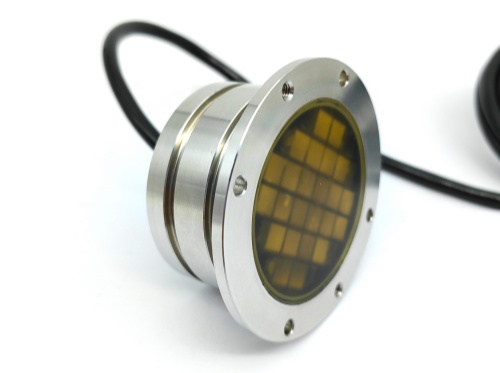
Why is this concept so important? Because in ultrasonic measurement, ringing is directly related to the size of the device's "blind zone."
After transmitting a signal, the transducer must wait until its own vibration has completely stopped before it can switch to receiving mode and listen for echo signals. During the period before the ringing ends, the transducer is effectively "deaf" and cannot receive any signals. If the transducer is working in water, this period of time is converted into distance using the speed of sound.
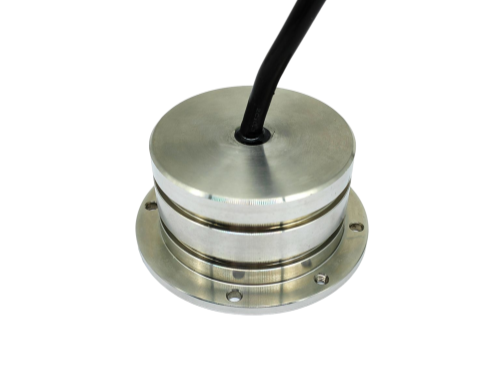
The conversion logic is straightforward: Blind zone distance = Ringing time × Speed of sound in water.
In other words, the time it takes for the transducer vibration to stop, multiplied by the speed at which sound travels through water, gives you the blind zone distance. This is why all ultrasonic sensors have a minimum measurement distance—within this range close to the probe, even if there is an obstacle, the device "cannot see" it, because the ringing has not yet subsided and the system is not ready to "listen" for the echo.
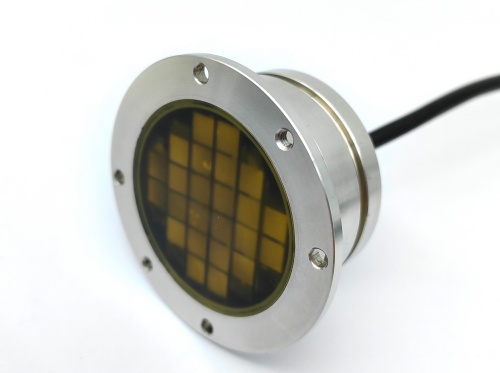
Understanding ringing helps us use the product more effectively. For example, in practical applications, if the target being measured is too close to the probe and falls within the blind zone, data loss is a normal physical phenomenon, not a product quality issue. When developing transducers, Dayu Electronics optimizes materials and processes to minimize ringing time, thereby reducing the blind zone and making measurements more accurate. If you have special requirements regarding blind zone parameters, you are welcome to discuss them with our technical team at any time.