
Dayu Electronics: How to Select Ultrasonic Anemometer Transducers for High-Wind Environments
In high-wind environments, there is a basic principle for selecting transducers for ultrasonic anemometers: choose transducers with a larger beam angle.
Why? The reasoning is simple.
Ultrasonic transducers emit sound waves directionally; a transducer with too small an angle produces a narrow beam with strong directivity, and the signal is only optimal when directly facing the receiver. In calm or light wind conditions, the transducer remains in a fixed orientation, and signal transmission and reception are stable without issues.
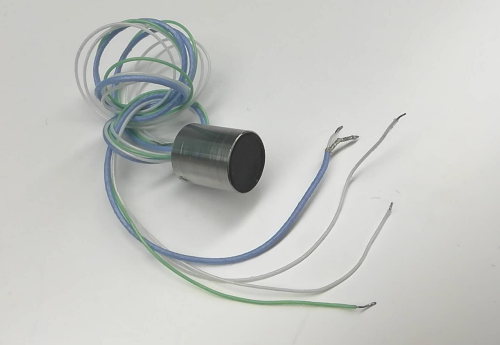
However, in high winds, the situation changes. Strong winds can deflect the transducer's mounting angle, causing misalignment or vibration. For a transducer with a small angle, the beam is already narrow; even a slight deflection causes the emitted sound wave to miss the receiver, resulting in signal loss. Data becomes intermittent or completely unavailable, making wind speed and direction measurements impossible.
In contrast, a transducer with a larger angle has a wider beam coverage and is less sensitive to slight changes in mounting angle. Even if strong winds cause minor deflection, the sound wave still reaches the receiver, and the signal remains stable. This is the fundamental reason why a larger-angle transducer is essential in high-wind conditions.
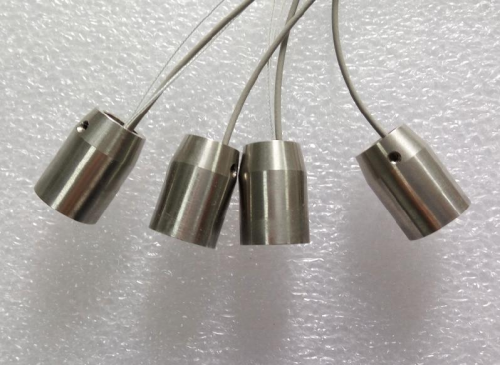
Therefore, when selecting a transducer, first consider your application scenario. For open areas, coastal regions, or mountainous areas where strong winds are frequent, directly choose a large-angle transducer. For indoor or light-wind environments, the effect of the angle is less significant, and you can follow standard selection criteria.
If you still have questions about matching the transducer angle to your specific wind conditions, feel free to contact Dayu Electronics' technical team. Tell us the installation site and the maximum wind speed, and we can help recommend a suitable model.