
Are Same-Frequency Transducers Equally Accurate? Dayu Electronics Reveals Core Differences and Key Selection Criteria
Many engineers ask during selection: Are ultrasonic transducers of the same frequency equally accurate? The answer is: accuracy varies little; what truly affects accuracy is the circuit and software.
This is a common misconception. Let's break it down clearly today.
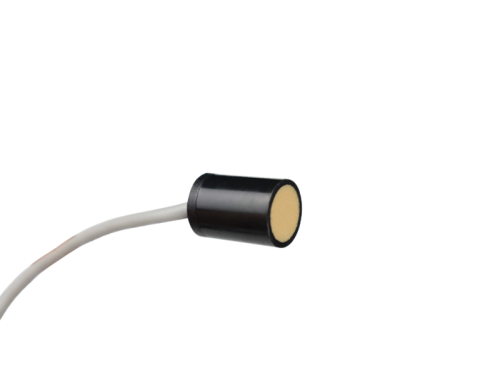
1. Where do same-frequency transducers differ?
Same-frequency transducers mainly differ in two aspects: sensitivity and echo amplitude (signal strength).
A transducer with higher sensitivity receives stronger weak echo signals; one with greater signal strength is less likely to be drowned out by interference during transmission. These differences affect the device's 'detection capability,' but have little to do with 'measurement accuracy.'
2. What determines accuracy?
The transducer's primary job is to convert electrical signals into sound waves for transmission, then convert received echoes back into electrical signals. As for 'how much time elapsed from transmission to reception' and 'what distance is calculated in meters'—these are completed by the backend circuit and software algorithms.
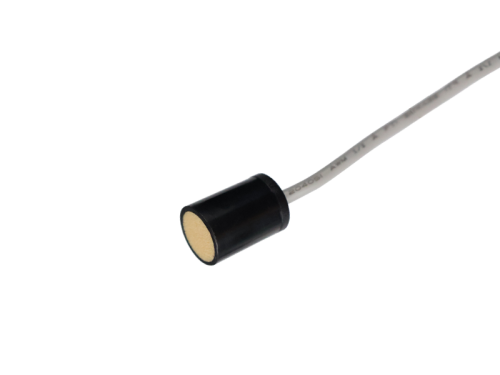
To put it simply: the transducer is responsible for 'sensing,' while the circuit and software are responsible for 'calculating.' The level of accuracy depends more on the calculation stage. The same transducer paired with different circuits and algorithms can yield significantly different final accuracy. Conversely, using different batches of same-frequency transducers on the same device typically results in no noticeable accuracy change.
3. So what should you focus on during selection?
Since accuracy varies little, don't get hung up on 'which one is more accurate' during selection. Instead, focus on:
? Whether sensitivity meets site requirements—where signals are weak, prioritize high-sensitivity models;
? Whether signal strength is sufficient—for long transmission distances or interference-prone environments, larger echo amplitude is more reliable.
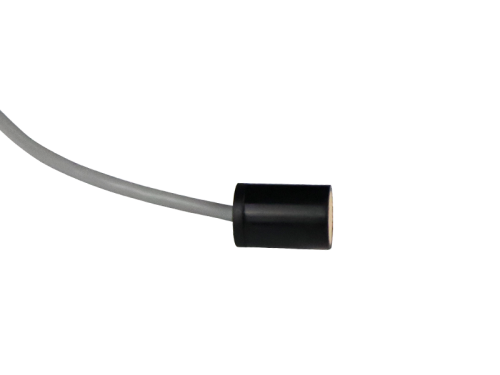
As always: the transducer determines 'whether it can detect,' while the circuit and algorithms determine 'how accurately it measures.' If your application demands high accuracy, consider investing more effort in circuit design and software algorithms. If you have questions about selection, feel free to contact Dayu Electronics' technical team for a detailed discussion.