
Application Positioning of Dayu Electronic Underwater Ranging Sensors in Dredging Robots
In the underwater operation of dredging robots, precise environmental perception is the core of ensuring safety and efficiency. Regarding the common question of whether Dayu Electronic's single-beam or multi-beam ranging sensors can achieve dredging robot positioning, we need to clarify the product functional boundaries and technical implementation paths to avoid conceptual confusion.
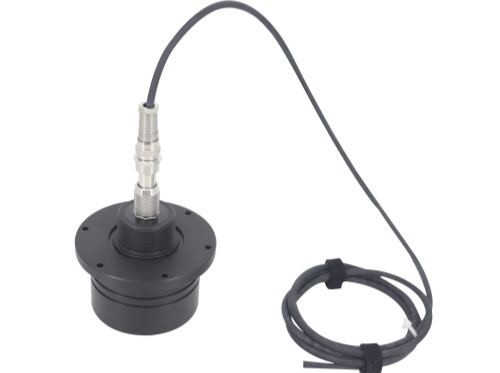
First, it should be noted that the main functions of Dayu Electronic's single-beam and multi-beam products are underwater ranging and obstacle avoidance. In dredging operations, they act like the robot's "eyes," providing real-time awareness of obstacles and distances to prevent the robot from colliding with walls or hard objects at the tank bottom. Currently, they have been maturely applied in various types of dredging robots.
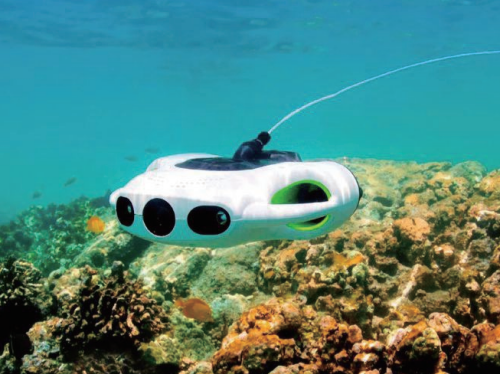
However, to achieve true "positioning"—that is, knowing the precise coordinates of the robot underwater at any given moment—relying solely on ranging sensors is insufficient. A more complex system is required to support this capability.
For example, a sensor might tell you "there is a wall 2 meters ahead," which helps you avoid the wall, but it cannot directly tell you "which corner of the pond you are in." To achieve positioning, in addition to the distance data collected by sensors, two key conditions are needed:
First, the robot must be equipped with a built-in GPS positioning module (though GPS signals are weak underwater, often supplemented by surface positioning systems);
Second, the environmental model of the dredging tank must be provided to the control system in advance, such as the tank's dimensions, shape, internal structure, etc. Only by combining the ranging data with this fixed environmental model and performing calculations through specific ranging algorithms can the robot's real-time position be deduced.
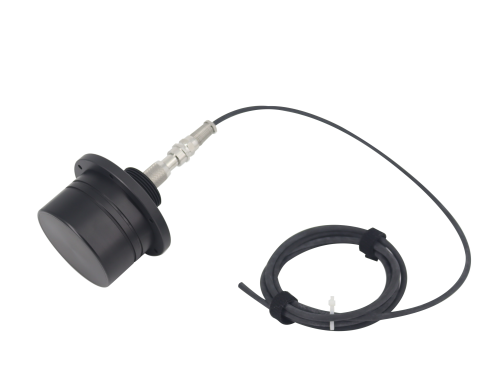
In simple terms: our sensors are responsible for "clearly seeing the surroundings," while the positioning system is responsible for "finding itself."
If you are developing dredging robots, we can provide stable and reliable underwater ranging and obstacle avoidance sensors to help your robot gain "sharp eyes." If you have specific positioning requirements, we recommend planning the GPS module and environmental modeling during the system design phase. Our technical team can also collaborate with you to explore solutions for integrating sensor data with positioning algorithms.