
Dayu Electronics Ultrasonic Level Meter: Professional Advice on Extending the Probe Cable
“The transmitter and probe are too far apart—can we just buy our own cable and extend it?” This is one of the most frequently asked questions by field instrument installers when installing ultrasonic level meters.
Here, Dayu Electronics gives you the straight answer: we do not recommend extending the probe cable yourself. No matter how good your wiring skills are, the most obvious result after extension is weakened signals, and the longer the cable, the worse the signal. Eventually, the transmitter may not receive the echo at all.
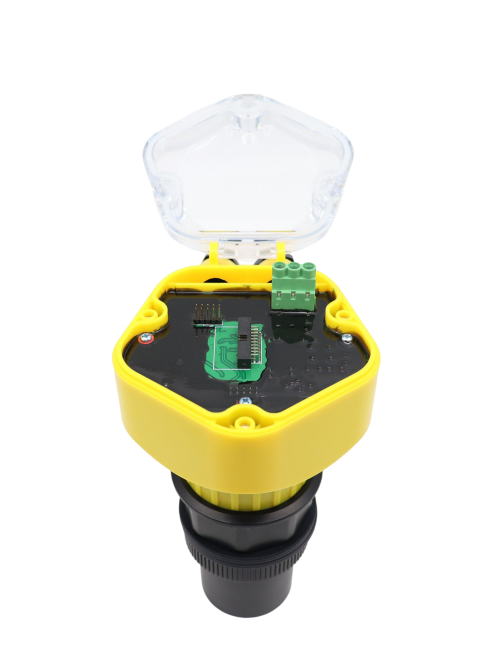
Why does this problem occur? Because the probe cable of an ultrasonic level meter is different from ordinary power cables.
It does not transmit simple current but high-frequency pulse signals. This type of signal is very "delicate" and extremely sensitive to impedance matching and distributed capacitance.
The original probe cable is strictly matched and shielded, and its length is precisely determined based on signal attenuation thresholds. Once you add extra cable, the impedance discontinuity at the splice causes signal reflection, and the extended cable itself acts like a sponge, absorbing signal energy. As a result, the originally strong echo signal weakens to nothing before it even reaches the transmitter, causing inaccurate readings or even full-scale errors.
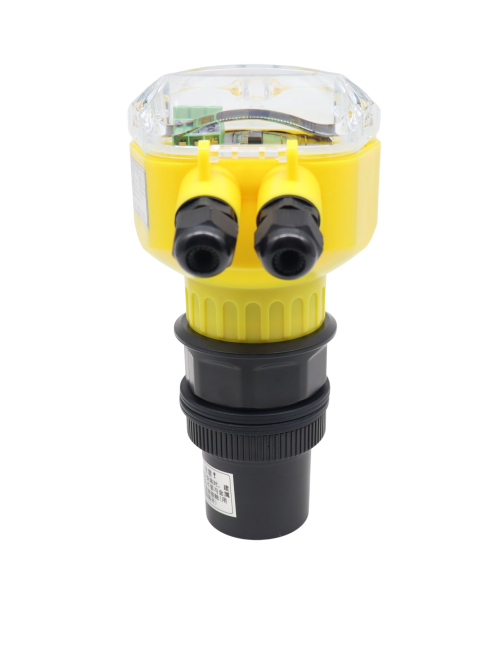
Some experienced technicians think, "If the cable is connected, there's a signal." That may hold true for 220V electricity, but it's a completely different story for high-frequency ultrasonic detection. Forcibly extending the cable not only causes inaccurate measurements, but in severe cases, signal interference can even burn out the transmitting circuit.
So what if the on-site distance truly isn't enough? Don't try to improvise. The best approach is to stop and contact Dayu Electronics' technical support directly. Based on your actual distance, we can custom-manufacture a probe cable of the corresponding length, or add a dedicated signal relay module to the system. What we want is not for you to make do, but to have a one-time proper installation, saving you the hassle of later maintenance.
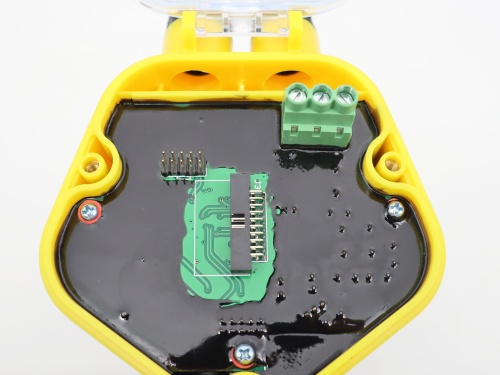
When it comes to instruments, stability is paramount. If you encounter installation difficulties, asking a technician a question is far more cost-effective than reworking later.