
Correct Installation Method for Dayu Electronics Liquid Flowmeter: Receiver and Transmitter Must Be Directly Aligned
During the installation of liquid flowmeter transducers, many field personnel ask: "Do the receiver and transmitter of the transducer need to be directly facing each other during installation?" The answer is clear: if it is a one-transmit-one-receive working mode, the two must be strictly aligned. This is not a suggestion but a basic condition to ensure measurement accuracy.
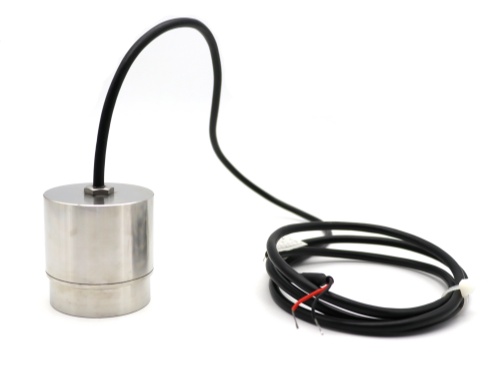
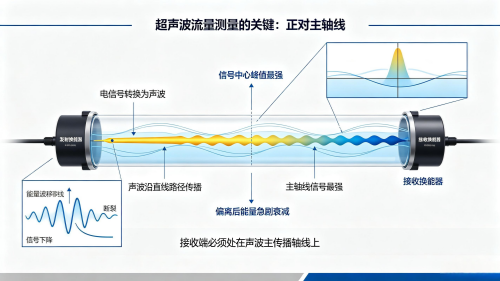
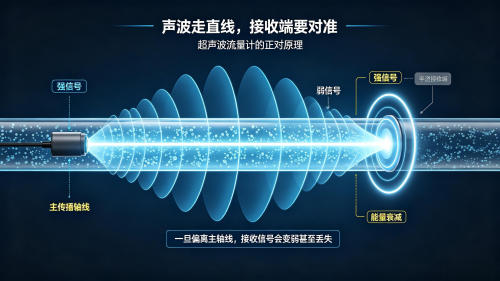
Why must they be directly aligned? Because the transducer measures flow by transmitting ultrasonic waves through the liquid; the transmitter converts electrical signals into acoustic waves that travel in a straight path through the liquid to the receiver. Only when the receiver is exactly on the main propagation axis of the acoustic wave can it capture the strongest and most stable signal. Once there is any deviation, the acoustic wave energy attenuates sharply, the received signal weakens or is even completely lost, causing the flowmeter to malfunction or produce severely distorted data.
In actual installation, direct alignment not only refers to axial alignment but also includes angle matching. Transducers are usually installed on both sides of the pipe, using the Z-method or V-method. Regardless of the method, the acoustic wedge surfaces of the transmitting and receiving transducers must be kept parallel and the central axes must coincide. Even a slight tilt will change the refraction path of the acoustic wave in the pipe wall and liquid, directly affecting the measurement of transit time difference and consequently causing errors in flow velocity calculation.
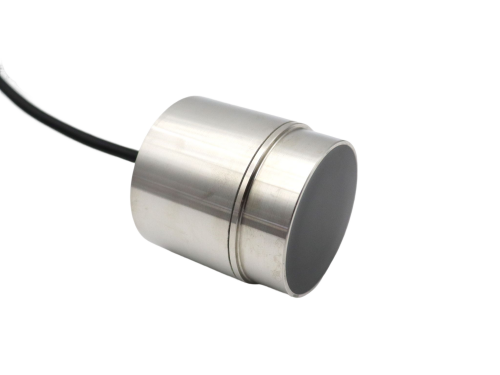
If direct alignment is not achieved during installation, common problems include: insufficient signal strength, fluctuating flow readings, no display at low flow rates, or severe zero drift. These will make later commissioning extremely difficult and may even require re-drilling holes or adjusting the pipeline, adding unnecessary cost and time.
Therefore, when installing on site, we recommend first using a straightedge or laser alignment tool to determine the installation positions of the two transducers, ensuring that the center points are on the same horizontal line. For flange-type or insertion-type transducers, tighten the bolts evenly to avoid angular deviation caused by mechanical stress. If there is lining or scaling inside the pipe, clean it in advance to avoid affecting the acoustic wave propagation path.
Dayu Electronics' liquid flowmeter transducers undergo strict consistency matching before leaving the factory to ensure optimal transmission and reception performance. However, even the best equipment requires proper installation. As long as the key point of "direct alignment" is fulfilled, the flowmeter will operate stably with accurate and reliable data. If you encounter space constraints or special pipe diameters during installation, our technical support team is always ready to provide guidance and help you find the best installation solution.