
Dayu Electronics Field-Tested Answer on Transmit Voltage for Coal Mine Tunnel Anemometer Transducer
In underground tunnel ventilation monitoring, wind speed and direction data are the safety baseline. The Dayu Electronics DYA-40-12CA is a 40KHz ultrasonic transducer purpose-built for this scenario, with a range of 0.5–12 m, operating temperature of -40~+80℃, peak voltage <1500 Vpp, stainless steel housing, IP68 protection, and opposed mounting on both sides of the tunnel—capable of handling wind speed and direction measurement across spans of over ten meters.
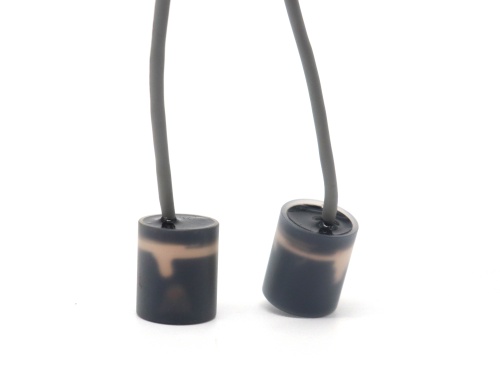
Recently, a customer asked a very practical question: does the DYA-40-12CA have a minimum transmit voltage requirement?
Let's give the conclusion first—there is no hard minimum limit. But that does not mean you can arbitrarily lower the voltage; there is a trade-off customers need to be aware of:
The lower the voltage, the lower the received echo amplitude, and the higher the requirements on the downstream circuitry.
In other words, this transducer itself does not impose a lower limit on you, but if you drop the transmit voltage too low, the returning echo signal becomes weak. If the circuit's amplification capability or signal-to-noise ratio cannot keep up, the measured time difference becomes unstable, and the calculated wind speed and direction tend to drift. So when selecting the transmit voltage, you need to consider it together with your own circuit board capability—if the circuit is strong, you can lower the voltage somewhat to save power; if the circuit is average, don't push the voltage too low—stabilize the echo first.
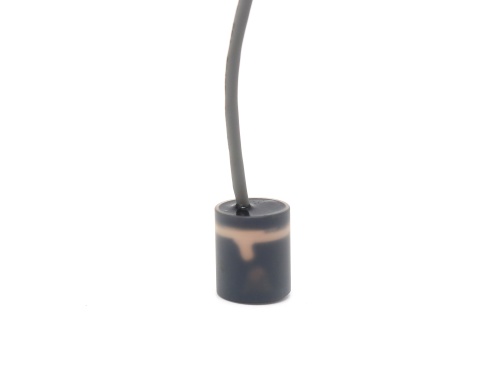
This is also why many customers working on tunnel anemometers end up coming to us to discuss both the transducer and the circuit solution together. In underground environments, besides voltage, there are several other unavoidable considerations:
Explosion-proofing and static electricity: The metal housing is not just for impact resistance—it also prevents static charge buildup on plastic. With methane gas present underground, a discharge is a serious matter.
Coal mine safety certification: Both transmit voltage and transmit current have compliance boundaries—you cannot simply crank them up as high as you want.
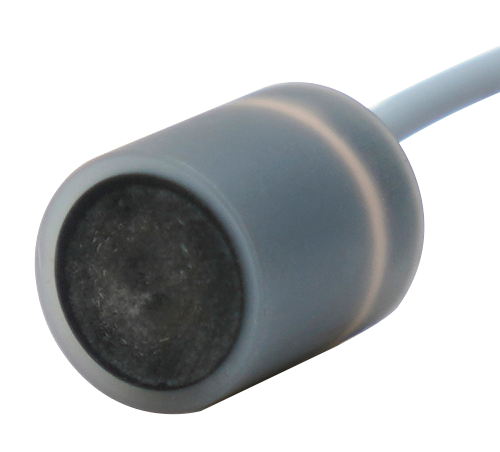
Dust and cleaning: The transmit face is typically made of PTFE, so coal dust that adheres to it can be wiped off.
Transmission distance: Running several kilometers underground is no problem, but you will need to provide your own 485 / CAN communication circuitry.
We have already completed joint projects with the DYA-40-12CA anemometer transducer together with Xiamen University's Department of Oceanography, the Institute of Acoustics of the Chinese Academy of Sciences, and Harbin Engineering University's Underwater Acoustic Engineering College, and it is in use in both coal mines and underground tunnels. If you have a tunnel wind direction transmitter project on your hands and need to tune the transducer parameters, match the circuit, or pass coal mine safety certification, bring your solution and come talk to us—it is far more efficient than buying a single sample.