
Dayu Electronics Manhole Doppler Flowmeter: Causes and Solutions for Negative Flow Velocity Readings
When using the Dayu Electronics manhole Doppler flowmeter, users may sometimes encounter negative flow velocity readings. This not only confuses many users but may also affect the accuracy and reliability of the data. So, how do these negative values arise? And can they be filtered out?
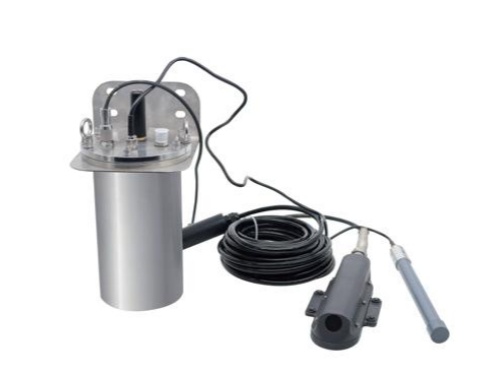
The Doppler flowmeter acts like a keen sonar hunter, relying on ultrasonic waves reflected by suspended particles in the water to determine flow velocity. When the reflector approaches the sensor, the reading is positive; when it moves away, the reading becomes negative. These seemingly anomalous data actually hold hidden insights.
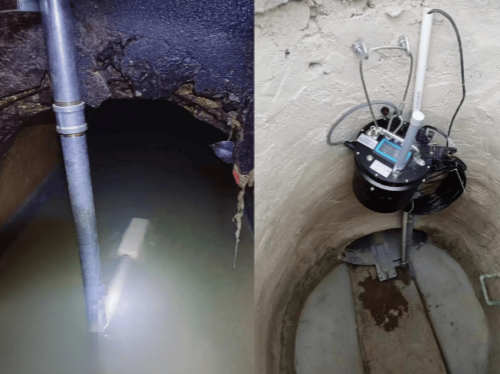
The most common culprit is improper installation. If the probe is buried deep at the bottom of the manhole rather than aligned with the pipe outlet, it is highly susceptible to recirculation eddies. In such cases, the water flow behaves like a playful child toing and froing, causing the probe to detect reverse flow velocity. Another scenario is when the probe is placed too close to the pipe wall—an area that often fosters vortices, much like the backwater eddies along a riverbank where some "rebellious" currents flow in the opposite direction.
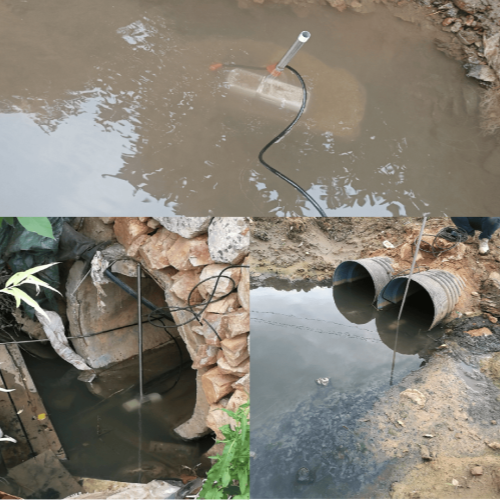
A more subtle trigger comes from the water itself. When the sewage is unusually clear and lacks sufficient sediment or air bubbles to act as "signal reflectors," the ultrasonic waves are like a shout in an empty valley, receiving only chaotic echoes, allowing negative values to sneak in.
When faced with negative values, simply filtering them out is not the best strategy. It would be like "giving up eating for fear of choking," potentially masking real pipe blockages or reverse-flow hazards. The correct approach is to conduct a precise "three-step diagnosis":
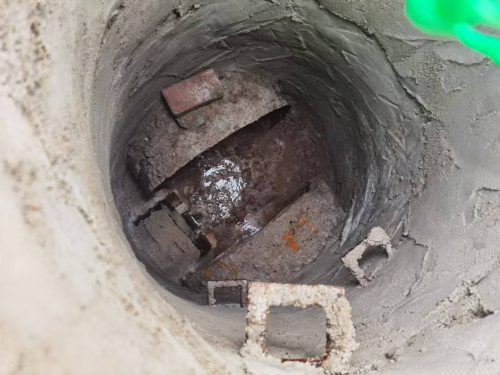
The first step is an on-site "inspection." Open the manhole cover and ensure that the probe is precisely aimed at the center of the pipe, like a sniper, and positioned at least 30 cm away from the pipe wall. The second step is to improve the "medium environment." If the water is too clear, try generating tiny air bubbles near the probe or adding harmless suspended solids to enhance signal reflection. The third step is parameter "fine-tuning." Set a minimum flow velocity threshold (e.g., ±0.02 m/s) to filter out interfering noise.
If the problem persists, the Dayu Electronics technical team is always on standby. They are well-versed in the "temperament" of each manhole and can tailor solutions based on site conditions—whether adjusting the probe angle or optimizing algorithm logic—ensuring that the data returns to being accurate and reliable.
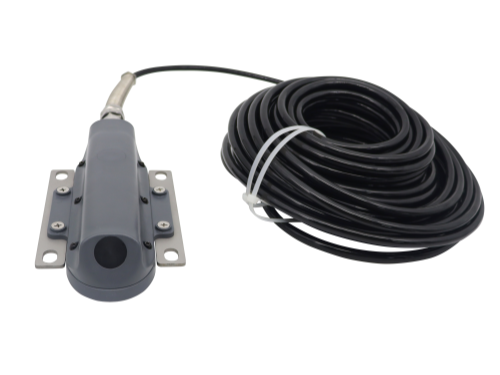
The Dayu Electronics manhole Doppler flowmeter is widely used in confined and complex drainage scenarios such as sewage wells and pipelines. With proper installation and configuration, the occurrence of negative flow velocity readings can be effectively reduced, enhancing data accuracy and reliability. If you encounter any issues during use, please do not hesitate to contact our technical support team, and we will provide professional solutions.