
Dayu Electronics Clamp-On Ultrasonic Flowmeter: Number of Paths — Get It Right for Accurate Measurement
When selecting an ultrasonic flowmeter for your plant pipeline, do the options like "single-path," "dual-path," and "four-path" make you feel like you're choosing a sound system? But here, one extra path can mean higher cost, improved accuracy, or avoiding measurement disputes. Today, let's clear the fog and look at the path secrets of Dayu Electronics' clamp-on ultrasonic flowmeter.
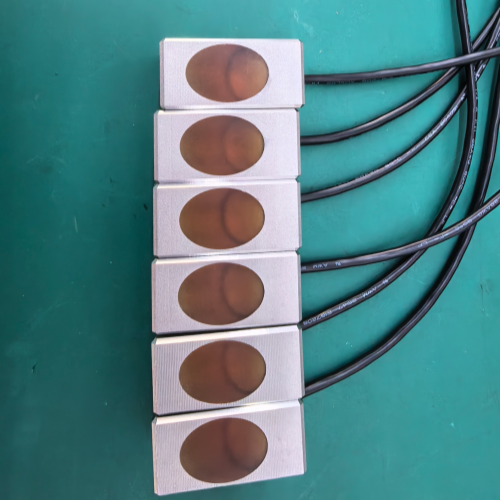
In fact, the number of paths determines the flowmeter's ability to "see" the full picture of the fluid. The more paths, the more angles it can measure flow velocity, accurately calculate average flow, and effectively counter flow disturbances caused by valves and elbows.
Accuracy and stability are the core differences among paths
Single-path typical accuracy is ±1% to ±2%, with simple structure and lowest cost, but it requires sufficient straight pipe runs upstream and downstream (e.g., 20D upstream and 10D downstream), suitable for general process monitoring and non-trade metering.
Dual-path and four-path flowmeters can both achieve ±1% accuracy, but dual-path uses two measurement paths to identify and partially compensate for flow asymmetry, providing significantly better repeatability and reliability than single-path.
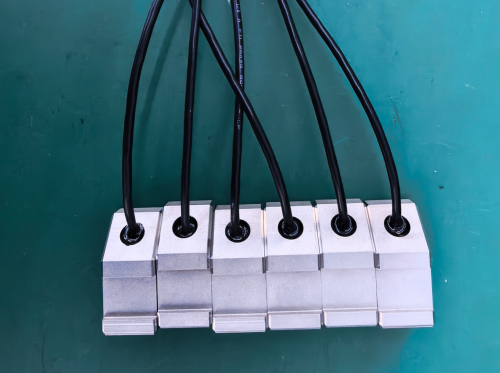
Four-path, on the other hand, uses a chordal layout, which captures velocity data at different heights of the cross-section, mapping a more complete velocity profile and providing stronger resistance to complex flow conditions such as vortices and crossflow. Its data fluctuation is smaller and repeatability is better, making it the recognized "gold standard" in custody transfer.
For different scenarios, selection should be tailored to local conditions:
Internal process monitoring and non-critical metering: If the pipe conditions are good and straight pipe runs are sufficient, single-path or dual-path can suffice, offering the best cost-effectiveness.
Internal cost accounting and energy management: When inter-departmental settlement is involved or straight pipe runs are moderate (around 10D), dual-path is preferred, striking the best balance between accuracy and cost.
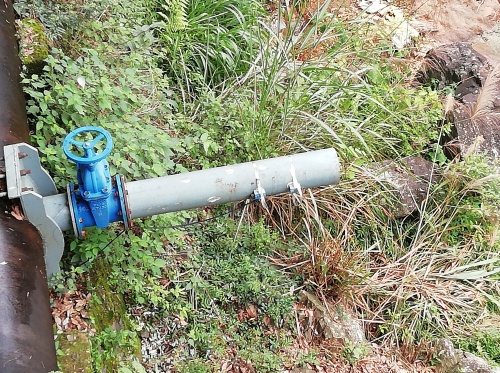
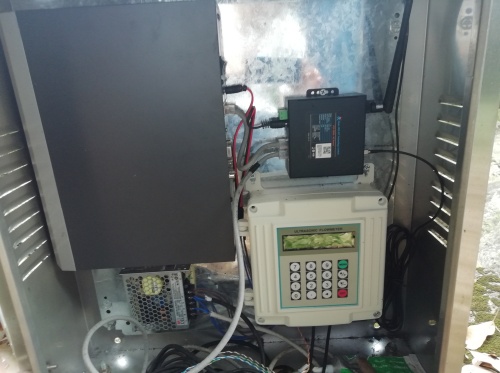
Custody transfer and financial settlement: When external billing is involved, four-path should be firmly chosen. The high repeatability ensured by multi-path technology not only provides data credibility but also effectively avoids measurement disputes.
Choosing the number of paths is essentially about finding the best balance among cost, accuracy, and site conditions. Equip your pipeline with sufficiently "bright eyes" so that every datum is well-founded and every transaction is crystal clear.