
Dayu Electronics: Not Enough with a Single Channel? The Split Multi-Beam Board Turns "One Transmit, One Receive" into "Array Collaboration"
In the R&D and engineering practice of ultrasonic applications, many developers have asked the same question:
"Your transducer development board only has one 232 interface. I want to connect multiple ultrasonic sensors. Is there a way?"
This question seems to be about "how to split the interface," but in fact, it asks "can the system handle it?"
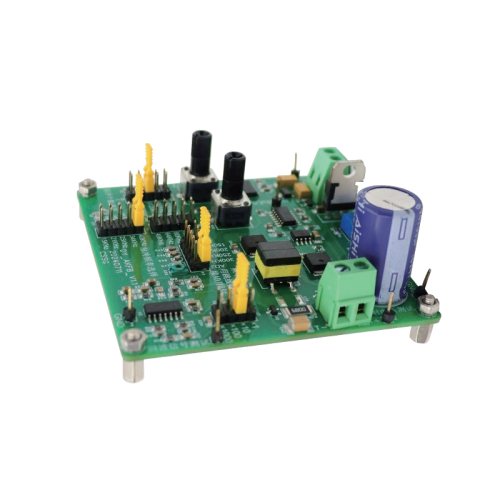
Let's first talk about the standard board. The single-channel transducer development board from Dayu Electronics was originally designed for "one transmit, one receive" — one transducer transmits ultrasonic waves, and the other receives the echo signal. All hardware circuits, signal conditioning, and processing logic are deeply optimized around this pair. A single board supports up to two transducers, which is its capability limit and its positioning: precise, efficient, and not greedy for more.
But what if a project really requires more than two transducers? For example, multi-point level monitoring, multi-angle obstacle avoidance, or array-based detection?
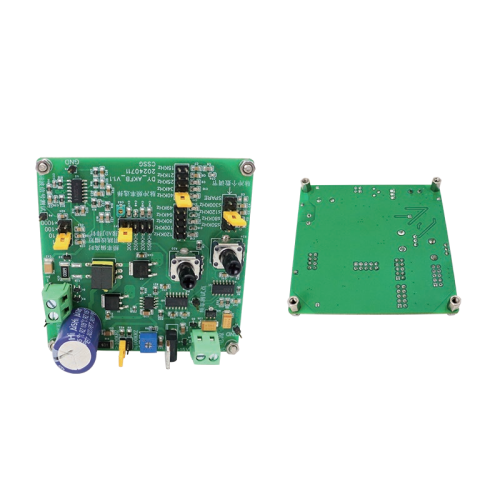
The standard approach is: instead of doing "physical adaptation," go directly for "platform upgrade." Dayu Electronics has specially launched the split multi-beam circuit board for such high-channel-count applications. This is not a minor tweak of soldering a few extra interfaces onto the standard board, but a system-level leap forward.
Its core advantages are threefold:
First, multi-channel parallel processing. The split multi-beam circuit board has greater computing power and can simultaneously manage and drive arrays of 4, 8, or even more transducers. Multi-point measurement and simultaneous detection are no longer just theoretical.
Second, flexible time-division multiplexing and phased-array logic. You can freely define which probe transmits and which probes receive, enabling dynamic focusing or sector scanning. Spatial resolution is greatly improved, and the precision of detection reaches several new levels.
Third, the communication interface is upgraded simultaneously. The main control board is equipped with industrial-grade interfaces such as RS485 or Ethernet, which not only solves the problem of "can it be connected," but also addresses the pain point of "is the transmission fast enough and far enough," making integration with host computers or PLC systems smoother.
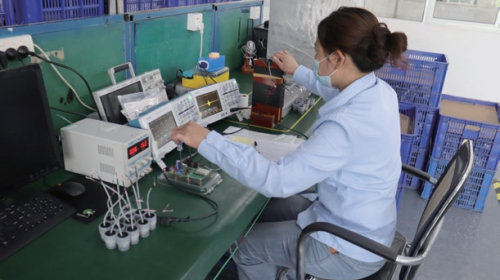
From "point-to-point" to "face-to-face," this is not just an increase in the number of channels, but a dimensional leap in capability. The standard board is a sharp scalpel — precise and pure; the split multi-beam system is a complete combat platform, capable of dispatching, coordinating, and covering a larger detection territory.
If you are planning a project that requires collaborative work among multiple transducers, feel free to contact the Dayu Electronics technical team. How to configure the interfaces, how to allocate the channels, how to build the system — we will recommend the most suitable solution based on your specific needs and help you truly unleash the potential of your ultrasonic transducers.