
Empowering System Integration: Dayu Electronics' High-Freedom Multi-Beam Underwater Ranging Sensor Customization Solution
In underwater surveying and engineering applications, efficiency and precision often directly impact project outcomes. When facing complex underwater terrain or fine structural inspection, many users encounter a practical issue: standardized sensors have fixed structures that are difficult to fully match with their own platforms and special mission requirements. To address this pain point, Dayu Electronics has launched a deeply customizable multi-beam underwater ranging sensor solution, providing higher freedom for system integration.
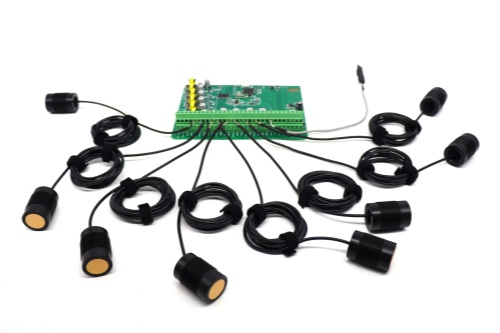
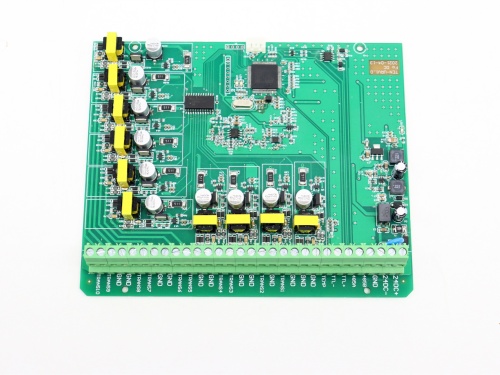
Dayu Electronics provides customizable bare-board multi-beam ranging modules, which are easy to embed into unmanned surface vehicles (USVs), underwater robots, or fixed monitoring platforms. The core circuit board features an 8-channel design, integrating 7 ultrasonic ranging probes and reserving 1 channel for temperature sensing, enabling synchronized acquisition of "7 distance data + 1 temperature data".
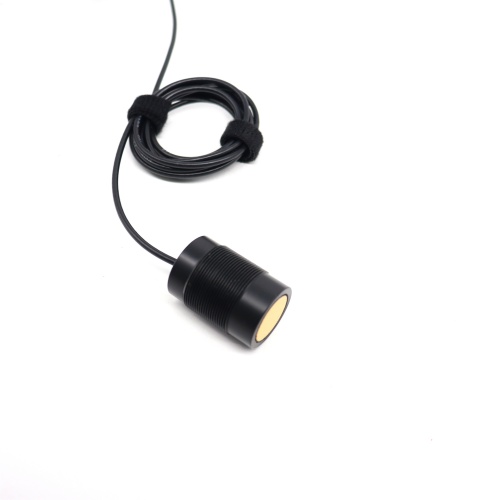
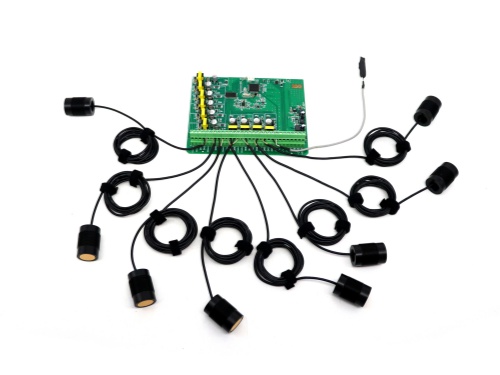
In underwater environments, temperature directly affects sound velocity variations, which in turn affect ranging accuracy. Real-time temperature compensation effectively enhances measurement stability and data reliability. Multi-channel synchronized operation allows the system to obtain distance information from multiple directions or points in a single operation, significantly improving data density and operational efficiency.
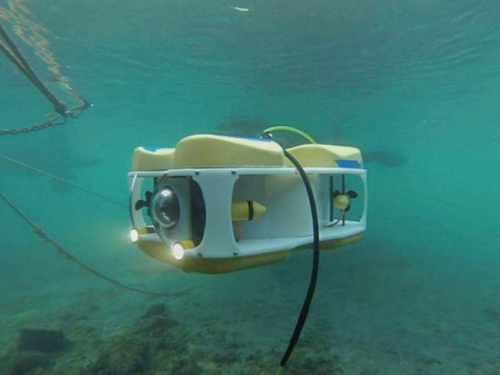
Leveraging mature ultrasonic multi-beam technology, the system can simultaneously transmit and receive multiple independent acoustic beams, enabling rapid and continuous detection of underwater targets. Users can flexibly arrange probe angles and spacing based on platform structure to optimize coverage, making it suitable for various scenarios such as underwater terrain scanning, obstacle avoidance, and structural inspection.
Compared to fixed finished equipment, the customized bare-board solution facilitates deeper integration and space optimization, allowing the sensing system to truly integrate into the overall machine design rather than passively adapting. For R&D teams and equipment manufacturers seeking high-performance matching, this is not just a circuit board but a core underwater sensing platform that can be flexibly defined according to specific scenarios.
In challenging underwater environments, precise, efficient, and customizable ranging capabilities will provide more reliable data support for engineering decisions and long-term monitoring. Choosing customization means letting technology truly serve the application itself.