
Dayu Electronics: Can an Ultrasonic Transducer Operate at a Non-Resonant Frequency? The Answer Is Here
In daily technical consultations, customers often ask: "The resonant frequency of the transducer is 200 kHz. If I apply a 190 kHz signal, can it work normally?"
This is a professional and representative question. Today, we will provide a unified answer.
First, let's understand what "resonant frequency" means.
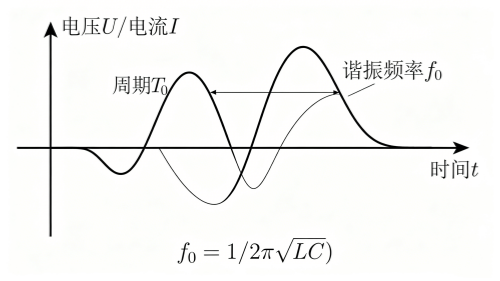
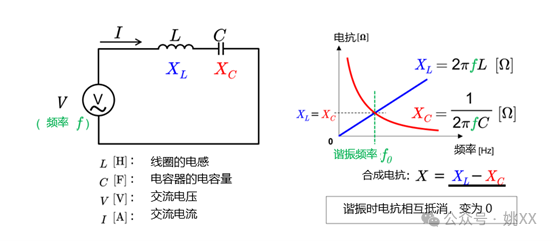
Each ultrasonic transducer has its own natural frequency (e.g., 200 kHz), which can be understood as the transducer's "inherent vibration frequency." Just like different tuning forks produce a fixed pitch when struck, the frequency at which a transducer vibrates freely without external driving is its resonant frequency.
So, what happens when driving with 190 kHz?
The answer is: it can work, but the operating state will be different.
When the transmitting circuit sends a 190 kHz pulse signal (e.g., 10 pulses) to the transducer, the transducer enters a "forced vibration" state—that is, the external signal "forces" it to vibrate at 190 kHz. At this point, the ultrasonic frequency emitted by the transducer is 190 kHz.
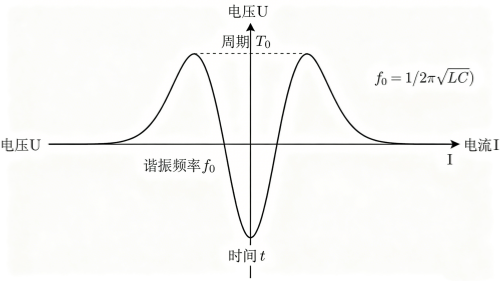
And when those 10 pulses end, the transducer does not stop vibrating immediately; there is a period of after-ringing, which is the "free vibration" phase. During free vibration, the frequency reverts to its natural frequency—i.e., 200 kHz.
What should be noted in practical applications?
Efficiency will decrease: When operating away from its resonant frequency, the electro-acoustic conversion efficiency is generally lower than at the resonance point, and heat generation may increase slightly.
After-ringing interference: The free vibration (200 kHz) after the pulse ends may cause some interference to the received signal, so it needs to be evaluated based on the specific application scenario.
Summary
A transducer can definitely be driven at a non-resonant frequency (e.g., 190 kHz), but this is a "forced vibration" mode. If you seek maximum efficiency and the cleanest signal, it is recommended to keep the driving frequency consistent with the transducer's natural frequency (200 kHz). If there is a special application requirement to deviate from the frequency, it is also entirely feasible—just pay attention to the efficiency and after-ringing effects.