
Dayu Electronics Ultrasonic Open Channel Flowmeter for Flow Monitoring at Power Plant Discharge Outlets
In flow monitoring at power plant discharge outlets, customers often face a dilemma: Doppler flowmeters are costly and have stringent installation requirements, while radar flowmeters lack accuracy in low-flow scenarios. To address this pain point, Dayu Electronics recommends the ultrasonic open channel flowmeter, which stands out as the ideal solution with its "precision fit + cost-effectiveness."
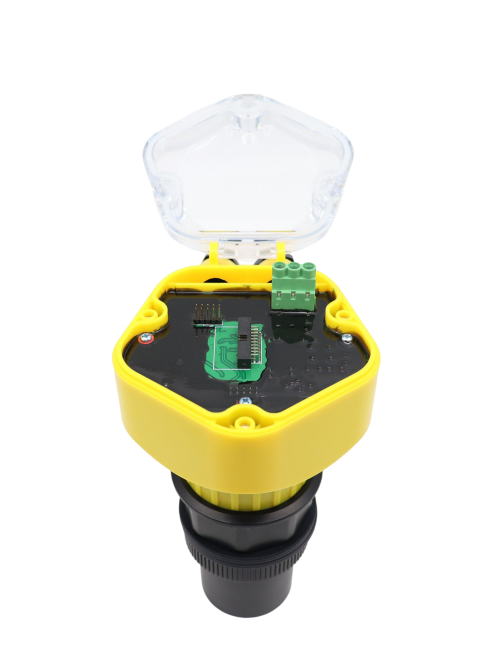
Power plant discharge outlets are mostly open channels or weir/flume structures, where flow velocity fluctuates significantly with unit load—at low load, velocity may drop below 0.1m/s, causing radar flowmeters to suffer data drift due to weak signal reflection, while Doppler flowmeters require insertion installation, which is not only complex but also costs over 3 times more per unit than ultrasonic solutions.
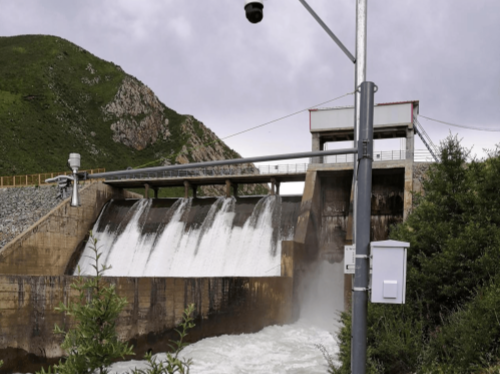
The Dayu Electronics ultrasonic open channel flowmeter overcomes this challenge with the "water level-flow conversion" principle: it integrates a high-precision level sensor (1mm resolution) that captures the water level in real time. Combined with pre-configured standard flow formulas for Parshall flumes, V-notch weirs, etc., it automatically converts water level into instantaneous flow rate and cumulative volume. Even at low flow rates such as 0.05m/s, it can accurately derive flow from water level changes, with an error of ≤±3%.
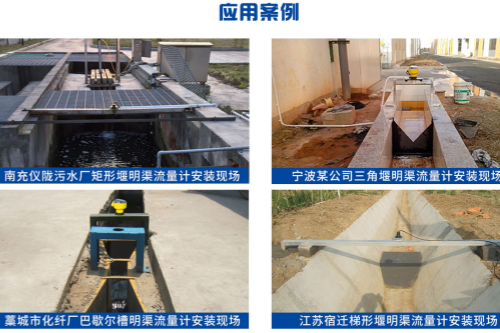
The installation process offers even greater advantages: no need for flow diversion or channel modification—simply mount the sensor above (or on the side wall of) the discharge outlet, facing the water surface. Installation takes less than 2 hours and is unaffected by sediment or floating debris in the water. An application at a thermal power plant showed that this solution ran continuously for 18 months without failure, with data stability superior to traditional radar solutions and a total cost reduction of 60%.
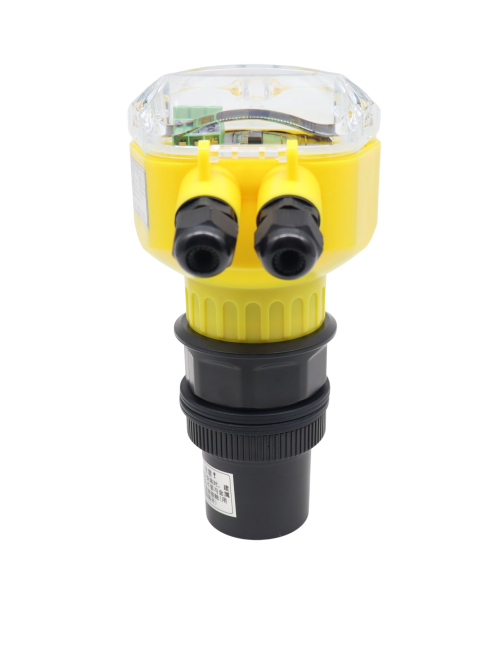
Ecological flow monitoring at power plant discharge outlets ultimately comes down to more than just claimed accuracy—it’s about whether data can be continuous, equipment can withstand the conditions, alarms can be triggered promptly, and the evidence chain can be closed.