
Dayu Electronics Doppler Flowmeter: An Upgrade from Propeller-Type to Doppler for Precision Measurement Solutions
In water conservancy monitoring and environmental compliance work, an accurate measurement often comes from a true understanding of the customer's actual needs.
Recently, a customer inquired about a propeller-type current meter for long-term monitoring of channel flow velocity. After in-depth communication, we found that what the customer truly needed was a fixed-installation, continuous-measurement device, not a tool for temporary spot checks. We honestly explained that a propeller-type current meter designed according to national standards has a mechanical component life of approximately 300 hours, requires regular maintenance, and is not suitable for prolonged submersion in water. This reminder helped the customer avoid a selection error.
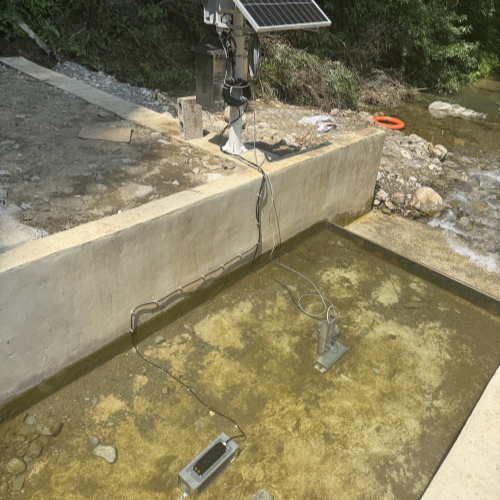
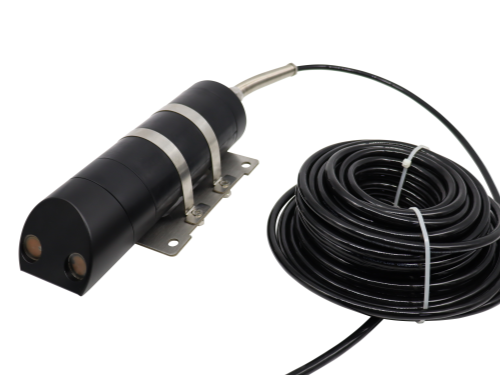
After switching to the Doppler solution, issues still arose. The on-site photos sent by the customer showed that the already installed Dayu Electronics Doppler current meter had significant data errors due to improper placement. The sensor was placed in a small ditch on one side of the river channel, where the flow conditions were unstable and did not comply with the key principle of "installing at 15%–20% of the channel width in a location with stable and representative flow." We carefully explained the working principle of Doppler: the device calculates flow velocity by emitting sound waves and receiving frequency-shift signals reflected by particles in the water, and its accuracy heavily depends on a stable, representative flow environment.
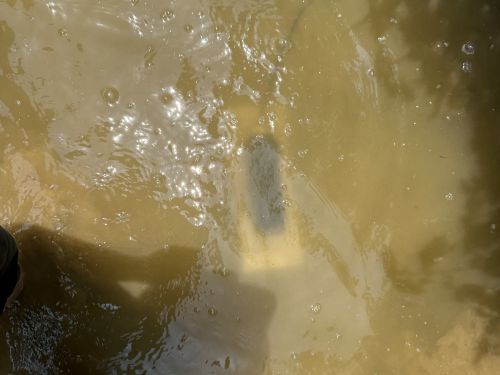
Therefore, we recommended a two-step approach: First, guide the customer to adjust the installation position and water depth of the existing device to meet conditions such as a straight channel section with "ten diameters upstream and five diameters downstream," a flat channel bed, and the sensor facing the flow, in order to obtain valid data. Second, if the on-site conditions are particularly complex—such as extremely low water levels or turbulent flow—we recommend the more adaptable 0° upward-angle Doppler current meter. Its unique installation angle allows it to sit closer to the channel bed, maintaining signal stability even in low-flow, shallow-water conditions, and compensating for environmental shortcomings through algorithms.
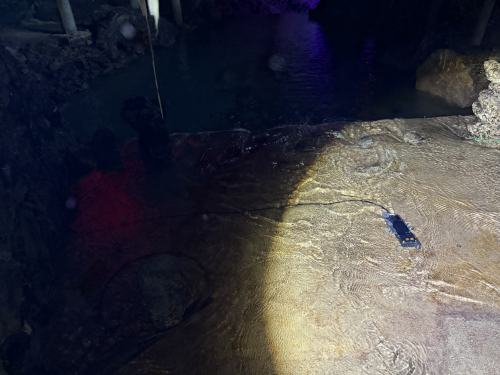
From propeller-type to Doppler, from correcting installation to optimizing solutions, Dayu Electronics has always adhered to one principle: we not only provide high-precision equipment but also complete solutions based on years of field experience. The real value is ensuring every customer can obtain reliable, stable monitoring data even in complex environments.