
Dayu Electronics: Practical Application of Ultrasonic Rail Monitoring Technology on the Chengdu Railway Section
As the direct carrier of train operation, the internal health of the rail directly affects the safety and efficiency of railway transportation. Ultrasonic rail monitoring and inspection technology is an important non-destructive testing method that utilizes the propagation and reflection characteristics of high-frequency sound waves in the rail to accurately detect internal defects such as cracks and porosity. In recent years, ultrasonic guided wave technology, as the mainstream direction, has broken through the limitations of traditional methods and achieved long-distance online monitoring of up to 10 kilometers, becoming one of the core means to ensure the safe operation and maintenance of railways.
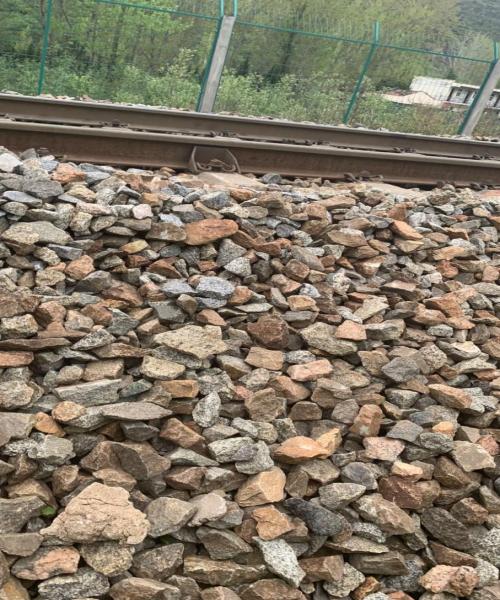
Core Technology Analysis: From Conventional Ultrasonics to Intelligent Guided Waves
Ultrasonic rail inspection mainly includes the following technologies, each with its own focus and suitable for different field scenarios:
Conventional Ultrasonic Technology: Utilizes high-frequency pulse reflection to detect internal rail defects, with detection accuracy up to 0.8 mm. This technology is mature and highly sensitive to internal defects, serving as the foundation for various rail inspection vehicles.
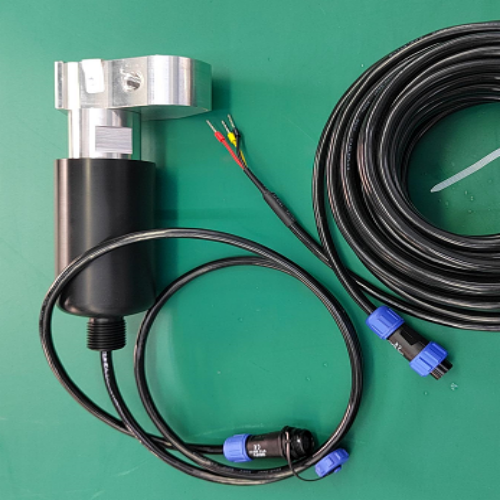
Ultrasonic Phased Array Technology: By controlling the excitation timing of a multi-element array, electronic beam steering and focusing are achieved. Combined with conventional ultrasonics, it significantly improves the detection rate of defects in the rail head area, offering advantages such as fast inspection speed and intuitive defect imaging.
Ultrasonic Guided Wave Technology (Key Direction): Utilizes guided waves formed by multiple reflections of ultrasonic waves between rail boundaries, enabling long-distance propagation and full cross-section coverage. A single set of equipment can detect distances up to 10.1 kilometers, with fault location error not exceeding 10%, making it highly suitable for online monitoring of long sections.
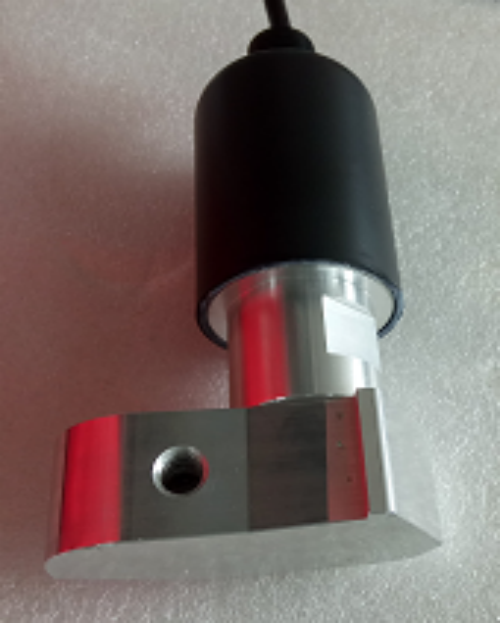
Other Advanced Methods (e.g., EMAT): Using non-contact electromagnetic acoustic transducers, high-speed dynamic inspection is achieved without the need for couplant, capable of adapting to train speeds up to 100 km/h, suitable for real-time online monitoring on regular trains.
Frontier Breakthroughs: Moving Toward Higher Precision and Intelligence
In addition to the above mainstream technologies, frontier research is also continuously pushing the boundaries of rail inspection technology:
High-Precision Crack Size Measurement: By using the "effective velocity" model and Hilbert envelope to calibrate wave velocity in cracks, crack depth can be estimated more accurately, with theoretical correlation (R?) as high as 0.9976.
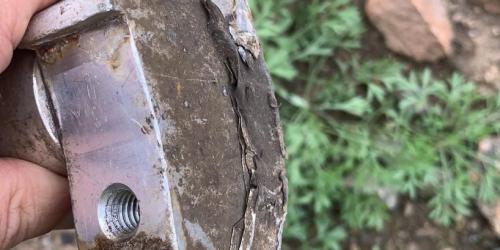
Complex Scenario Applications: Ultrasonic guided wave technology has been successfully applied to detect defects at the rail base of complex switch point rails, solving the problems of low efficiency and easy omission in manual visual inspection.
Intelligent Inspection Models: Inputting ultrasonic signals into deep learning models (such as neural networks) enables high-generalization, low-cost automatic defect recognition and localization, significantly reducing reliance on manual experience.
Chengdu Section in Action: 8 Years of Stable Railway Safety Protection
Currently, ultrasonic rail inspection transducers have been successfully applied on the Chengdu railway line. This product monitors the generation of rail cracks around the clock through the principle of sound wave transmission.
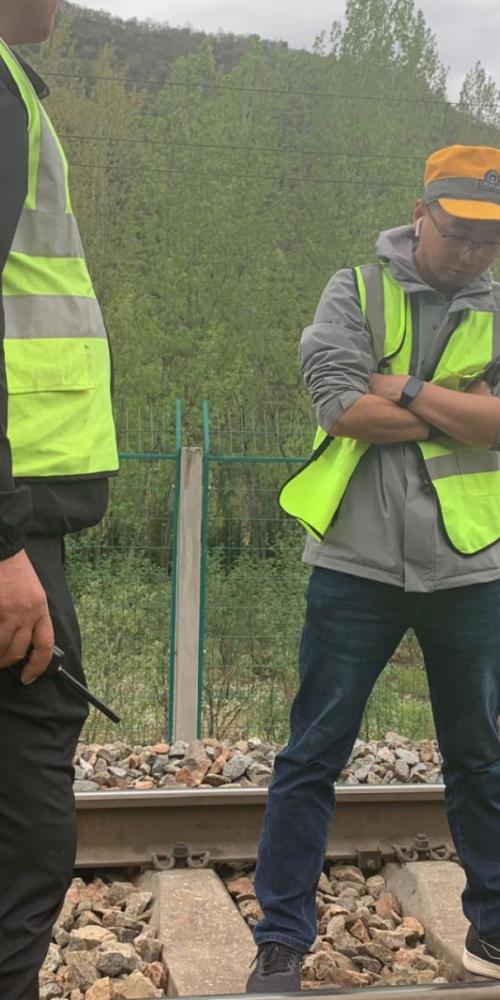
Since installation at the site for 8 years, the system has maintained stable operation, successfully detecting 3 rail crack incidents during this period. This not only provides accurate data support for railway "inspection, maintenance, and repair," but also prevented major safety accidents at critical moments, effectively safeguarding people's property and saving the country from tremendous potential losses.
From conventional ultrasonics to cutting-edge ultrasonic guided waves and AI intelligent models, ultrasonic rail monitoring technology is continuously advancing toward longer distances, higher precision, and greater intelligence. In the future, Dayu Electronics will continue to deepen its work in the non-destructive testing field, using technology to build a strong railway safety defense line and safeguard the health of every rail and the safe travel of every train.