
Dayu Electronics Case Study: Application of Externally Mounted Ultrasonic Level Sensor on Bellow-Type Oil Conservator
1. Background
The application of externally mounted ultrasonic level gauges on transformer oil conservators is primarily aimed at solving long-standing pain points of traditional invasive oil level gauges, such as "false oil level," oil leakage, difficult maintenance, and high retrofit costs. Traditional solutions are prone to serious inaccuracies due to issues like stuck floats or blocked breather pipes, while open-hole designs cannot avoid leakage risks from seal aging. This is especially critical for aging transformers or key equipment that cannot be easily taken offline or perforated, where the cost and safety risks of maintenance oil drainage or even "bell lifting" (removing the transformer cover) are extremely high.
2. Product Selection
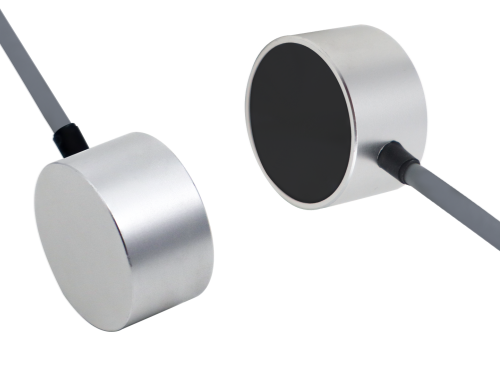
The Dayu Electronics externally mounted ultrasonic level gauge utilizes ultrasonic technology and requires no perforation of the oil conservator, allowing direct "hot work-free" installation, fundamentally eliminating leakage risks and significantly reducing retrofit difficulty and live-line operation risks. It offers minimal measurement error and supports temperature compensation, providing high-accuracy and high-reliability level data. It can also serve as a portable independent verification tool for calibrating false oil levels, or integrate interfaces like 4-20mA and RS485 for remote centralized monitoring and intelligent alarm, making it especially suitable for scenarios in booster stations, substations, and other locations where transformers cannot be easily taken offline or structurally modified. The promotion of this technology is essentially a necessity in the transition from traditional time-based inspection and maintenance to preventive and intelligent operation in power and critical industrial sectors.
3. Operating Conditions
1. Installed Equipment: Bellow-type transformer oil conservator, as shown in the figure
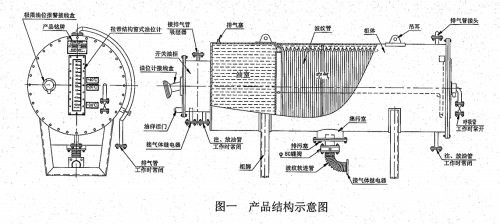
2. Customer Requirement: Need to measure the internal oil level and transmit the oil level data to the main controller via RS485.
4. Analysis and Selection
1. For measuring oil conservators with an externally mounted ultrasonic level gauge, the primary recommendation is the M33-800K, but since previous applications have all been on capsule-type oil conservators, the feasibility for this bellow-type conservator is uncertain and requires verification through on-site testing at the customer's facility.
2. On-site tests were conducted using the M33, with results as shown in the figure (red crosses indicate positions where no signal was detected, and red circles indicate positions where a signal was detected).
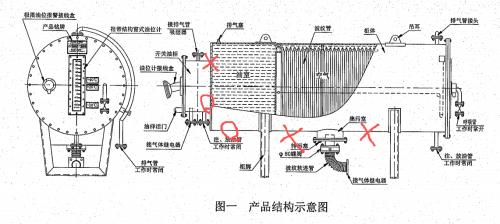
After testing, it was found that even at positions where the M33 could detect data, the signal was weak and the data was inaccurate, so the plan is to switch to the M36-300K.
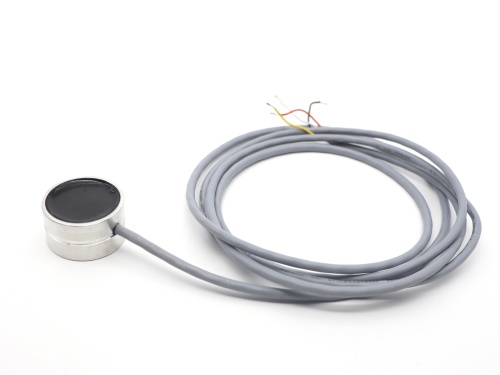
3. The M36-300K was debugged, and after modifying the program and setting the sound speed based on the feedback waveform, it was taken to the site for further testing, where the test signals and waveform were good. However, since the oil gauge on the tank cannot determine the actual internal oil level, and the customer is unsure whether the horizontal or vertical oil level is the true level (in a bellow-type conservator, the bellows move horizontally, unlike capsule-type where both the capsule and oil level move vertically, making it easier to determine), debugging and confirmation are still ongoing.
5. Potential Issues Ahead
1. The current tests have all been conducted with the transformer de-energized; the impact of the strong electric field after energization on the sensor is currently unknown.
2. The on-site oil conservator is located at a high position, and hot work is prohibited, so how to install is also a concern.
3. The true oil level of the bellow-type oil conservator cannot be directly indicated by the gauge on the conservator, leaving the actual internal level unknown; whether the data we measure is valid is another concern.