
Dayu Electronics: Millimeter-Precision Tunnel Ceiling Fluctuation Measurement at Millisecond Speed with Ranging Sensors
Tunnel inspection—stopping to measure is easy; the hard part is doing it at 60 km/h while capturing every ceiling fluctuation.
The customer's requirement was straightforward: mount ultrasonic ranging sensors on the roof of a tunnel inspection vehicle, and while the vehicle travels at 30–60 km/h, measure the distance from the vehicle roof to the tunnel ceiling in real time. Based on this continuous distance data, analyze ceiling flatness to determine whether additional construction is needed. The request sounds simple, but it represents a typical engineering site contradiction—speed must be high, the environment is dirty, and results must be reliable.
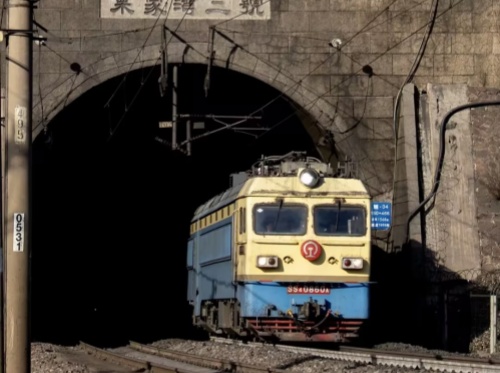
Why is ultrasonic ranging often included in such scenario lists?
Because it is non-contact detection. By emitting ultrasonic pulses, sound waves propagate through the medium to the surface of the measured object and then reflect back to the receiving end; the system calculates distance based on sound speed and propagation time, with the fundamental relationship: D = C * t / 2. For scenarios like tunnels, where frequent contact is unsuitable and equipment wear should be minimized, non-contact means much lower maintenance pressure.
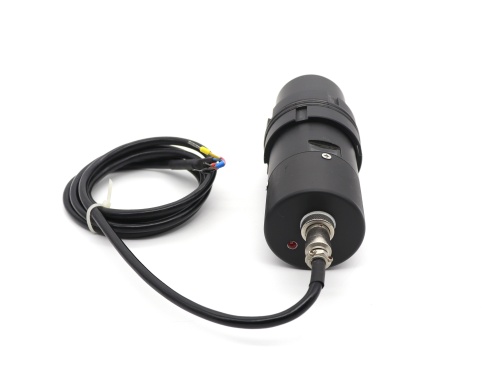
Regarding speed, the customer's top priority is "fast response." One of the key features of Dayu Electronics' ultrasonic ranging sensors is millisecond-level response speed—meaning that as the vehicle moves from one position to the next, the sensor provides more timely feedback, allowing continuous data to be linked together rather than being fragmented into isolated "sparse points."
Many people first hearing about "flatness analysis" mistakenly assume it requires complex algorithms. In fact, the simplest engineering judgment often starts with a stable distance curve: as the vehicle moves, the sensor continuously outputs distance, and ceiling fluctuations are reflected as variations in distance. The more frequent and larger the variations, the more they indicate local unevenness; the smoother the variations, the more uniform the overall ceiling.
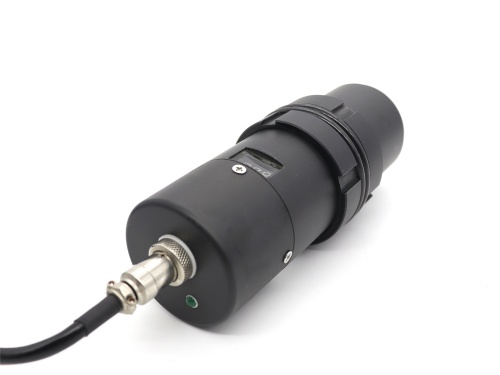
Therefore, the core of this application lies not only in the ranging principle but in "output and integration":
On-site, the data needs to be fed into the vehicle's onboard system for real-time display and recording;
Parameter setting and debugging should be convenient to reduce repeated rework after entering the tunnel;
Output methods must align with the project's data acquisition habits.
This is why we typically provide RS232/485 interfaces for parameter configuration and offer multiple output options: switching outputs, analog outputs, and RS232/485 interfaces. For a project, more output options mean more ways to "connect," especially since onboard acquisition systems and industrial control equipment often have different communication conventions; early compatibility can save a lot of on-site communication overhead.
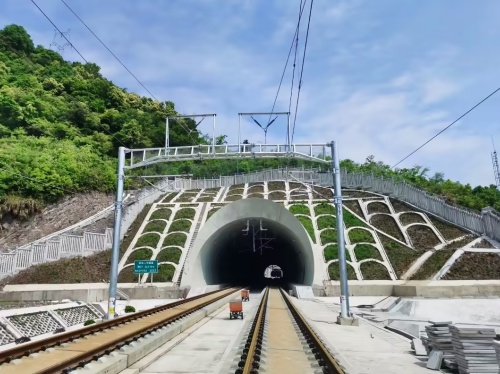
Whether the tunnel ceiling requires additional construction often hinges on a "just a little off" gray area: insufficient flatness can affect subsequent maintenance and safety, but rework means time and cost. Being able to output distance in real time and stably at 30–60 km/h essentially provides continuous evidence for decision-making.
With millisecond-level response and flexible output interfaces, every inch of tunnel ceiling fluctuation is captured. Whether to rework or accept is no longer a matter of guesswork—it's a clear, traceable distance curve.