
Aluminum Liquid Leak Hydrophone Monitoring: A "Listen-and-Warn" Guardian in the Deep Casting Well [Dayu Electronics]
Beside the 13-meter-deep aluminum ingot casting well, high-temperature aluminum liquid above 700°C pours down. In the event of a leak, the contact between aluminum liquid and cooling water could lead to catastrophic consequences. Traditional manual monitoring has blind spots, and visual monitoring also has dead angles. At this point, a system that provides early warning by "listening" becomes a critical safety barrier—this is the Dayu Electronics complete set of aluminum liquid leak hydrophone monitoring equipment.
How does it "listen"?
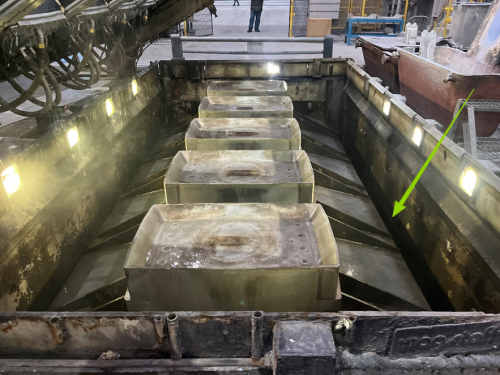
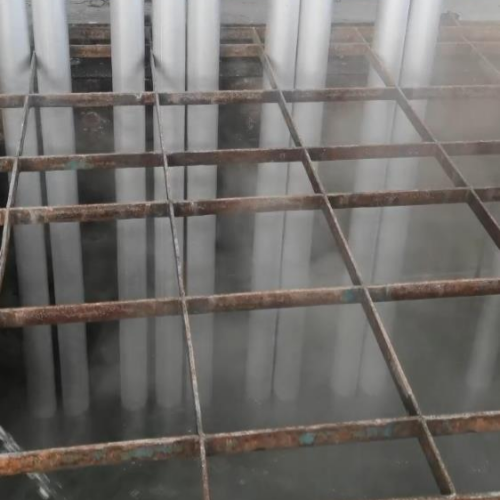
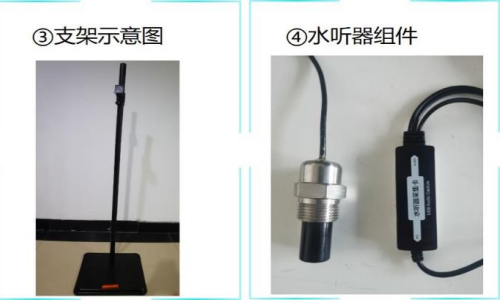
The hydrophone array is deployed on the inner wall of the casting well. Based on the customer's on-site conditions: the casting well is 13 meters deep, with 0–4 meters being the cooling water zone, and 0–1.5 meters being the high-risk area for aluminum leakage and slag accumulation. Utilizing the at least 15 cm of installation space on the inner wall of the casting well, the hydrophones are precisely positioned in key water depth intervals, especially near the bottom in the high-risk zone. Once high-temperature aluminum liquid leaks and comes into contact with cooling water, it instantly generates intense bubble sounds, hissing noises, or impact acoustic waves—hydrophones can keenly capture these specific acoustic signals.
How does the main unit determine a leak?
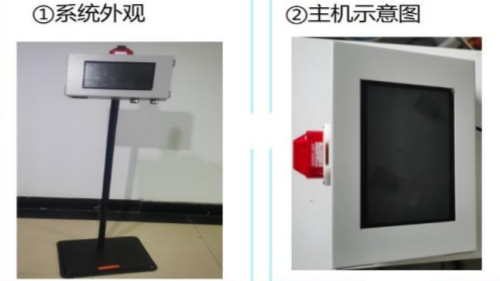
The captured acoustic signals are transmitted to the monitoring main unit via dedicated cables. The main unit is equipped with a recognition algorithm tailored to the acoustic signature of aluminum liquid leaks, effectively filtering out background noise such as water circulation and equipment vibration, precisely extracting the acoustic features of leak events. Once a leak is identified, a high-priority alarm is immediately generated.
Output and linkage control
The main unit comes with standard industrial communication interfaces (RS485, Ethernet, or 4–20mA), allowing seamless transmission of real-time waveforms, alarm status, and equipment health information to a higher-level control system or computer. Through the accompanying monitoring software, customers can clearly view real-time sound pressure at each monitoring point, historical trend curves, as well as the acoustic signature spectrum, time, and intensity of each alarm. More critically, the system supports closed-loop linkage—after the software confirms a leak, operators can issue a one-click command from the computer, or it can automatically execute based on preset logic: emergency shutdown of the aluminum liquid supply valve, activation of enhanced cooling, or audible and visual alarms, nipping accident risks in the bud.
Complementing visual monitoring, adding an extra layer of safety
In the aluminum processing industry, there are already precedents like Foshan Jianmei Aluminum relying on AI vision for high-level monitoring, while hydrophones reinforce the deep casting well environment—characterized by high temperatures, humidity, and obstructed views—from the acoustic dimension. The fusion of visual and acoustic monitoring builds a more reliable "technical prevention" system.
Making data clearly visible on the screen and control commands respond in milliseconds—this is not just a technological advancement, but a commitment to the safety of every operator on site. Amid the roaring sound of flowing aluminum liquid, may this "listening" from deep within the well safeguard every moment of safe production.