
Application Solution for Compact Ultrasonic Doppler Flowmeter in Residential Community Sewer Flow Monitoring [Dayu Electronics]
Why do I recommend Dayu Electronics' compact ultrasonic Doppler flowmeter for residential community drainage flow monitoring?
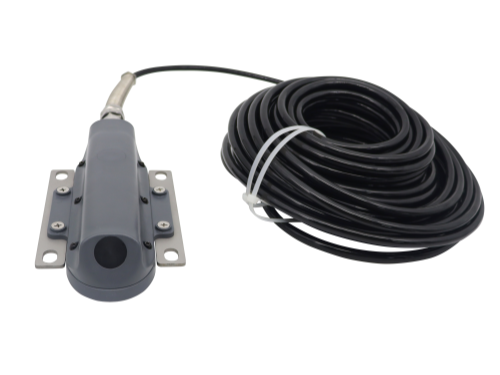
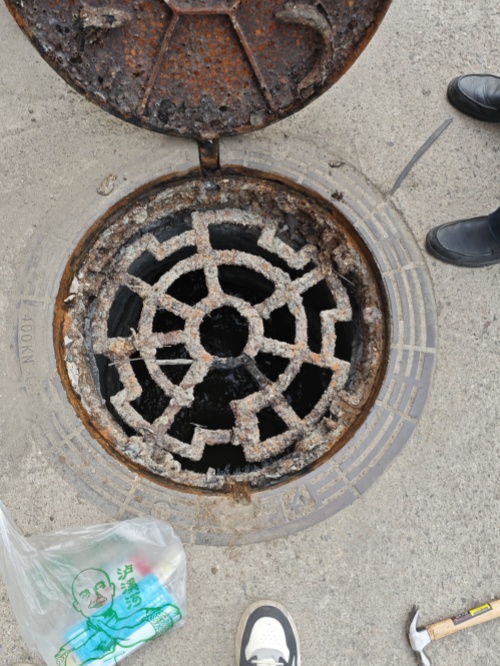
Residential community sewers are never under 'standard conditions.' Manholes are cramped, humid, and corrosive; pipes are sometimes full and sometimes partially full; debris, sediment, and air bubbles appear without warning. Customer needs are straightforward: long-term flow monitoring, solar power supply, and data that can be collected, transmitted, and viewed remotely.

With this kind of project, the real challenge isn't 'buying a meter,' but getting 'accurate measurement, easy installation, long-term durability, and reliable data transmission' all right in one go.
Why choose a compact ultrasonic Doppler flowmeter?
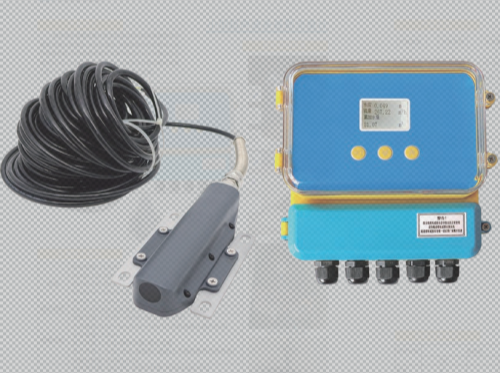
In cramped, complex drainage scenarios, Dayu Electronics' compact ultrasonic Doppler flowmeter is the more reliable choice. It features a split design with the main unit and sensor separated, synchronously collecting flow velocity, water level, and temperature, and automatically completing flow calculations. The calculation logic is clear: the main unit obtains water level and flow velocity data via RS485, calculates the cross-sectional flow area based on site channel parameters, derives instantaneous flow using 'cross-sectional area × flow velocity,' and then accumulates it into total flow. The entire closed loop requires no manual recalculation by field personnel.
Solar power supply + data acquisition unit integration: how smooth is it?
On-site solar power supply, plus a data acquisition unit for collection and transmission. This combination is most concerned with power supply adaptation and interface protocols. Dayu Electronics' device supports wide-voltage power supply, capable of adapting to voltage fluctuations from solar power; it comes standard with an RS485 interface, supports the MODBUS protocol, and also offers 4~20mA signal output. Integration with data acquisition units, PLCs, or monitoring platforms typically requires no additional modifications.
Long-term underground durability relies on protective details
The biggest enemies in drainage environments are immersion, corrosion, and humidity. Dayu Electronics uses a split structure with sensors rated IP68 (suitable for prolonged submersion) and a transmitter housing rated IP65, made of corrosion-resistant materials. The standard cable includes a vent tube to ensure stable underwater operation, and cable length can be customized to site requirements—since residential manholes are scattered and vary in depth, this 'extendable' feature is often more practical than expected.
Applicable scenarios and installation reminders
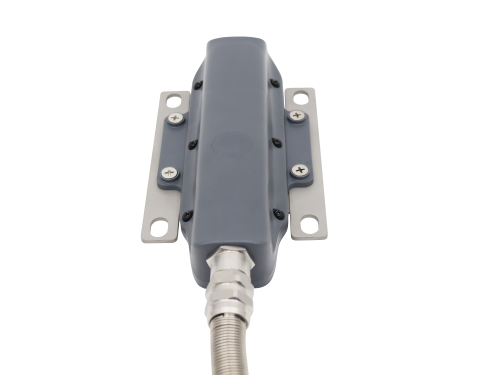
This solution is suitable for flow monitoring in sewage manholes, stormwater pipes, and inspection wells, and is often used in municipal drainage control, urban flood warning, and other applications requiring long-term reliable data. However, during installation, it's crucial to match the device's tilt angle, applicable pipe diameter, and water level conditions to the site, ensuring the sensor is positioned correctly—otherwise, accuracy will be directly affected. If the site is unusual, it's best to have the technical team provide tailored selection and installation guidance to avoid rework and data discrepancies later.
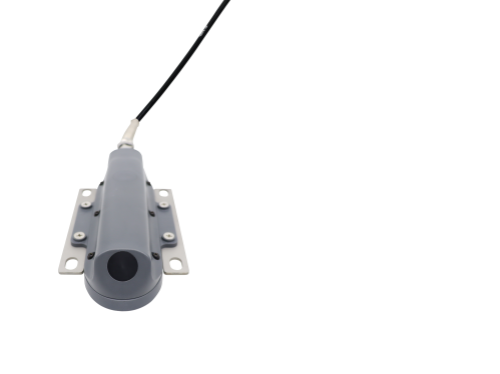
In essence, residential sewer flow monitoring is about setting up a set of 'data eyes' that can run reliably for the long term. When the site has solar power, data acquisition units, and cramped, complex conditions, Dayu Electronics' compact ultrasonic Doppler flowmeter—with its combination of 'compact size + split design + RS485/MODBUS + high protection'—is often the choice closest to the answer.
If you're also working on flow monitoring for residential drainage outlets, sewage manholes, or stormwater pipes, feel free to share whether the pipe is full or partially full, the approximate manhole depth, and what platform you plan to connect the data to. I can help you refine the solution to better match your actual site conditions.