
Application and Installation Optimization of Split-Type Ultrasonic Open Channel Flowmeter in Sites Without Weirs or Flumes [Dayu Electronics]
In scenarios such as irrigation, urban drainage, and industrial wastewater treatment, open channel flow monitoring is a core part of water resource management, pollution control, and production scheduling. However, in practical applications, flow measurement at sites without weirs or flumes often faces many challenges. The split-type ultrasonic level meter, with its non-contact measurement, wide range coverage, and intelligent functions, is an ideal choice to solve this problem.
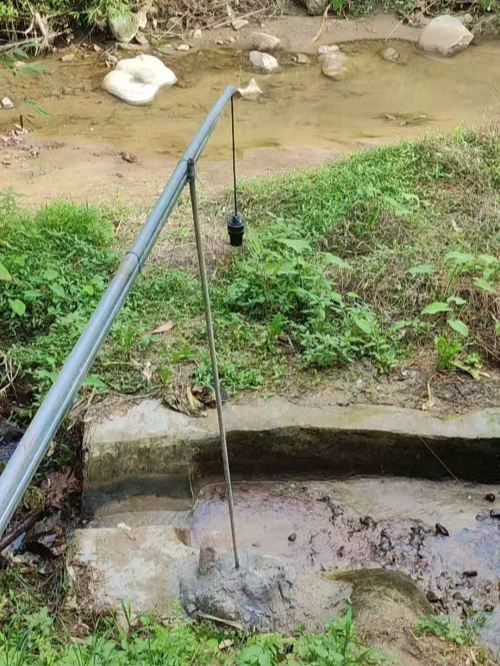
At sites without weirs or flumes, traditional flowmeters are often difficult to measure accurately because the lack of a fixed weir structure makes it hard to ensure flow stability. The split-type ultrasonic level meter uses non-contact measurement to obtain the water level in the channel via an ultrasonic transducer, and then calculates the flow rate using a water level-flow conversion method. This approach not only avoids the effects of sediment deposition and corrosive liquids that often affect traditional contact sensors, but also enables long-term stable operation in harsh environments.
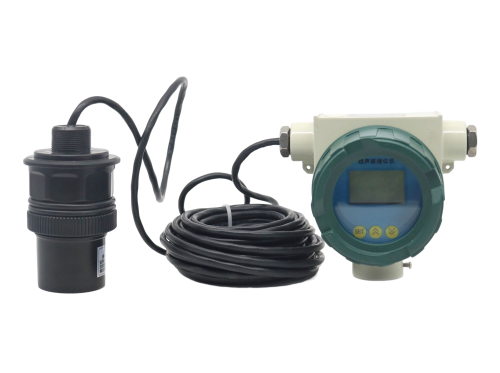
However, in practical applications, the transducer of the split-type ultrasonic level meter may shake if not properly fixed, affecting measurement accuracy. To solve this problem, it is recommended to install a baffle at the outlet to hold back the water, allowing it to flow out naturally over the baffle. This can improve flow accuracy to a certain extent. Specifically, the baffle serves to stabilize the flow and reduce fluctuations, thereby enhancing measurement accuracy. In this way, even at sites without weirs or flumes, relatively accurate flow data can be obtained.
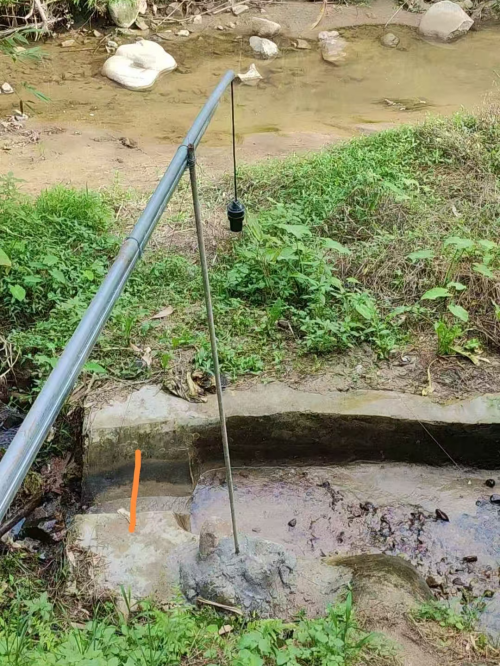
During installation, the following points should be noted:
Transducer fixing: Ensure that the transducer is installed securely to avoid shaking caused by external factors. A dedicated mounting bracket can be used to keep the transducer stable during measurement.
Baffle design: The height and position of the baffle should be adjusted according to the actual flow conditions to ensure smooth water flow. The baffle material should be corrosion-resistant and wear-resistant to extend its service life.
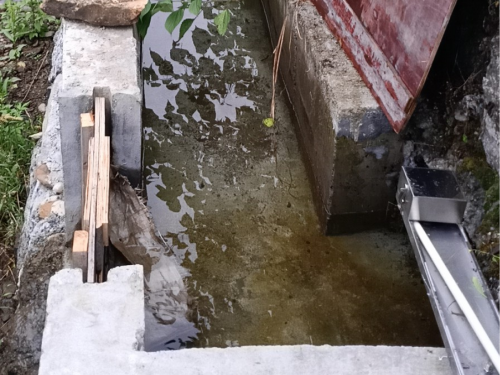
On-site commissioning: After installation, on-site commissioning is required to ensure optimal coordination between the transducer and the baffle. Multiple measurements can be taken to adjust the baffle's height and position for the most accurate flow data.
Through the above optimization measures, the application effect of the split-type ultrasonic level meter at sites without weirs or flumes will be significantly improved. This not only enhances measurement accuracy, but also extends equipment service life, providing reliable data support for water resource management and environmental protection.
Dayu Electronics has been deeply involved in the field of ultrasonic measurement for many years. If you encounter similar on-site difficulties—such as unstable transducers, fluctuating readings, or uncertainty—please feel free to contact us. We not only provide equipment, but are also willing to work with you to make measurement solid and reliable.