
Dayu Electronics: Application of Ultrasonic Transducers in Soil Density Measurement in Cement Cavities
Have you ever wondered how to precisely detect the secrets of soil layers buried deep underground? In the fields of environmental monitoring and geological survey, an innovative application based on ultrasonic transducers is providing a high-precision solution for measuring soil density in cement cavities. Today, we will delve into how this technology moves from concept to reality, based on a specific customer requirement.
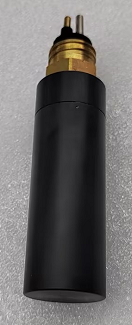
The customer's demand is clear and specific: firstly, the core task is to use ultrasonic transducers to measure the density signal difference of soil layers in cement cavities. This requires the transducer to not only penetrate the cement medium but also accurately capture the acoustic characteristic differences caused by soil density changes. To achieve this goal, the technical solution requires a high degree of customization.
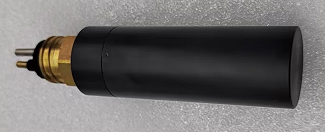
The key to the solution lies in the DYW-80-G model transducer. Given the application environment with a standard cement cavity diameter of 16mm and a detection depth potentially reaching 7 meters, customizing a transducer with a diameter of 15mm becomes a necessary choice. This "tailor-made" approach ensures that the transducer can operate smoothly in a confined space, avoiding signal attenuation or installation difficulties caused by size mismatches. A more ingenious design is the "sugar gourd string" structure — arranging the transducers in a "one up, one down, one transmit, one receive" configuration. This layout forms an effective measurement sound path, where the upper transducer emits ultrasonic waves that pass through the soil layer to be measured and are then received by the lower transducer. By analyzing differences in speed, amplitude, and other aspects between the transmitted and received waves, the system can inversely derive the density distribution of the soil layer. The structural advantage of this design lies in enhancing the stability of the measurement path and the reliability of data comparison.
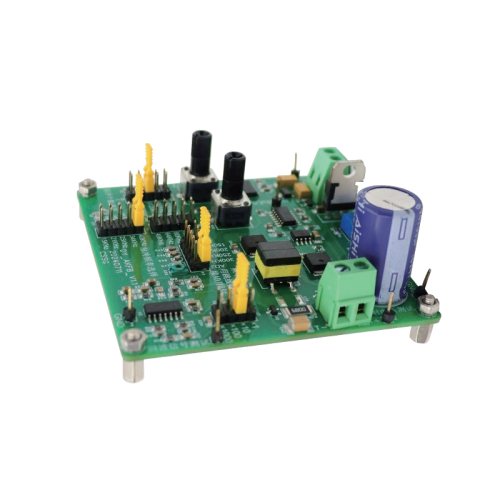
Data recording and retention are equally crucial. The customer requires the development board to have the capability to connect a USB drive for convenient storage of measurement data. This design takes into account the practicality in field or long-term monitoring scenarios, where technical personnel do not need to rely on complex real-time data transmission systems. They can simply replace the USB drive periodically to take away valuable raw waveforms and processed data, providing a solid data foundation for subsequent in-depth analysis and report generation.
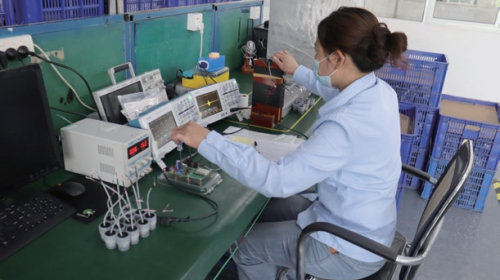
From requirements to solutions, every step reflects the flexibility of ultrasonic technology in addressing challenges in special scenarios. Whether it's the custom sizing for specific aperture diameters, the unique structure designed to optimize measurement accuracy, or the storage solution to ensure data is never lost, the core is to transform the detection capability of ultrasonic transducers into a clear and reliable "diagnostic report" of the underground world through precise technical adaptation.
In an era where intelligent sensing and precision measurement are increasingly important, similar technical analyses that deeply integrate specific scenarios might be the key to driving the industry toward deeper and more accurate detection. As for more possibilities of this technology, what are your insights? Feel free to share and discuss in the comments section.