
Meeting the Challenge of Northern Sandstorms: Wear-Resistant Anemometer Transducer Solutions [Dayu Electronics]
If an anemometer is compared to a pair of "eyes," then the transducer is its most sensitive "cornea." No matter how stable it performs on the test bench, in the sandstorm-prone areas of the north, what truly determines longevity and reliability is often not the most prominent spec on the datasheet, but two simple things: whether the emitting face can withstand wear, and whether the required frequency matches.

The customer's requirement is clear: the emitting face must be wear-resistant, with the material preferably PEEK or titanium alloy; additionally, a -6dB frequency of 200kHz ±10% is desired. From selection to communication, this issue can be fully explained from two perspectives.
1. From a "field survival" perspective: In heavy sandstorms, ensure the emitting face doesn't fail first.
In a sandy environment, the transducer is not only responsible for "sending" and "receiving" sound, but it also faces long-term risks of performance drift due to particle erosion and dust accumulation. You'll find that field issues are often not one-time failures, but a gradual degradation: weaker echoes, reduced stability, increased maintenance frequency, eventually leading to system false alarms or unusable data.
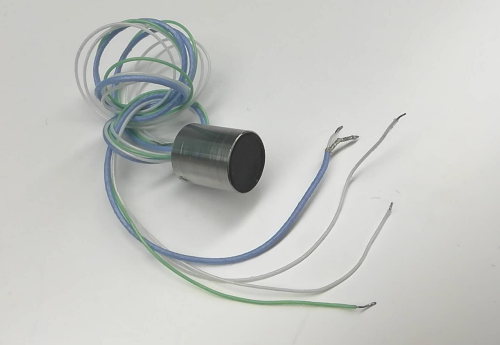
So when the customer emphasizes "wear-resistant emitting face," they are essentially asking two questions:
1) Can the material withstand long-term wear and erosion?
2) After withstanding that, can the performance remain consistent?

2. Wear-resistant materials withstand sandstorm challenges, and precise core frequency ensures accurate wind direction sensing.
In sandy environments, the transducer's emitting face is subjected to long-term sand and dust impact. Ordinary materials are prone to scratches and wear, which can affect the stable transmission and reception of ultrasonic signals. For this reason, we offer two wear-resistant materials for the customer to choose from: PEEK (polyether ether ketone) engineering plastic and titanium alloy. PEEK offers excellent impact resistance and self-lubricating properties, is lightweight, and corrosion-resistant; titanium alloy has higher hardness, making it suitable for extreme sand and dust conditions. Both effectively extend the transducer's service life under harsh operating conditions.
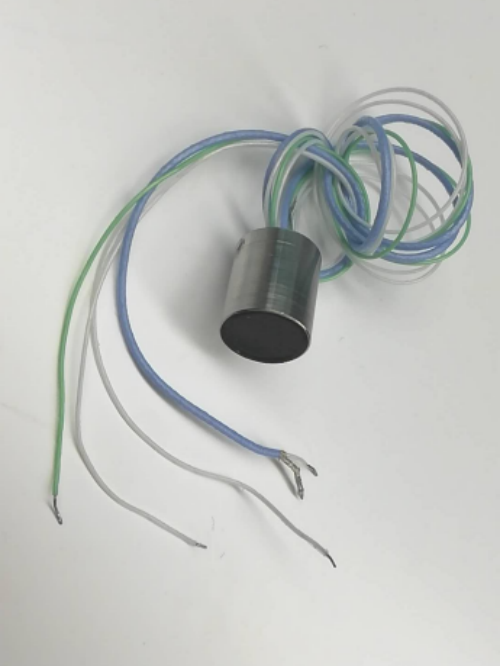
While pursuing ultimate durability, we have not relaxed our strict requirements for signal accuracy. This customized transducer strictly adheres to the customer's technical specifications, locking the core frequency precisely within the range of 200kHz ±10% (-6dB). This frequency setting not only accounts for the penetration of ultrasound in air but also ensures the sensitivity and anti-interference capability of signal transmission, guaranteeing that every wind speed and direction measurement is precise.
Dayu Electronics is always committed to addressing complex environments through technological innovation. Whether facing the northern sandstorms or coastal salt spray corrosion, we can provide you with professional, reliable ultrasonic sensing solutions to support the smooth operation of your meteorological monitoring projects.