
Professional Technical Description and Performance Evaluation of Underwater Long-Range Communication Sensor Solutions [Dayu Electronics]
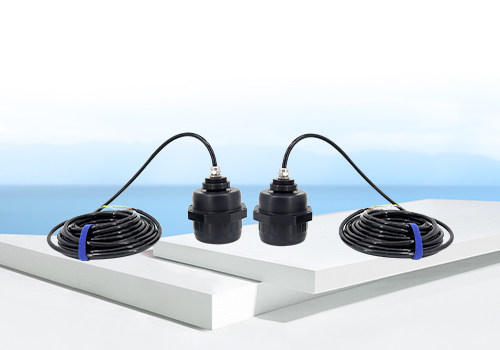
In response to the requirement for 1000-meter deep-water communication between a ship and seabed sensors, and based on current field test conditions and marine environmental characteristics, the following professional assessment of technical feasibility and potential risks is provided:
1. Significant uncertainty exists in transmission distance and environmental adaptability.
Currently, the ultrasonic underwater communication sensor, even in an ideal clear-water reservoir environment, still experiences occasional packet loss when transmitting toward a target 1000 meters away. The marine environment is far more complex than a reservoir; suspended particles such as sediment and plankton in the water column sharply increase acoustic scattering and absorption, leading to rapid signal energy attenuation. Additionally, ocean waves and currents induce severe multipath effects and bubble scattering, further weakening the stability of the communication link. Therefore, if existing equipment is deployed directly in the ocean, the effective communication distance will most likely be greatly reduced to 500 meters or even shorter, making it difficult to ensure stable communication over 1000 meters.
2. Battery endurance cannot meet long-term operational requirements.
Based on the power supply conditions you provided (20AH battery, transmitting once every 5 minutes), combined with equipment power consumption (1W in receiving state, 3.5W in transmitting state), calculations indicate that the theoretical continuous operating time of this configuration is only about 3 days. For deep-sea remote nodes relying on battery power, this endurance cycle is too short to support long-term monitoring tasks. During the initial system design phase, it is necessary to recalculate power capacity or introduce low-power sleep strategies and energy harvesting technologies to extend equipment life.
3. Pressure resistance meets basic specifications.
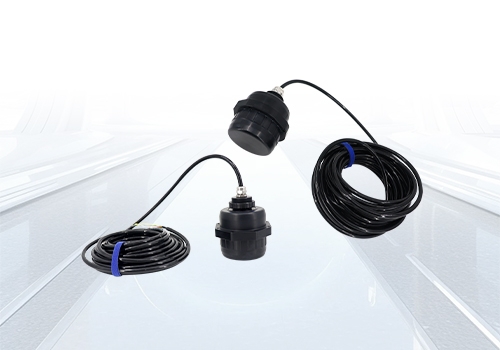
For operating conditions where the transmitter is located at depths of 800 to 1500 meters underwater, the equipment must withstand a hydrostatic pressure of approximately 1.5MPa. The current sensor housing has undergone rigorous testing, and its pressure resistance can reliably reach 1.5MPa, ensuring long-term stable operation in deep-sea high-pressure environments.
Conclusion and Recommendations
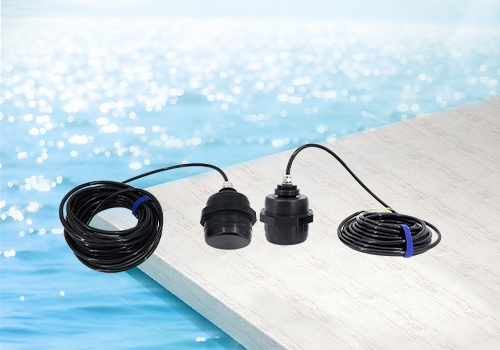
In summary, the current solution has serious shortcomings in actual communication distance in the deep-sea marine environment, and battery endurance is insufficient. It is strongly recommended that, before actual deployment, targeted communication distance and packet loss rate verification tests be conducted in the actual operating sea area, and that the power supply scheme be re-evaluated to ensure the reliability of the underwater communication link.