
Dayu Electronics: Offshore Cable Position Monitoring — Can Ultrasonic Ranging Sensors Be Used?
"I want to use an ultrasonic ranging sensor to measure the position of cables on railings. The width between two railings is 2–3 meters, and the cable diameter is 15–40 cm. The cable occasionally detaches from the railing, but the detachment height is only a few centimeters. The environment is offshore, requiring IP68 protection and salt-spray resistance. Can your products achieve this?"
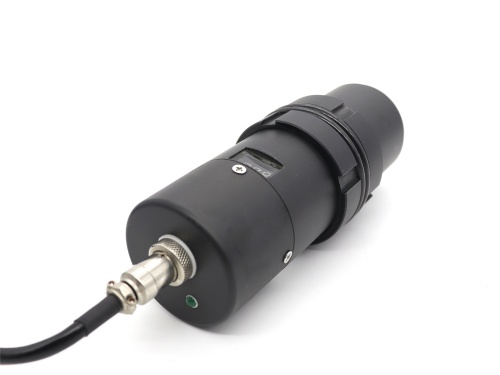
This is a real requirement raised by a customer. To be frank, this operating condition is quite special and cannot be directly "applied" with a standard model. We will analyze it point by point and provide the most practical recommendations.
We immediately conducted an operating-condition matching analysis on our existing ultrasonic ranging sensors:
IP68 protection: can work long-term underwater or in high-humidity environments, no problem;
Salt-spray resistance: the housing material currently used is an industrial-grade corrosion-resistant material, but no PTFE (polytetrafluoroethylene) housing is provided. If offshore salt spray is extremely heavy and exposure is long-term, additional coating or regular maintenance may be required. This point needs to be communicated honestly.
So from a protection standpoint alone, it is basically usable, but not the optimal solution.
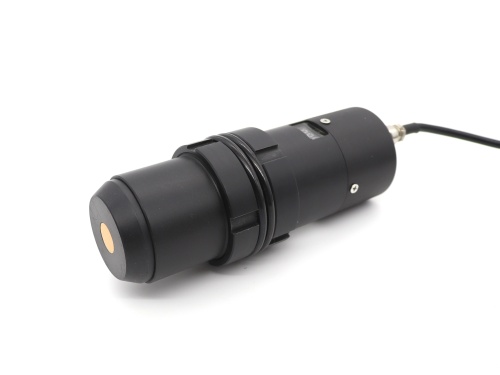
Due to the relatively compact spatial layout between the railing and the cable on site, and being limited by the acoustic emission angle (beam angle) of existing single-beam products, when the sensor emits detection signals downward, the acoustic cone angle inevitably sweeps across the support railing below the cable. This causes the sensor to receive strong reflected echoes from the railing, resulting in severe signal interference and false readings, making it impossible to accurately identify the true position of the cable above.
Faced with this non-standard and complex real-world condition, relying solely on a standardized single-beam ranging sensor is difficult to resolve. We understand that the customer's core requirement is not to insist on "must use an ultrasonic ranging sensor," but rather to find a final solution that can stably and accurately address the cable position monitoring problem.
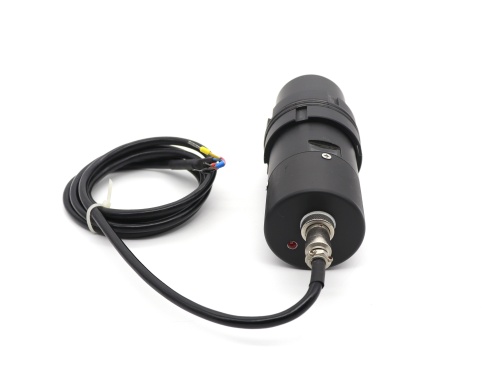
Therefore, to break the technical deadlock, we recommend that the customer provide more detailed on-site visual materials. Capture a complete set of on-site photos, including front view, side view, rear view, and top view of the cable in its normal state on the railing.
With these multi-angle on-site photos, Dayu Electronics' technical team can accurately reconstruct the physical spatial structure of the site and assess the specific range of acoustic interference. Based on real on-site data, we will re-validate the solution — whether through custom acoustic lenses, multi-sensor fusion algorithms, or introducing other non-ultrasonic detection technologies, our goal remains the same: to tailor a cable monitoring solution that remains stable and reliable in harsh offshore environments.
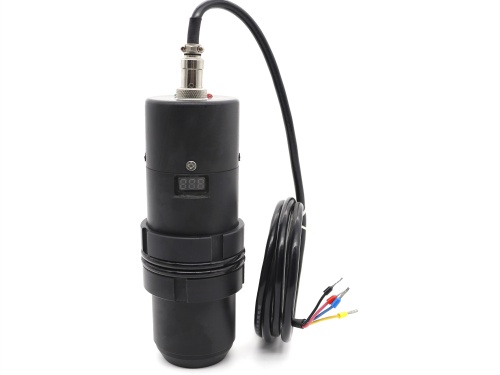
Dayu Electronics has always been dedicated to the R&D and industrialization of ultrasonic technology. Based on fundamental acoustic principles, and backed by outstanding custom development capabilities and a one-stop service system, we provide deeply tailored ultrasonic solutions across various industries. We firmly believe that the vitality of ultrasonic technology lies in the unlimited expansion of its application scenarios.