
Dayu Electronics: How Far Can a Hydrophone Measure? Unraveling the Distance Question in Acoustic Detection
"How far can your hydrophone measure? What is the effective range in meters?"
This is the most frequently asked question from customers after receiving a hydrophone. We are all accustomed to giving a definitive number—say, 50 meters or 100 meters. But to be honest, for a hydrophone, the measurement range is not a fixed value. Why? Today, we will explain this in the most straightforward way.
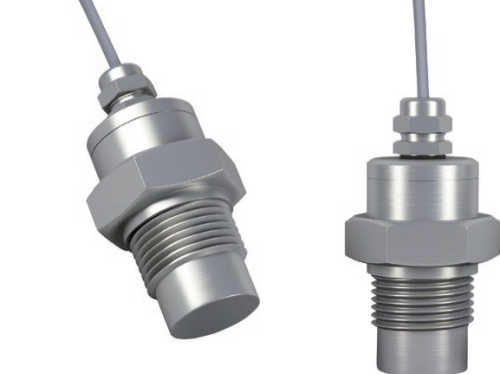
Many people are used to measuring sensor performance in "meters," but in underwater acoustics, this is a misconception. Essentially, a hydrophone is an extremely sensitive "microphone" whose task is to capture acoustic wave vibrations in water. Therefore, what determines whether it can receive a signal is not physical distance but the energy level (decibel value) of the acoustic wave when it reaches the sensor.
1. Key Parameter: Receiving Sensitivity (e.g., -198dB)
Every hydrophone has a core specification called receiving sensitivity. Taking one of our commonly used hydrophones as an example, the sensitivity is -198dB (reference: 1V/μPa). This number may seem a bit abstract, but you only need to remember its physical meaning:
As long as the sound pressure level at the hydrophone position (i.e., the intensity of the leak sound) is greater than -198dB, the hydrophone can reliably receive the signal.
-198dB represents very high sensitivity—meaning it can "hear" extremely faint underwater sounds.
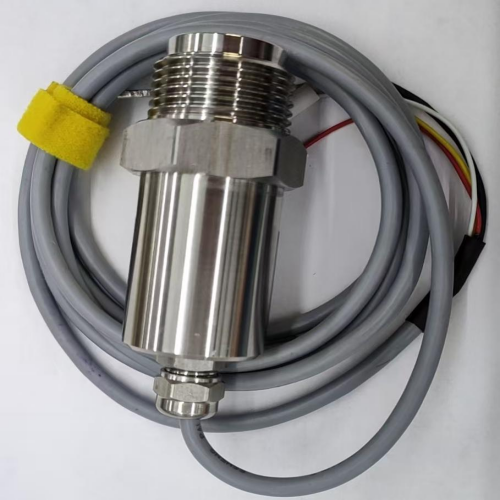
2. So, How Far Can It Actually Measure?
Let's use an example to help you understand:
? Suppose the sound emitted by a leak point attenuates by approximately 6dB for each doubling of distance during underwater propagation (spherical wave approximation).
? If the leak point itself is strong enough—for instance, a sound pressure level of -120dB measured at 1 meter—then as distance increases, the sound pressure level gradually decreases.
? When propagating to 1000 meters, the sound pressure level may still be higher than -198dB. In this case, the hydrophone can still receive the signal from over 1000 meters away.
Conversely, if the leak sound is extremely faint—say, only -160dB—then it may fall below -198dB within a few dozen meters, and the hydrophone would no longer "hear" it.
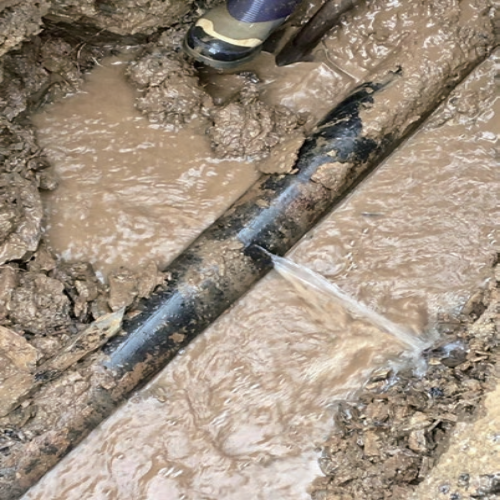
3. Since the Measurement Range Is Determined by Leak Intensity, How Can Users Optimize Detection Performance?
Precise Deployment: Understand the pipe material and diameter. Steel pipes transmit sound farther, while plastic pipes attenuate sound quickly. For PVC pipes, increase the deployment density of hydrophones.
Eliminate Interference: Ensure good coupling between the hydrophone and the pipe wall or water body, avoiding signal attenuation caused by air bubbles or looseness.
Intelligent Algorithms: Dayu Electronics' hydrophones not only rely on hardware sensitivity but also incorporate built-in digital filtering algorithms that effectively remove environmental noise and extract weak leak signals—equivalent to equipping your ear with a "noise-canceling headphone," indirectly extending the effective measurement distance.
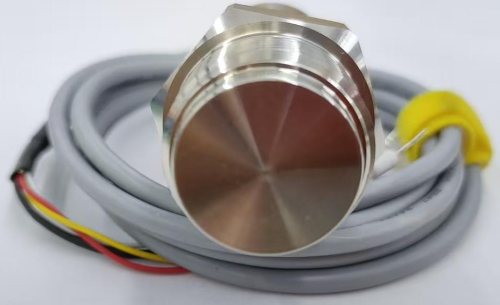
In simple terms, the hydrophone's detection distance = source intensity - transmission loss. As long as the effective signal intensity transmitted from the leak point to the hydrophone exceeds the device's receiving sensitivity (e.g., -198dB), it can be successfully received.
When selecting and deploying in practice, we recommend conducting a comprehensive evaluation based on the site's pipe material, fluid pressure, and estimated leak intensity. If you have any concerns about detection distance under specific operating conditions, please feel free to contact the Dayu Electronics technical team. We will provide professional acoustic calculations and deployment recommendations.