
The Answer to Whether a Depth Sounder Has an "Acoustic Focus" May Differ from What You Expect
“Does your depth sounder have an ultrasonic focus? Does it have an acoustic focus?”
This is a common question customers ask after receiving an ultrasonic depth sounder. Many people habitually draw an analogy between the “focus” concept of optical lenses and acoustics, believing that having a focus ensures measurement accuracy. Today, let’s discuss this topic candidly.
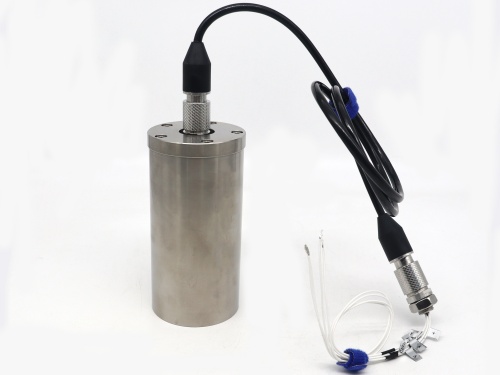
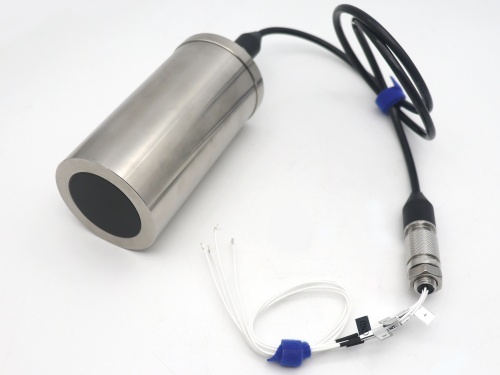
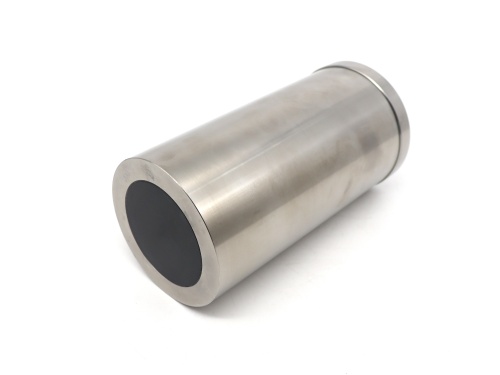
Our answer is very clear: our standard depth sounder transducers employ divergent beam transmission and do not have an acoustic focus. From an acoustic principle standpoint, only specially designed “focused transducers” have a focal point.
Since most standard ultrasonic depth sounder transducers emit a divergent beam rather than a focused one, the sound waves naturally spread out like a flashlight beam after leaving the transducer crystal. In this process, there is no definite “focus.”
Does the absence of a focus mean inaccurate measurements? Quite the opposite.
To help you understand better, imagine the ultrasonic beam as the light from a flashlight.
Focused transducer: Like the spotlight mode of a flashlight, it uses physical lenses or electronic phase control to converge sound energy at a specific depth point. At this “focus” position, the beam is narrowest, the energy is strongest, and the detection resolution is highest. This technology is commonly used in medical B-mode ultrasound or high-precision industrial flaw detection, aiming to resolve fine details at a specific depth.
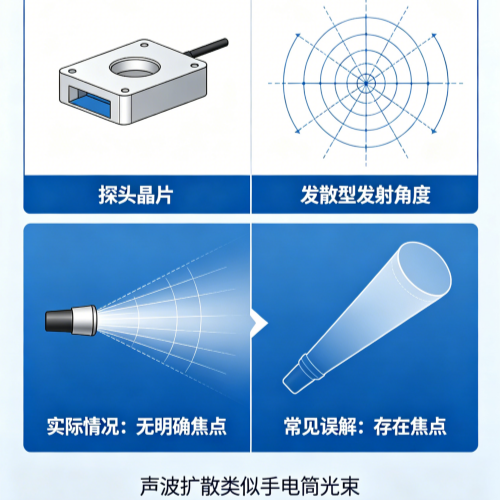
Divergent (non-focused) transducer: Like the floodlight mode of a flashlight, sound waves spread outward at a certain angle. There is no convergence point, and the beam widens gradually with distance.
At this point, you might wonder: why don’t manufacturers design depth sounders as focused types to concentrate energy and measure farther?
In fact, this is a deliberate choice based on practical engineering considerations:
1. Wide coverage to prevent missed echoes: Underwater terrain is often uneven. A divergent beam angle ensures that the sound wave covers a larger area of the riverbed or seabed directly beneath the transducer. If an extremely narrow focused beam were used, encountering a slope or uneven bottom could cause the beam to “miss,” leading to lost echo signals and interrupted depth data.
2. High fault tolerance and ease of installation: The divergent angle provides some installation tolerance. As long as the area is within the transducer’s sound cone, stable measurement is possible, which is very favorable for shipborne installations or multi-transducer arrays.
3. Meeting standard range requirements: For the vast majority of inland river channels, reservoirs, and shallow coastal areas, the sound intensity and range of divergent transducers already fully meet regulatory requirements, with no need for unnecessary additions.
In the ultrasonic field, there is no absolute “best” technology, only the “most suitable” solution. Our depth sounders eliminate complex focusing structures, returning to the essence of measurement, and use the most robust divergent beam design to provide you with the most authentic and stable water depth data. If you have any questions about acoustic parameters, please feel free to contact the Dayu Electronics technical team!