
Dayu Electronics: Differences Between Ultrasonic and Eddy Current Single/Double Sheet Detection Sensors
Single/double sheet detection sensor: ultrasonic or eddy current?
The core difference between eddy current and ultrasonic single/double sheet sensors is that eddy current only detects metals via electromagnetic induction, while ultrasonic works for both metal and non-metal materials via sound wave transmission attenuation. Below is a detailed comparison from the aspects of working principle, applicable materials, installation, anti-interference, and cost.
1. Working Principle
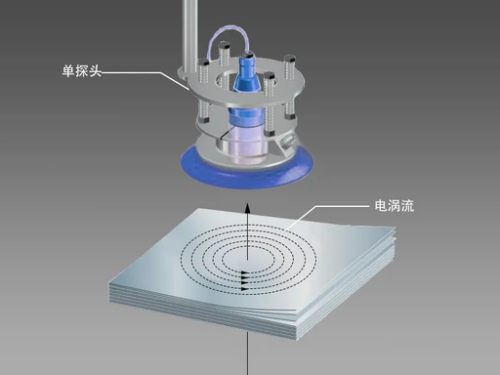
1.1 Eddy Current Single/Double Sheet Sensor
Based on the eddy current effect: the probe coil is energized with high-frequency AC to generate an alternating magnetic field. When a metal sheet enters the field, eddy currents are induced; these eddy currents change the coil impedance/voltage in reverse. Since the eddy current intensity differs between a single sheet and double sheets, the layer count can be determined.
1.2 Ultrasonic Single/Double Sheet Sensor
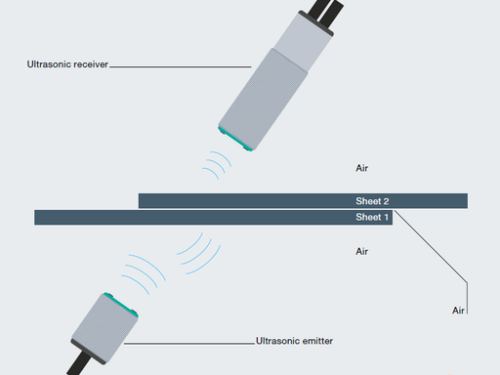
Based on sound wave transmission attenuation: through-beam probes (transmitter + receiver) emit high-frequency sound waves that penetrate the sheet. A single sheet causes low attenuation and a strong signal; double sheets, due to the abrupt impedance change at the intermediate air layer, cause significant energy attenuation and a weak signal, thereby distinguishing between single and double sheets.
2. Overview of Core Differences
2.1 Applicable Materials (Most Critical)
· Eddy current type: limited to metals (steel, iron, aluminum, copper, and other conductive materials); cannot detect non-metals (paper, plastic, film, silicon wafers).
· Ultrasonic type: works for both metal and non-metal (paper, plastic, transparent film, silicon wafers, PCB, aluminum foil, thin metal sheets, etc.); unaffected by color or transparency.
2.2 Detection Method and Installation
· Eddy current type: single probe, non-contact or light contact, flexible installation (can be mounted near suction cups), no through-beam alignment needed; suitable for large-area metal plates, stamping/auto parts stack detection.
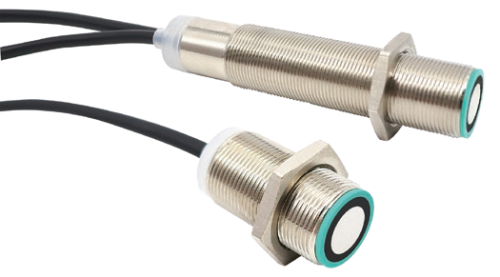
· Ultrasonic type: requires through-beam configuration (transmitter and receiver on opposite sides of the material); needs penetration space (20–60mm); suitable for thin-sheet conveying on production lines (printing, packaging, photovoltaics, lithium batteries).
2.3 Accuracy and Sensitivity
· Eddy current type: sensitive to metal thickness variations, can detect metal sheets from 0.1–2.5mm; oil or film contamination does not affect it (stamping-friendly).
· Ultrasonic type: extremely sensitive to air layers (the gap between double sheets is key); can detect ultra-thin transparent films down to 0.01mm; fails when liquid or adhesive fills the gap.
2.4 Anti-Interference and Environmental Adaptability
· Eddy current type: strong resistance to vibration, dust, and oil; but susceptible to strong magnetic fields and metal support interference.
· Ultrasonic type: strong resistance to dust, light, and color; but high temperature, high humidity, and strong noise can attenuate the signal; temperature compensation is required.
2.5 Response Speed and Output
· Eddy current type: millisecond response, suitable for high-speed stamping; outputs a digital signal (single/double sheet).
Dayu Electronics leverages its outstanding custom development capabilities and one-stop service system to provide deeply tailored ultrasonic solutions for various industries. We firmly believe that the vitality of ultrasonic technology lies in the unlimited expansion of application scenarios.