
Dayu Electronics Ultrasonic Gas Flow Velocity Sensor Wins 9th Place in China Innovation and Entrepreneurship Competition
"Ultrasonic businesses are hard to run, and winning with tech products is hard." This is the insight gained by many ultrasonic business owners who work day and night, racking their brains for R&D breakthroughs. Dayu Electronics has been making ultrasonic sensors for over 10 years, and our R&D leaders have been in the industry for nearly 20 years. The founders of Dayu Electronics and our technical engineers have always worked together with the spirit of "never give up, never abandon," which has brought Dayu Electronics to where it is today!
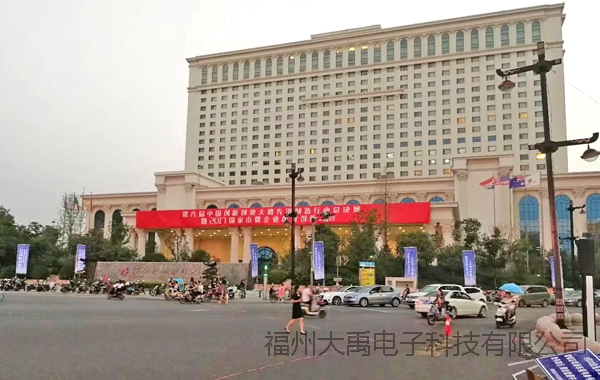
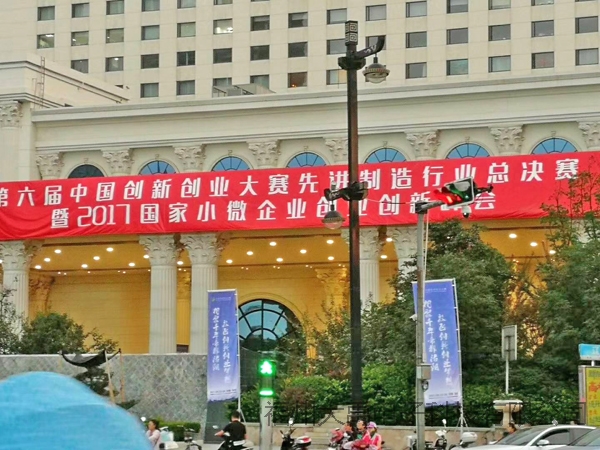
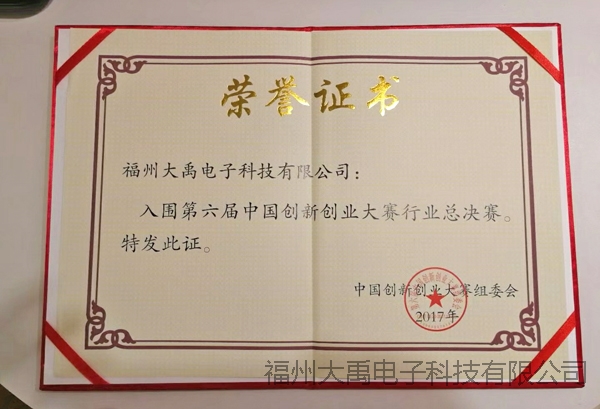
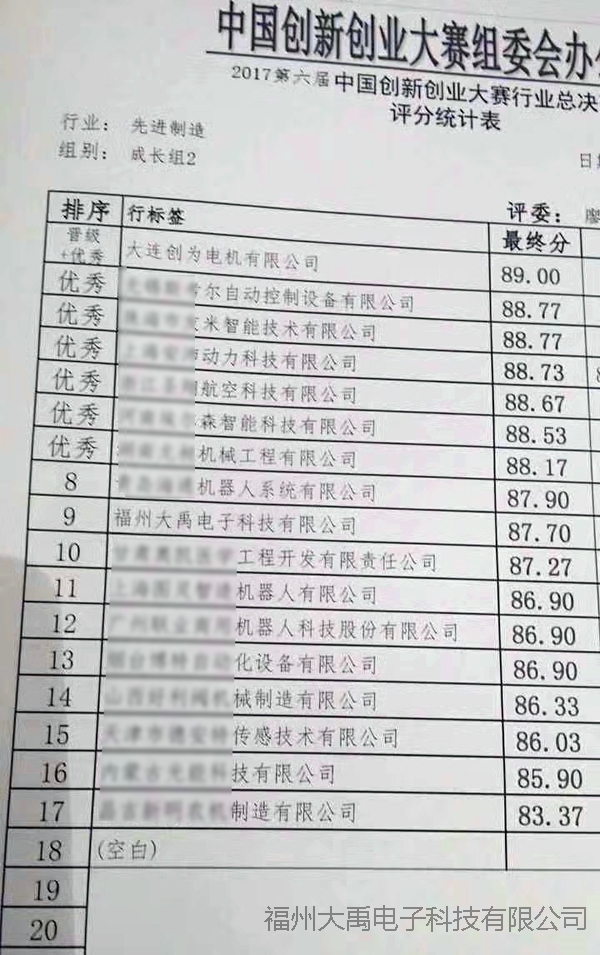
In August 2017, we were recognized as a Fujian High-Tech Enterprise; in September 2017, Dayu Electronics' ultrasonic gas flow velocity sensor won 9th place in its group at the China Innovation and Entrepreneurship Competition.
Now let's talk about ultrasonic sensors:
How Ultrasonic Sensors Work
Ultrasonic sensors are sensors developed based on the characteristics of ultrasound. We can hear sounds because they are produced by vibrating objects, and their frequency ranges from 20 Hz to 20 kHz. Frequencies above 20 kHz are called ultrasound, while those below 20 Hz are called infrasound. Common ultrasonic frequencies range from tens of kHz to tens of MHz.
Ultrasound is a mechanical wave with a vibration frequency higher than that of sound waves, generated by the vibration of transducer crystals under electrical voltage excitation. It has the characteristics of high frequency, short wavelength, and minimal diffraction, especially good directionality, and can propagate directionally as a beam. Ultrasound has strong penetrating ability through liquids and solids, especially in solids that are opaque to light, where it can penetrate depths of tens of meters. When ultrasound encounters impurities or interfaces, it produces significant reflection to form echoes, and when it hits moving objects, it can generate the Doppler effect. Therefore, ultrasonic testing is widely used in industry, national defense, biomedicine, and other fields.
Ultrasonic sensors, also called ultrasonic probes, are mainly composed of piezoelectric crystals. They can both transmit and receive ultrasound. Low-power ultrasonic probes are mostly used for detection purposes. They come in many different structures, including straight beam probes (longitudinal waves), angle beam probes (shear waves), surface wave probes (surface waves), Lamb wave probes (Lamb waves), and dual-element probes (one probe transmits, one receives).
Ultrasound is a mechanical oscillation in an elastic medium, with two forms: transverse oscillation (shear waves) and longitudinal oscillation (longitudinal waves). In industrial applications, longitudinal oscillation is mainly used. Ultrasound can propagate through gases, liquids, and solids, with different propagation speeds. Additionally, it exhibits refraction and reflection phenomena, and it attenuates during propagation. When propagating through air, ultrasonic frequencies are relatively low, generally around tens of kHz, while in solids and liquids, higher frequencies can be used. Attenuation is faster in air, but in liquids and solids, attenuation is smaller and propagation distance is longer. Using the characteristics of ultrasound, various ultrasonic sensors can be made, and with different circuits, various ultrasonic measuring instruments and devices can be built.
Performance Specifications
The core of an ultrasonic probe is a piezoelectric crystal housed in a plastic or metal casing. The crystal can be made of various materials. The size of the crystal, such as its diameter and thickness, varies, so the performance of each probe differs. Before use, we must understand its performance in advance. The main performance specifications of ultrasonic sensors include:
Operating Frequency
The operating frequency is the resonant frequency of the piezoelectric crystal. When the frequency of the AC voltage applied across it matches the crystal's resonant frequency, the output energy is maximum and sensitivity is highest.
Operating Temperature
Since the Curie point of piezoelectric materials is generally high, and especially because diagnostic ultrasonic probes use low power, their operating temperature is relatively low, allowing them to work for extended periods without failure. Medical ultrasonic probes operate at higher temperatures and require separate cooling equipment.
Applications of Ultrasonic Distance Sensors
Ultrasound has strong penetrating ability through liquids and solids, especially in solids that are opaque to light, where it can penetrate depths of tens of meters. When ultrasound encounters impurities or interfaces, it produces significant reflection to form echoes, and when it hits moving objects, it can generate the Doppler effect. Therefore, ultrasonic testing is widely used in industry, national defense, biomedicine, and other fields.
Ultrasonic distance sensors can be widely used in level (liquid level) monitoring, robot anti-collision, various ultrasonic proximity switches, and anti-theft alarms. They feature reliable operation, easy installation, waterproof designs, small emission angles, high sensitivity, easy connection to industrial display instruments, and probes with larger emission angles are also available.
Main Applications
Ultrasonic sensing technology is applied in various aspects of production practice, and medical applications are among its primary uses. In industry, typical applications of ultrasound include non-destructive testing of metals and ultrasonic thickness measurement. In the past, many technologies were hindered by the inability to detect the interior of objects, and the advent of ultrasonic sensing technology changed this situation. Of course, more ultrasonic sensors are fixedly installed on various devices, "silently" detecting the signals people need. In applications, ultrasound will be combined with information technology and new materials technology, leading to more intelligent and highly sensitive ultrasonic sensors.
In summary, the use of ultrasonic sensors is crucial.
If you need more information, please call our hotline: 0591-28082552 Dayu Electronics Technology Co., Ltd. will serve you wholeheartedly!