
From "Single-Point Detection" to "Fan-Shaped Coverage": Technical Analysis of Dayu's Ten-Beam Obstacle Avoidance Sensor
In underwater robot (ROV/AUV) and unmanned underwater vehicle operations, the complex underwater environment is often the biggest challenge. Many engineers or enthusiasts who are new to underwater equipment ask when comparing products: "We are currently using a single-beam sensor — what exactly makes your newly launched ten-beam obstacle avoidance sensor superior?"
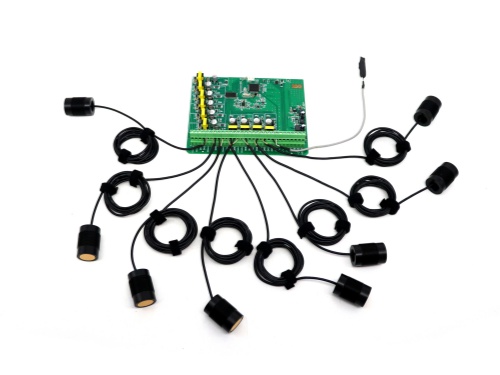
In simple terms, if a single-beam sensor is compared to a "flashlight" that can only illuminate directly ahead, then Dayu Electronics' ten-beam obstacle avoidance sensor is a "searchlight" that provides all-around illumination. This leap from "point" to "surface" brings a qualitative improvement in detection coverage, obstacle avoidance efficiency, and reliability.
The specific advantages are reflected in:
1. Eliminating blind spots and doubling the safety factor
The underwater environment is complex, featuring not only huge rocks but also fine obstacles such as abandoned fishing nets and steel cables. A single-beam sensor is prone to missing lateral threats, whereas the ten-beam sensor, through multi-point scanning, virtually eliminates all dead angles. For expensive scientific research equipment or engineering vessels, this means a significant reduction in risk.
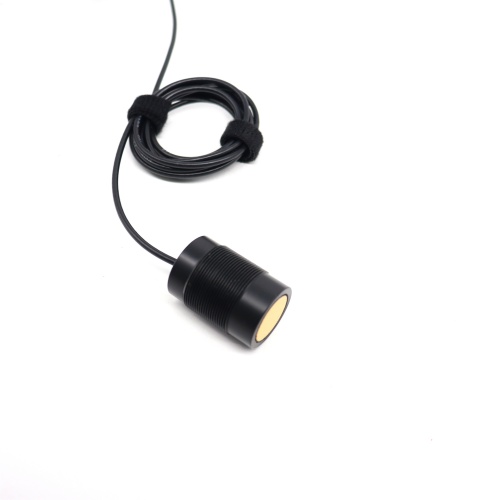
2. Improving obstacle avoidance efficiency (response speed)
A single-beam sensor often requires the device to move or rotate itself to scan the environment, resulting in slower response. The ten-beam sensor outputs contour information of the forward area in a single pass, allowing the main control system to immediately plan the optimal obstacle avoidance path without waiting, greatly enhancing the maneuverability and operational efficiency of the underwater robot.
3. Enhancing data reliability (anti-interference)
Multi-beam technology has a natural "redundancy mechanism." Even if individual beams are affected by suspended particles in the water, data from the other beams can still be cross-validated to ensure the accuracy of the final decision. This level of high reliability is unattainable with single-beam systems.
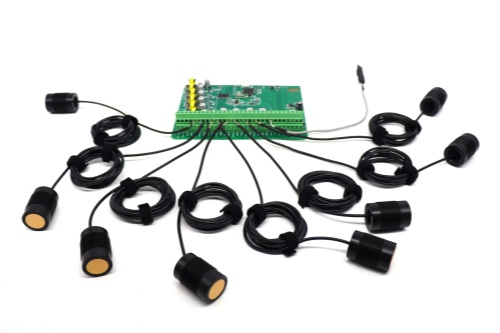
A single-beam sensor provides "point" perception, while a ten-beam sensor provides "surface" perception.
Wider coverage → higher efficiency → stronger redundancy → better reliability. For equipment that needs to navigate autonomously underwater, the ten-beam system is not merely a "nice-to-have" enhancement, but an essential "lifesaver."
If you are troubled by blind spots or slow response in underwater obstacle avoidance, please feel free to contact Dayu Electronics. We not only provide ten-beam sensors but can also offer optimal installation and commissioning recommendations tailored to your control algorithm.