
Dayu Electronics: Why Can't Contact Ultrasonic Probes Do Without That 'Sticky Little Layer'?
Why can't contact ultrasonic probes do without that 'sticky little layer'?
Anyone who has used ultrasonic flaw detection, thickness measurement, or probes knows a ritual-like step: before testing, you must apply a layer of transparent gel-like couplant to the workpiece surface. Some find it sticky, some wonder if water can be used instead, and some simply ask: can we skip it? Dayu Electronics gives you a clear answer today: no. And the reasons are rock-solid.

Air is the 'natural barrier' to ultrasound
First, understand a concept: acoustic impedance. Think of it as a material's 'resistance' to sound wave propagation. Every substance—whether metal, plastic, water, or air—has its own acoustic impedance value. When ultrasound passes from one medium to another, the closer the acoustic impedances of the two materials, the more energy penetrates; the greater the difference, the more energy is blocked at the interface.
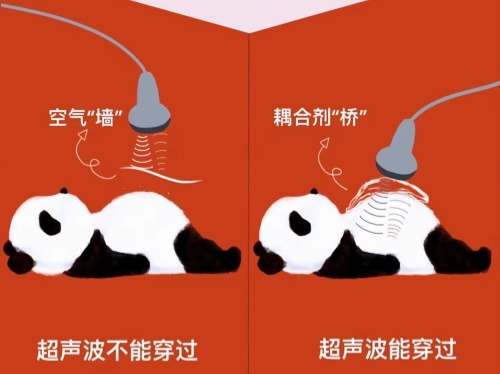
The probe itself is typically made of high-impedance materials like piezoelectric ceramics, and the workpiece under test (e.g., steel plates, pipes, castings) is also solid, with a fairly high impedance. However, the thin layer of air sandwiched between them has extremely low acoustic impedance. Though the probe and workpiece may look tightly in contact, on a microscopic level, the surfaces are full of air gaps. The presence of air acts like a high wall blocking the ultrasound path—most energy is reflected back, and only a tiny fraction can enter the workpiece, let alone return.
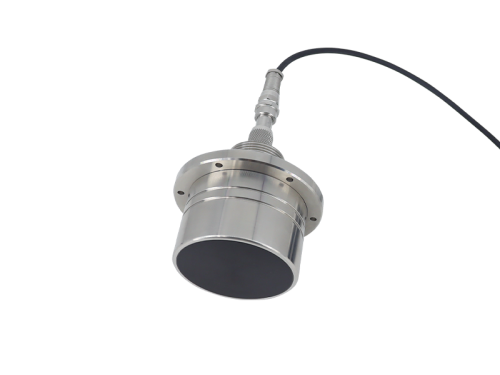
The couplant's job: 'squeeze out' the air
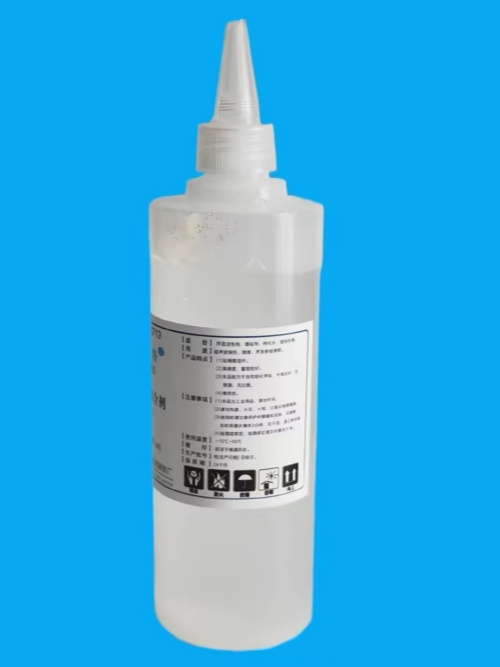
The core role of the couplant is to fill the invisible air gaps between the probe and the workpiece surface. Its acoustic impedance lies between that of the probe and the workpiece, and it is closer to solid materials. Once the couplant fills the interface, the ultrasound path becomes: probe → couplant layer → workpiece. Without the air barrier, the energy transmission rate can jump from less than 1% to over 80%.
So, that sticky stuff is not a dispensable 'lubricant'—it is the bridge for the sound wave path. Common couplants include water, glycerin, oil, and special ultrasonic gels. The choice depends on surface roughness, testing temperature, and ease of cleaning.
What happens if you skip it?
If you don't use couplant and press the probe directly onto a dry metal surface, you'll see the echo almost disappear, thickness readings jump randomly, and defects become undetectable. Forcing extra pressure can only squeeze out a tiny amount of air, far less effective than a thin layer of couplant. In applications requiring precise detection of internal cracks, thickness measurement, or flaw detection, no couplant equals failed ultrasonic testing.
Small thing, big principle
The couplant may look unremarkable, and you might wipe it off without a second thought, but behind it lies the fundamental physics of acoustic impedance matching. Every contact ultrasonic probe produced by Dayu Electronics is strictly tested with couplant at the factory—because we know that without it, even the best probe cannot deliver its value.
Be scientific, don't be afraid of a little extra effort. Next time you pick up a probe, remember to apply a drop first. That single drop ensures real, stable, and repeatable inspection results.