
Dayu Electronics: One Ruler for Deep and Shallow Water—How Do Fish Finders Determine the True Size of Fish?
Have you ever encountered this situation: you clearly caught a small crucian carp, but the fish finder screen showed a "big fish"; or a large carp swam by in shallow water, yet the device only gave an inconspicuous little dot. Is the fish finder "misreading"? Not necessarily. The problem may well lie in the water depth.
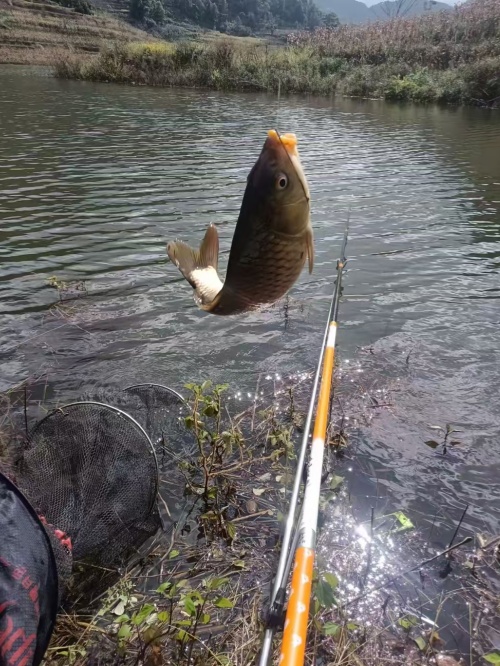
The same fish at different depths produces completely different echo signal strengths. Without any processing, fish in deep water appear "weak" and the device tends to underestimate them; fish in shallow water appear "strong" and tend to be exaggerated. So how does a reliable fish finder restore the truth? Dayu Electronics will walk you through the three-step logic behind it.
Step 1: First collect three hard data points
A fish finder that is willing to invest in hardware will simultaneously extract three raw pieces of information from its receiving circuit:
? Echo amplitude: how strong the signal is (voltage level)
? Echo width: how long the signal lasts (pulse width)
? Echo depth: the time from transmission to return of the sound wave, converted into water depth
Together, these three data sets provide the basis for determining "what the target really is."
Step 2: The key depth attenuation compensation (TGC)
This is the most critical step in judging fish size. As we all know, the deeper the water, the greater the loss of acoustic energy due to absorption and scattering by the water body. For fish of the same size, the echo voltage in deep water will be significantly lower than in shallow water.
To smooth out this physical deviation, the fish finder has a built-in precision underwater acoustic attenuation model. Based on the current water depth and operating frequency (e.g., 77 kHz or 200 kHz), the system automatically applies gain compensation to the echo amplitude—this is what the industry commonly calls TGC (Time Gain Control). In simple terms, the farther the distance (greater water depth), the more the circuit and algorithm automatically amplify the echo signal. This step successfully brings the reflected signals of same-size fish at different depths back to the same reference intensity, eliminating the "visual error" caused by distance.

Step 3: Use the "acoustic reflection cross-section" to calculate the true size
After depth compensation, the software extracts the target strength (TS) of the target. You can think of it as the fish's "reflection capability" towards sound waves. The algorithm first removes interference from the bottom, aquatic plants, and fixed clutter, focusing only on suspended, moving targets. Then, based on the compensated echo energy and pulse width, it converts this into an equivalent fish body size.
This process does not rely on graphical lines on the screen but on solid acoustic physics formulas. So when your fish finder tells you "this is a fish about 20 cm long," it is not guessing—it has already factored in water depth, frequency, and attenuation in its algorithm.
Of course, all of this is based on the premise that the fish finder's receiving circuit is sensitive enough and the TGC algorithm is mature. Low-cost devices often omit complete TGC compensation, resulting in small fish in deep water being mislabeled as large fish, while large fish in shallow water are ignored. It's not that the fish finder can't calculate—it's that the budget limits its ability to calculate accurately.
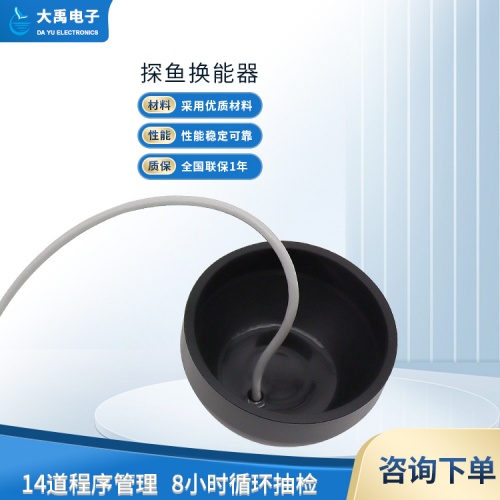
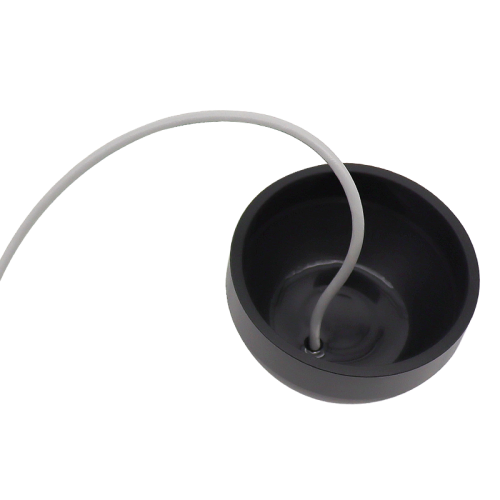
Dayu Electronics has long provided high-consistency transducers and reliable signal processing reference solutions for fish finder manufacturers. We believe that a good fish finder should treat every fish fairly, whether it hides in deep water or stays close to the shallow shore.