
Dayu Electronic Underwater Ranging Sensor Assists Offshore Platform Operations
The "Pressure Test" at 600 Meters Deep in the Sea
Working on offshore platforms has never been an easy task. Underwater equipment, in particular, must not only contend with darkness and low temperatures but also withstand immense water pressure.
Recently, we received a typical requirement: the equipment needed to dive to a depth of 600 meters for ranging, yet the measuring range was actually within 20 meters. This might sound like "using a sledgehammer to crack a nut," right? Actually, it's not. The water pressure at 600 meters is unimaginable for the average person, placing extreme demands on the sensor's sealing technology and material strength.
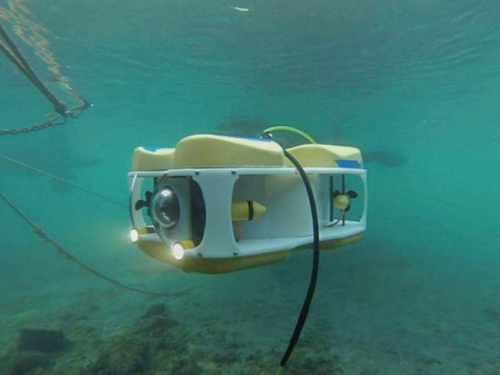
Why the M36 Underwater Obstacle Avoidance Sensor?
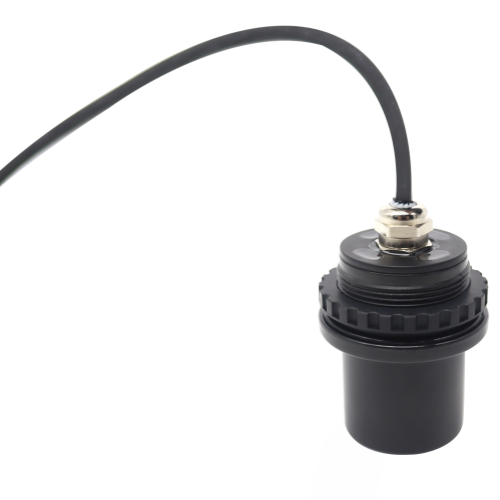
Facing such deep-sea conditions, material selection is the first hurdle. We unhesitatingly recommended the M36 sensor made of 316 stainless steel.
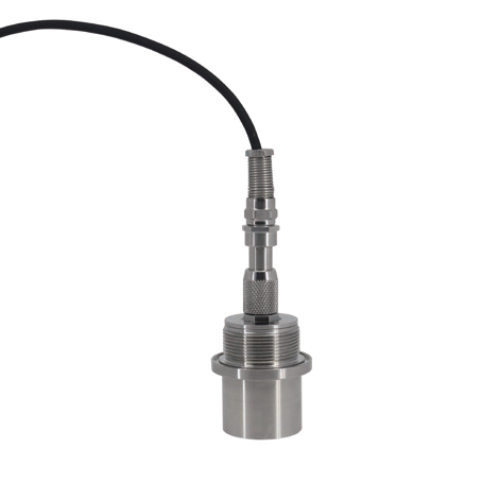
Why not use ordinary 304 stainless steel or a plastic housing? Because in seawater, ordinary materials are easily corroded by salt spray and electrolytes. 316 stainless steel contains molybdenum, offering extremely strong corrosion resistance. Especially in chloride environments (like seawater), it forms a dense passive film that protects the sensor from rust and corrosion.
For scenarios like offshore platforms, where maintenance costs are extremely high and the consequences of failure are severe, durability translates to cost savings, and reliability is a lifeline.
The "Intricate Craftsmanship" within the 20-Meter Range
Although it must withstand the pressure of 600 meters, functionally, the customer only requires precise ranging within 20 meters.
This is not overkill, but rather a pursuit of ultimate stability. It's like a truck with a capacity of several tens of tons that normally drives smoothly on city streets, yet possesses enough reserve capability to handle any sudden bumps. When our sensor operates in shallow waters, the signal is more stable, and the echo processing is more refined, without data drift caused by changes in water pressure.
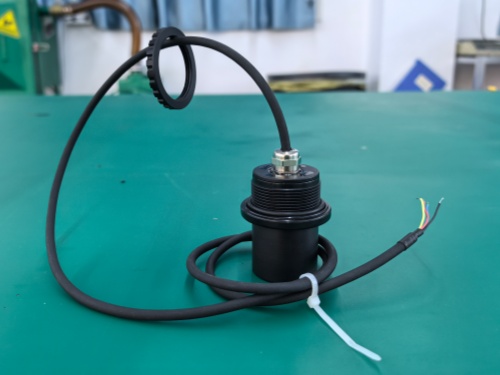
The biggest fear in deep-water applications is leakage. We have designed a multi-layered sealing structure for this sensor. For the cable entry method, considering the 600-meter depth, we recommend direct cable entry with a custom-length armored cable, avoiding underwater connectors—because connectors are more prone to seal failure in deep water. The connection between the cable and the sensor housing undergoes rigorous pressure testing to ensure zero water ingress at the rated depth.
Practical Installation Recommendations for Offshore Platforms
For actual installation, here are a few suggestions for your reference:
The sensor's emitting surface should face the target to be measured, avoiding obstruction by platform structural components.
Keep it as far away as possible from strong noise sources like propellers and pumps to reduce acoustic interference.
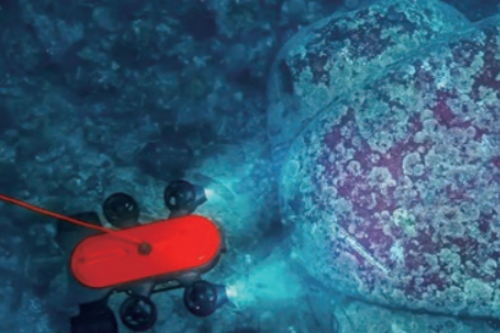
If it is permanently submerged in seawater, we recommend periodically checking the transducer surface for marine biofouling (e.g., barnacles, oysters), which can be gently cleaned off to restore optimal performance.
As an industrial sensor manufacturer, we are deeply aware of the responsibility we bear. Every solder joint and every material choice concerns the safety of our customers' property. Dayu Electronics is willing to be your silent guardian in the deep sea, using solid craftsmanship to help your equipment go further and dive deeper.