
Dayu Electronic Ultrasonic Flowmeter Application Case in Wuhan Municipal Wastewater Treatment Pipeline
With the acceleration of urbanization, urban sewage discharge has been increasing year by year. Municipal wastewater treatment systems face challenges such as pipeline leakage, low scheduling efficiency, and inaccurate drainage monitoring data. The existing sewage monitoring equipment in the urban area of Wuhan suffers from issues like susceptibility to corrosion and scaling of contact sensors, large measurement errors in partially filled pipes, and high operation and maintenance costs, failing to meet the demands of refined management. Local municipal management authorities urgently need a stable and reliable flow monitoring solution to support precise measurement at wastewater treatment plants, early warning of pipeline blockages, and environmental discharge supervision.
1. Project Background
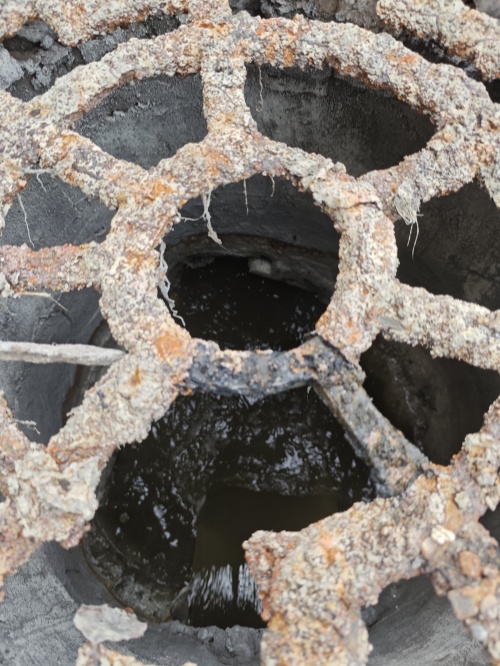
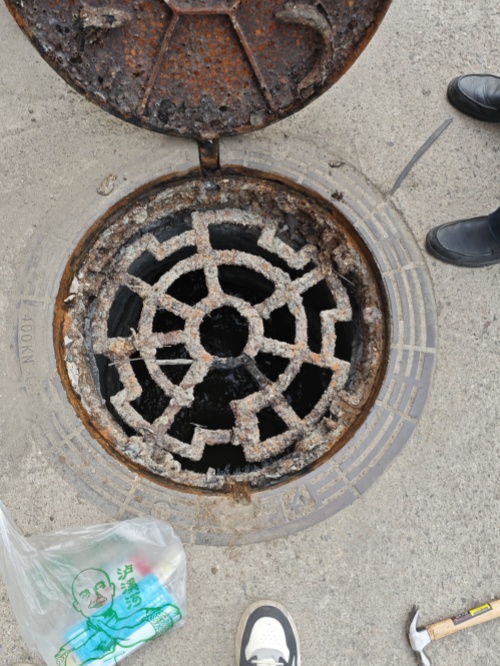
Municipal sewage pipelines generally face difficulties such as partially filled flow, media containing suspended solids and corrosive impurities, humid underground environments, and lack of external power supply. Traditional monitoring equipment is prone to damage, experiences significant data drift, and requires frequent maintenance, making it difficult to meet the requirements for long-term stable operation.
To address these issues, the municipal department of Wuhan introduced the Dayu Sewer Ultrasonic Doppler Flowmeter, building a sewage pipeline monitoring system that integrates real-time monitoring, wireless transmission, intelligent alarms, and data management, comprehensively enhancing sewage treatment and pipeline operation and maintenance efficiency.
2. Product Selection and Technical Parameters
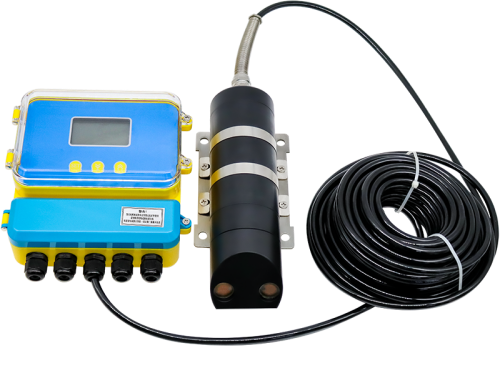
Considering the actual conditions of the DN800 concrete sewage pipeline, partially filled flow, media containing impurities, and lack of external power supply, the project selected the Dayu Ultrasonic Doppler Flowmeter as the core monitoring device, equipped with an IP68 ultrasonic level meter, solar power supply system, and RTU data transmission terminal, achieving reliable 24/7 unattended operation.
Core Technical Parameters
Measurement Principle: Doppler shift principle, calculating flow velocity through the frequency difference of reflected ultrasonic signals, combined with level data to convert to flow rate.
Measurement Range: Flow velocity 0.03 m/s to 5 m/s / -5 m/s to -0.03 m/s; Level 0.02 to 10 m; Flow rate 1 L/s to 99,999,999 m³/h
Measurement Accuracy: Flow velocity accuracy ±1% to ±3%
Protection Rating: IP68 waterproof and corrosion-resistant, suitable for humid, corrosive underground environments
Power Supply: 12V solar power, with 7-day battery life during overcast/rainy conditions
Data Transmission: 4G wireless transmission, real-time upload of instantaneous flow, cumulative flow, flow velocity, and level to the management platform
3. Project Implementation Process
1. Site Survey: Two manholes were selected as monitoring points, ensuring 5 times the pipe diameter of straight pipe sections both upstream and downstream, avoiding elbows, valves, and other flow-disturbing structures to ensure stable and accurate measurement.
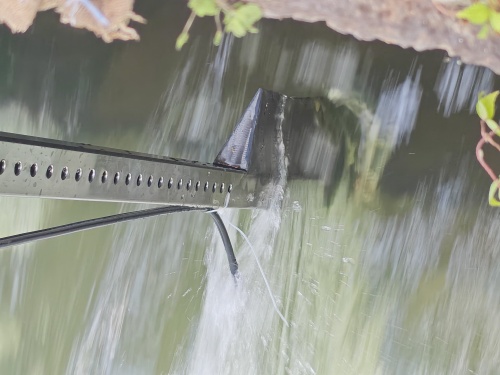
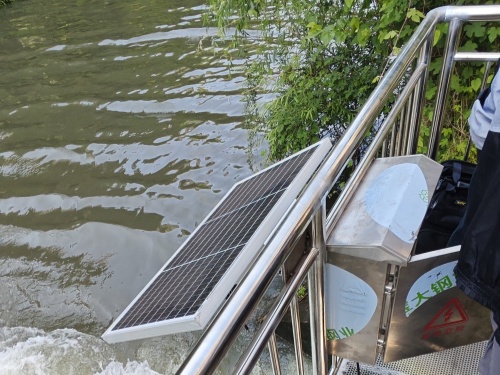
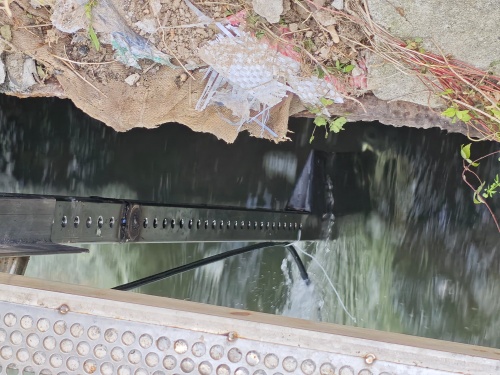
2. Equipment Installation: The flowmeter transducers were fixed to the inner wall at the bottom of the pipe, the level meter was installed at the top of the manhole, and the solar panel was erected in the roadside green belt. The entire system was installed and commissioned within one working day, without requiring service shutdown.
3. System Integration: Data was connected to the municipal sewage management platform via the RTU terminal, supporting real-time viewing on PC and mobile devices, with automatic alarms for abnormal flow and level exceedances.
4. Calibration and Verification: On-site calibration using the volumetric method, with measurement errors controlled within 3%, fully meeting municipal sewage measurement accuracy requirements.
4. Project Application Results
1. Core Business Value
Significantly Improved Measurement Accuracy: Solved the problems of corrosion, scaling, and drift in traditional contact flowmeters, achieving measurement accuracy of over 99% in partially filled scenarios, providing reliable evidence for wastewater treatment plant accounting and enterprise discharge fee collection.
Substantial Reduction in O&M Costs: The non-contact design has no vulnerable parts, reducing annual maintenance volume by 80% compared to original equipment, eliminating the need for frequent sensor cleaning.
More Efficient Pipeline Blockage Early Warning: Real-time monitoring of flow velocity changes allows detection of anomalies at the early stage of blockage, reducing response time from 24 hours to 15 minutes. In 2026, blockage and overflow incidents in the area decreased by 72% year-on-year.
Strong Support for Environmental Supervision: Data is automatically stored and traceable, meeting the discharge supervision requirements of environmental authorities, and providing precise decision-making data for pollution control during combined sewer overflows in the rainy season.
2. Extended Application Value
This solution has been replicated and promoted at dozens of sewage monitoring points across Wuhan, covering main pipelines, branch pipelines, and discharge outlets of key enterprises, establishing a citywide unified sewage flow monitoring network, assisting municipal authorities in achieving dynamic scheduling and intelligent management of pipeline network operations.
5. Conclusion
The Dayu Ultrasonic Doppler Flowmeter, with its advantages of non-contact measurement, suitability for partially filled scenarios, easy installation, corrosion resistance, durability, and simple maintenance, perfectly adapts to the complex operating environment of municipal sewage pipelines.
The successful implementation of this project in Wuhan provides a replicable and promotable mature solution for the construction of sewage pipeline monitoring systems in similar cities across the country, significantly enhancing the level of refined and intelligent municipal sewage management, and contributing to the improvement of urban water environment governance.