
Dayu Electronics Doppler Flowmeter in Xi'an International Trade and Logistics Park Sewage Pipe Network Monitoring Retrofit Solution
In April 2026, our technical team visited Xi'an International Trade and Logistics Park to provide on-site guidance on abnormal flow monitoring in the sewage pipe network. Through diagnosis and optimization of the original installation scheme, we successfully resolved the issue where the open-channel flowmeter paired with a Parshall flume was submerged in the inspection well and unable to measure accurately, providing replicable field experience for online monitoring of urban sewage pipe networks.
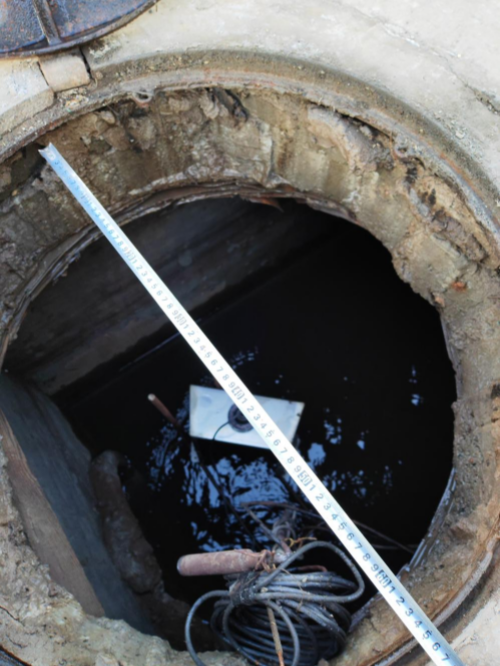
1. Project Background and Original Problem
Ultrasonic Doppler flowmeters are widely used for real-time monitoring of water level, flow velocity, and flow rate in urban rivers, main agricultural irrigation canals, and urban sewage/stormwater pipe networks. They are core equipment for water utility operations and environmental supervision.
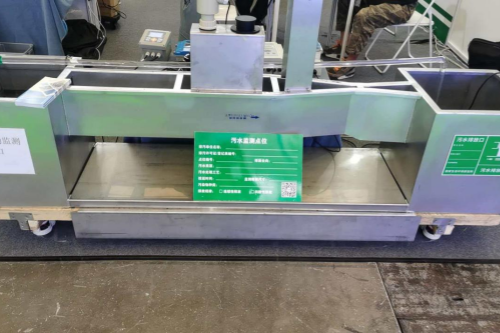
The monitoring point at Xi'an International Trade and Logistics Park is a DN600 circular sewage discharge pipe with a typical water level of approximately 500 mm. The original installation used an open-channel flowmeter + Parshall flume installed at the 600 mm diameter inspection well opening. As the water level rose, the Parshall flume channel was completely submerged, preventing the flowmeter from accurately measuring instantaneous and cumulative flow rates, rendering the monitoring data invalid and impacting sewage discharge control and data reporting.
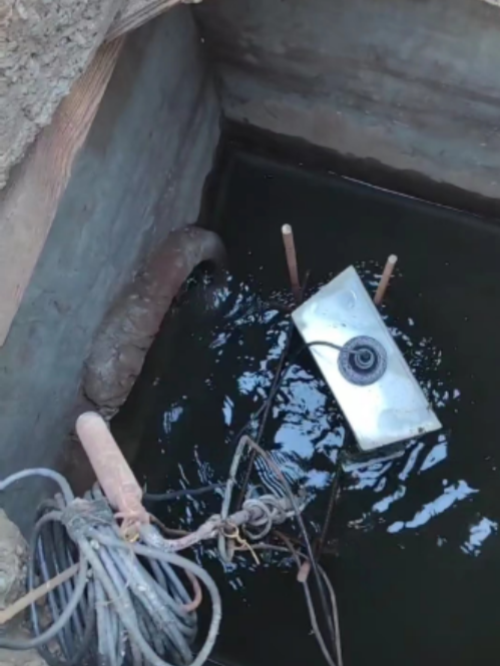
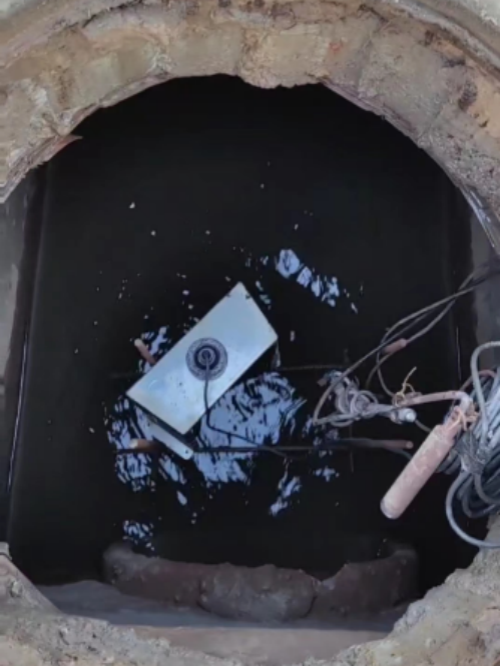
2. Optimization Solution: Application of the First-Generation Doppler Flowmeter
Based on the on-site pipe specifications, water level conditions, and application scenarios, we recommended the first-generation ultrasonic Doppler flowmeter for the retrofit, designed to adapt to both partial-fill and full-pipe monitoring requirements.
Core Product Advantages
1. Dual-Principle Precision Monitoring: Utilizes ultrasonic velocity measurement and pressure-based water level measurement, calculating instantaneous and cumulative flow rates in real time via algorithms, ensuring low data error and high stability.
2. Strong Application Adaptability: Eliminates the need for open-channel construction and Parshall flume installation, saving construction time and space, and fits circular pipes above DN400.
3. Reliable Partial-Fill Measurement: Operates normally with a minimum water level of 5 cm above the sensor, without requiring full-pipe conditions, perfectly matching the typical operating state of sewage pipe networks. 4. Lower Maintenance Costs: Simple structure and easy installation reduce the frequency and workload of sediment cleaning and device debugging.
3. Key On-Site Installation Specifications (Technical Points)
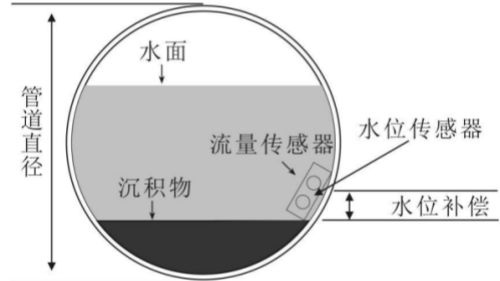
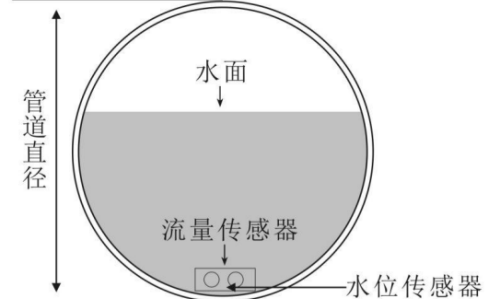
To ensure stable monitoring and extend equipment lifespan, the technical team defined four key installation requirements on site: 1. Avoid Sediment – When there is sludge or sediment in the pipe, install the sensor above the sediment layer to prevent coverage from affecting measurement; if no sediment is present, it can be fixed directly at the bottom of the pipe with a dedicated base to withstand water flow impact.
2. Select a Stable Flow Section – Maintain a straight pipe section of 10 times the pipe inner diameter upstream and 5 times downstream of the installation point to avoid flow turbulence causing data fluctuation or underestimation; install a grating upstream to filter floating debris, positioned at least 10 pipe diameters away from the sensor.
3. Anti-Interference Installation Technique – In environments with high debris or floating matter, the flow velocity sensor can be installed facing away from the water flow direction (coefficient set to -1), reducing the probability of probe coverage and minimizing maintenance.
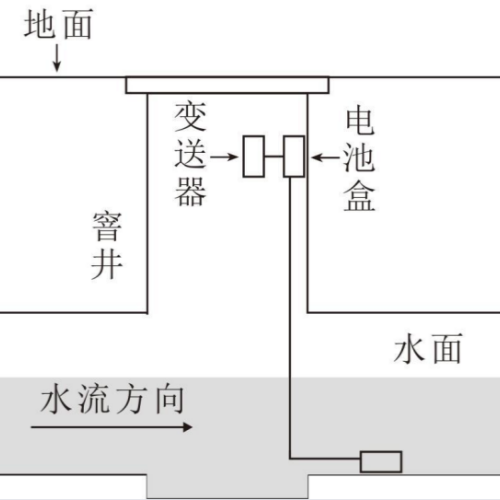
4. Bracket and Cable Protection – Use corrosion-resistant materials for the bracket to match water flow impact; sensor cables should be routed through protective conduits, with flexible conduit before metal conduit, and the internal air tube must be placed inside the transmitter to ensure proper pressure compensation.
4. Project Summary
This on-site retrofit at Xi'an International Trade and Logistics Park quickly resolved the issue of the traditional open-channel solution being easily submerged in inspection wells and failing to monitor, validating the practicality and reliability of our ultrasonic Doppler flowmeter in urban sewage pipe network applications. Looking ahead, we will continue to deepen our focus on the water monitoring field, providing one-stop flow monitoring solutions for urban pipe networks, river channels, irrigation districts, and industrial discharge scenarios with accurate measurement, convenient installation, and stable maintenance, supporting the development of smart water utilities.