
Dayu Electronics: How to Choose the Frequency of a Single-Beam Fish Finder Transducer? Dual-Frequency Adaptation is More Efficient
During the selection process of a single-beam fish finder transducer, "which frequencies to choose" is the most common question raised by customers and fishing enthusiasts. In fact, for most conventional fishing scenarios, there is no need for complex multi-frequency combinations; choosing two well-matched frequencies is sufficient to meet various fishing needs, simplifying operation while enabling accurate fish detection. This is also the efficient selection solution recommended by Dayu Electronics based on years of underwater acoustic technology experience.
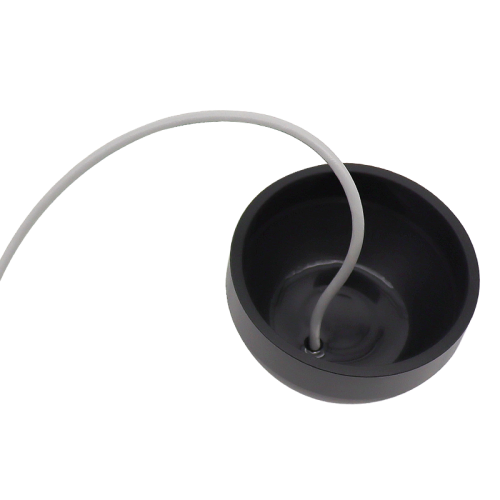
For general fishing scenarios, a dual-frequency configuration is preferred for single-beam fish finder transducers, with 200kHz recommended for high frequency and 83kHz for low frequency. This combination has been validated by long-term market use and is suitable for most recreational fishing and basic fish-finding needs. It complies with relevant standards for fish finder operating frequencies, balancing practicality and stability, and allows flexible switching across different water depth scenarios without extra cost.

The core logic of frequency selection lies in adapting to different water depth environments, and this is also an operational tip that fishing enthusiasts can quickly master: when fishing in shallow water, use the 200kHz high frequency for detection, which offers strong directivity and high resolution, accurately capturing fish school positions and underwater details in shallow areas while avoiding signal attenuation caused by excessively high frequencies. This is suitable for near-shore shallow water fishing such as bank fishing and lure fishing. When the water is deep, switch to the 83kHz low frequency for detection; low-frequency signals attenuate slowly in water and travel longer distances, typically covering more than twice the range of the 200kHz high frequency. This easily covers deep water areas, clearly presenting underwater fish distribution and bottom topography, and is suitable for sea fishing and recreational fishing in deep water areas.
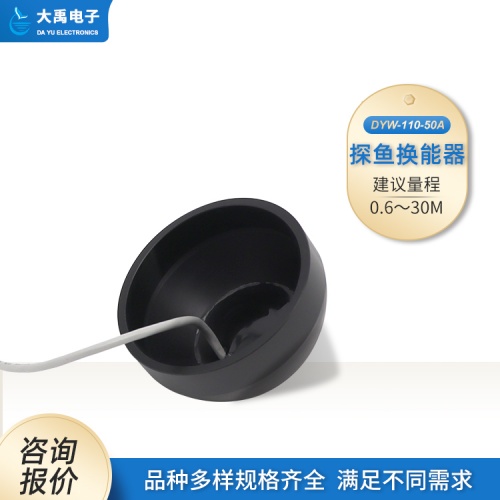
Why is the 83kHz and 200kHz dual-frequency combination preferred? The key lies in its wide adaptability and ease of operation—no professional technical knowledge is required. Fishing enthusiasts can quickly switch based on real-time water depth, balancing accuracy and usability. Compared with a single frequency, the dual-frequency combination can handle complex fishing environments, whether in shallow near-shore areas or deep water, ensuring stable detection. Compared with multi-frequency configurations, the dual-frequency combination is more cost-effective, avoids unnecessary parameter redundancy, and aligns with the core needs of general recreational fishing.
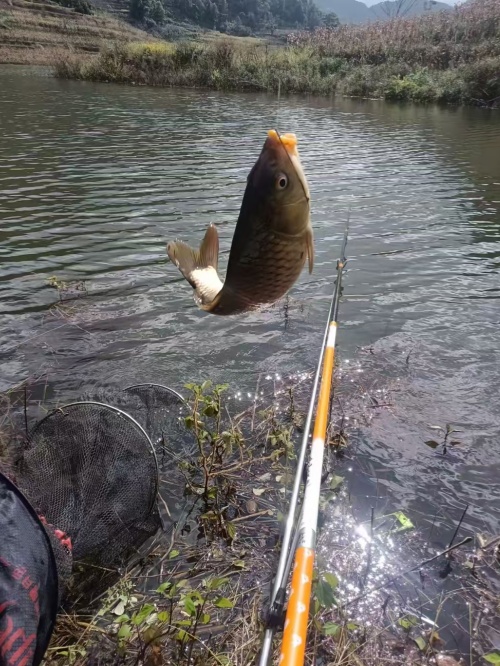
Dayu Electronics is deeply committed to the R&D of single-beam fish finder transducers, strictly following relevant technical specifications and optimizing the 83kHz and 200kHz dual-frequency adaptation performance to ensure stable signal transmission and accurate detection. This not only meets the operational needs of ordinary fishing enthusiasts but also provides fish finder manufacturers with high-adaptability core component solutions. Always driven by scenario-based needs, we make frequency selection for single-beam fish finder transducers simpler, allowing every fishing trip to locate fish accurately and bring a rewarding catch.