
Dayu Electronics: Feasibility and Key Considerations for Long-Distance Measurement with Ultrasonic Integrated Level Transmitters
In scenarios such as large storage tanks, deep wells, reservoirs, and industrial basins, achieving stable and continuous monitoring of liquid levels at depths of tens of meters is a critical requirement for process control and safety management. In response to the frequently asked question of whether an ultrasonic integrated level transmitter can achieve a 50-meter range and operate on 220VAC power, Dayu Electronics gives a clear answer: absolutely. Our ultrasonic level transmitters are technically designed to support customized ranges up to 50 meters and can be adapted to the common 220VAC power supply found in industrial sites, meeting the demands of long-distance, high-reliability measurement.
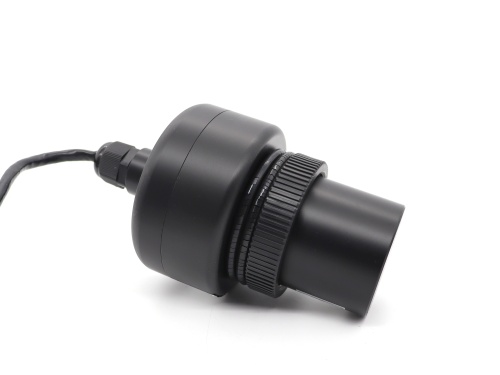
However, achieving stable and reliable 50-meter long-distance measurement depends not only on the nominal range of the instrument itself but also on careful evaluation and planning of the application site. The following key points are the core factors that must be considered in advance to ensure project success.
Primary Consideration: Sound Wave Coverage and Site Environment
The significant extension of the measurement range means that the transmitting energy and beam angle characteristics of the ultrasonic transducer must be specially optimized. Consequently, the beam coverage area will increase considerably at longer distances. During the design phase, it is essential to carefully assess whether there are supports, ladders, pipelines, or other internal components in the measurement path, especially near the tank wall or well wall. Any fixed obstacle within the sound cone can generate strong false echoes that are not reflected from the liquid surface, seriously interfering with or even completely masking the true level signal, leading to measurement failure. Therefore, a clear sound propagation path is a prerequisite for long-distance measurement.
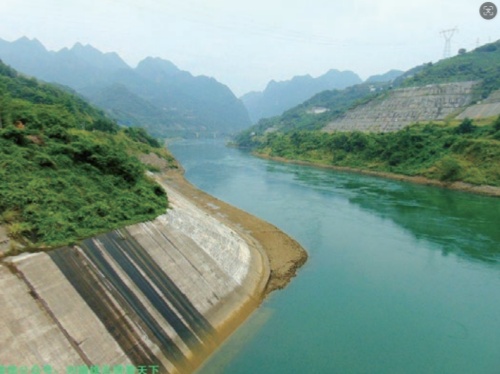
Next: Transducer Size and Installation Conditions
To efficiently drive sound waves to travel back and forth through a 50-meter air medium and ensure sufficient echo signal strength, the transducer size for this range will inevitably increase significantly. For example, the mounting thread specification may reach M108 * 2 or larger. This requires that the equipment mounting interface (such as a flange or threaded base) have sufficient mechanical strength and a matching diameter. During selection and installation design, it is necessary to verify in advance and reserve the corresponding installation space and structural strength to ensure that the large transducer can be firmly and vertically installed.
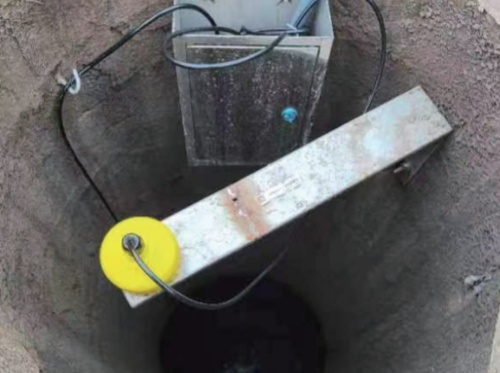
Finally: Balancing Performance and Cost
Compared with conventional-range products, achieving a stable 50-meter measurement range involves higher-performance piezoelectric ceramics, more sophisticated acoustic design, and more complex signal processing algorithms, which correspondingly increase material and manufacturing costs. Therefore, its market price is typically significantly higher than that of conventional-range products. Customers should have reasonable expectations when planning budgets, viewing it as a professional investment capable of solving specific long-distance measurement challenges.
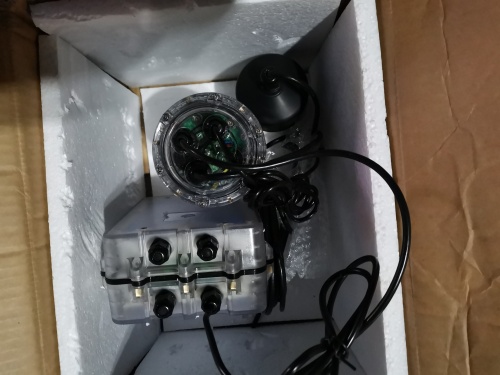
Dayu Electronics has deep technical expertise in the field of ultrasonic level measurement. We not only provide high-performance products that meet the 50-meter range requirement, but also offer professional pre-project site assessment support and installation guidance. We recommend that you fully communicate the site environment details with our technical team during the early stages of the project. We will assist you in completing a comprehensive feasibility analysis to ensure the reliable implementation of your large-scale level monitoring project.