
Dayu Electronics: Three Major Challenges of Externally Mounted Level Gauges on Cast Iron Tanks
Why is an externally mounted level gauge unsuitable? Recently, our company received a special measurement request from a customer: to achieve continuous level monitoring on a 2m x 2m sealed cast iron tank. The tank wall thickness is 4mm, at normal temperature and pressure, but there is slight moisture vapor, a dusty environment, and sludge deposition at the bottom. The customer initially wanted to use an externally mounted level gauge to avoid the need for drilling. However, after on-site condition analysis and solution comparison by the Dayu Electronics technical team, we ultimately recommended an 80G radar level gauge, suggesting top-mounted installation. The customer is currently evaluating the options.
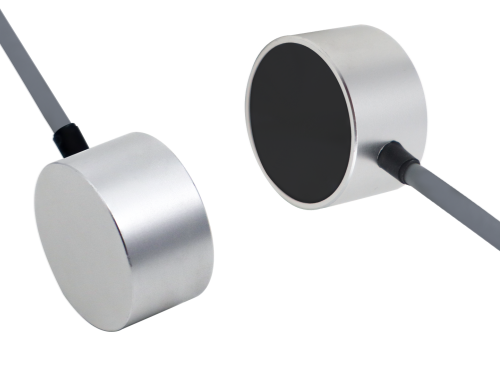
Why does an externally mounted level gauge face challenges in such conditions? Externally mounted ultrasonic level sensors rely on transducers to emit ultrasonic waves that penetrate the container wall and form echoes at the liquid surface. For cast iron tanks, the internal grain structure is relatively coarse, causing strong scattering and attenuation of ultrasonic signals. Even with a wall thickness of only 4mm, this may still lead to insufficient penetration energy and unstable echoes. In addition, moisture vapor and floating dust inside the tank—moisture can condense on the inner wall, altering the acoustic impedance coupling conditions; dust particles can absorb or scatter sound waves, further reducing the signal-to-noise ratio. More critically, the sludge layer at the bottom is soft and has a blurred interface, making it easy for ultrasonic waves to generate chaotic reflections between the sludge and the liquid, making it difficult to accurately lock onto the true liquid level. These multiple factors combine, making the externally mounted solution high-risk in terms of reliability in this scenario.
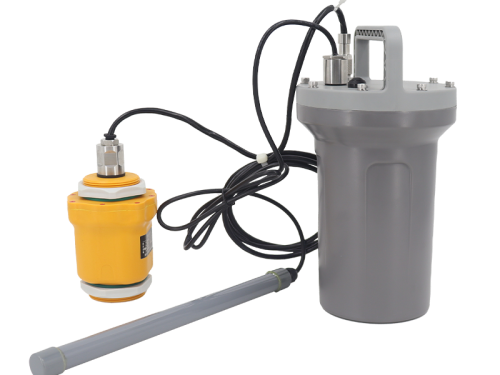
In contrast, the 80G millimeter-wave radar level gauge uses Frequency Modulated Continuous Wave (FMCW) technology, operating at a high frequency of 80GHz. It features a very narrow beam angle (typically ≤3°), concentrated energy, and strong penetrating power. Electromagnetic waves are essentially unaffected by moisture vapor, dust, or light liquid mist, and do not depend at all on tank material or wall thickness—only requiring a standard flange or threaded mounting hole at the top of the tank. The radar antenna can be installed to emit signals vertically downward, directly reaching the liquid surface. Even with slight surface agitation or sludge at the bottom, the radar echo can accurately lock onto the true liquid-air interface. The sludge layer has minimal impact on electromagnetic wave reflection, and the radar instrument can automatically filter out false bottom echoes via advanced algorithms. Furthermore, given the normal temperature, normal pressure, and absence of corrosive gases inside the cast iron tank, the PTFE or PP antenna of the 80G radar is fully suitable, and no subsequent maintenance is required after installation.
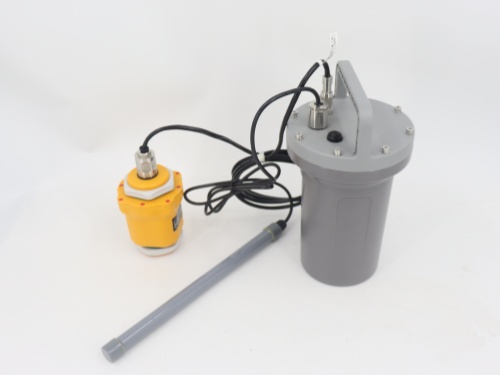
Currently, Dayu Electronics has submitted a detailed 80G radar selection plan and drilling precautions to the customer, who is now weighing the trade-off between drilling costs and long-term measurement reliability. We will continue to follow up and are ready to provide on-site commissioning support. If you also encounter level measurement challenges with cast iron, fiberglass, or irregularly shaped tanks, please feel free to call our technical hotline or visit our website to leave a message.