
Dayu Electronics Split-Type Ultrasonic Level Difference Transmitter Four-Wire Signal Transmission Specification
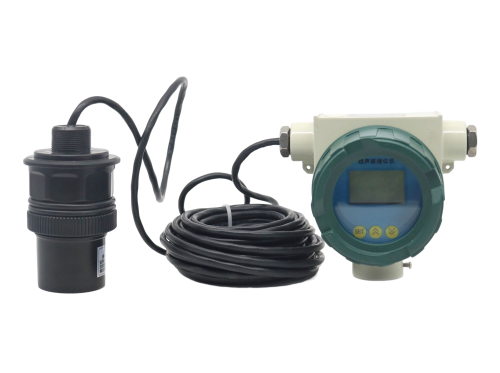
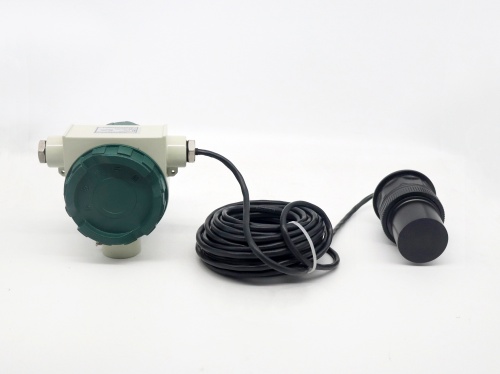
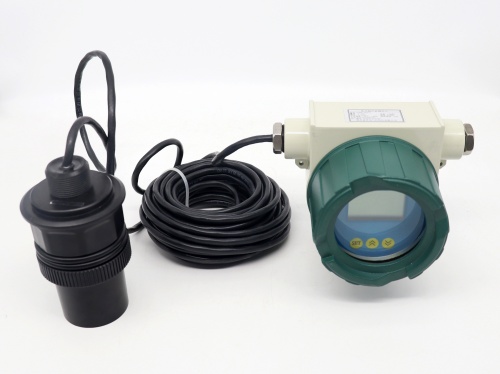
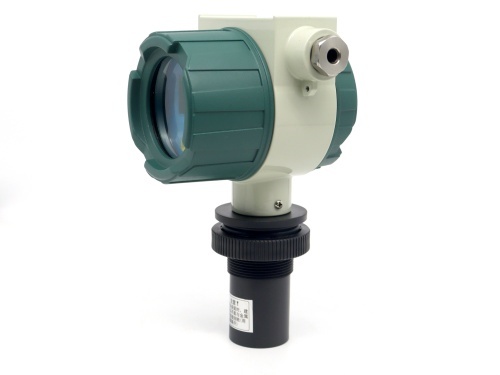
In applications such as wastewater treatment, pump station collection wells, and channel flow monitoring, the split-type ultrasonic level difference transmitter is widely used for level difference measurement thanks to its flexible installation that separates the probe from the instrument. Its 4-20mA analog output is responsible for transmitting the differential pressure signal over long distances to the control center. How far can the signal travel? How should the wire gauge be selected? Dayu Electronics, based on measured data, provides you with clear guidance for four-wire connection mode.
Ideal Condition Assumptions
The transmission distance data provided in this article is based on an ideal environment without electromagnetic interference, specifically meeting the following conditions:
The power supply itself generates no electromagnetic interference;
No external interference couples onto the signal output lines;
No radiated electromagnetic interference sources exist in the surrounding air.
Under the above conditions, the transmission distance of the four-wire 4-20mA current loop is primarily limited by the line resistance. Split-type ultrasonic level difference transmitters typically use an independent power supply, which provides stronger loop drive capability than two-wire systems, thus enabling longer transmission distances with the same wire gauge.
Four-Wire 4-20mA Transmission Distance vs. Shielded Cable Specifications
| Transmission Distance | Recommended Shielded Cable Specification |
| Up to 100m | 2×0.5 mm² |
| Up to 250m | 2×1.0 mm² |
| Up to 400m | 2×1.5 mm² |
| Up to 600m | 2×2.5 mm² |
The above data has been verified through actual testing. When the corresponding wire gauge is selected, signal attenuation can be kept within the allowable range, and the 4-20mA output remains stable without drift, meeting the precision requirements for level difference signals in industrial environments.
For transmission distances exceeding 600 meters, our company has not yet completed systematic experimental data collection. In theory, the distance can be further extended by the following methods:
- Use a shielded cable with a larger cross-sectional area (e.g., 2×4.0 mm²), but cost and installation difficulty must be considered;
- Add an isolated repeater or signal converter (4-20mA to fiber optic or wireless) in the loop;
- Switch to RS485 digital communication (Modbus RTU), which theoretically supports transmission distances up to 1200 meters.
We recommend that for long-distance transmission scenarios, users prioritize connecting the RS485 interface of the split-type ultrasonic level difference transmitter to the fieldbus, or install a data acquisition terminal nearby, and then upload data via the network.
Field Wiring Precautions: Even with the recommended wire gauge, to ensure signal reliability, the following should be noted:
- The 4-20mA signal cable should be routed separately from power cables (especially variable frequency drive output cables) with a separation distance of no less than 30 cm;
- The shield should be grounded at one end only (typically at the control room side) to avoid ground loop interference;
- Avoid intermediate splices in the cable; if unavoidable, ensure the shield at the splice is continuously and reliably connected;
- If strong electromagnetic interference exists on site (e.g., welding machines, high-power radio stations), the actual stable transmission distance may be shorter than the values in the table; it is recommended to step down one level as a margin.
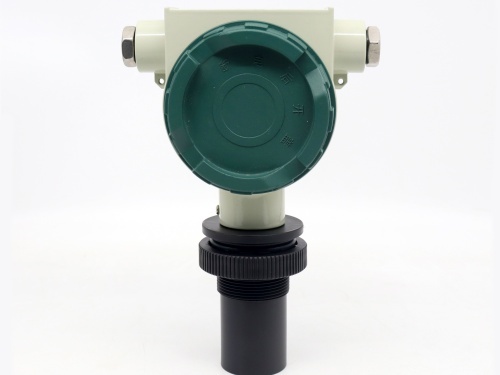
The Dayu Electronics split-type ultrasonic level difference transmitter uses a four-wire design, with separate power and signal lines, providing strong output drive capability. If you require a solution for analog signal transmission over distances exceeding 600 meters, or if your on-site electromagnetic environment is complex, please feel free to contact our technical team. We will provide customized recommendations based on your actual working conditions.