
Dayu Electronics: Core Principles of Signal Transmission in Ultrasonic Underwater Communication Sensors
In today's world where land-based communications are highly advanced, information transmission in underwater environments still faces unique challenges. Radio waves and light waves attenuate extremely quickly in water, severely limiting their transmission distance. Against this backdrop, underwater acoustic communication has become the core technology connecting the underwater world. It cleverly uses sound waves as information carriers, leveraging the water medium to achieve reliable data transmission, providing key support for applications such as ocean exploration, environmental monitoring, and collaborative underwater equipment operations.
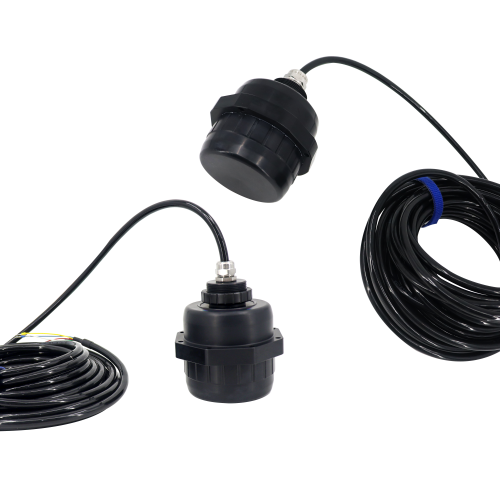
So how exactly does underwater acoustic communication work? The process can be summarized as the core chain of "electro-acoustic conversion" and "acoustic-electric conversion."
The entire communication process begins with the digital processing of information. Whether it is commands, sensor data, or other information, it is first converted by an electrical transmitter into standard electrical signals. Subsequently, an encoder performs digital encoding and modulation on these signals, transforming them into a sequence of digital signals that are more resistant to interference and better suited for transmission through the complex underwater acoustic channel. This is the first step in ensuring information accuracy.
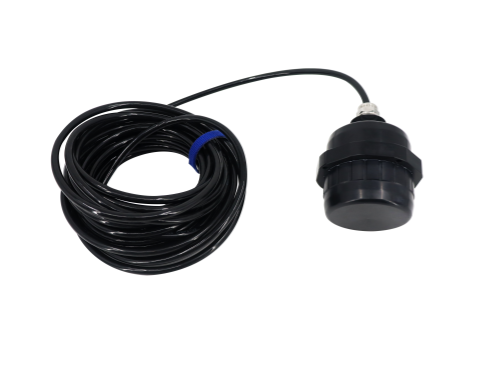
Next comes the crucial conversion of energy forms. The electrical signals carrying information are transmitted to the underwater acoustic transducer. The transducer serves as the "underwater loudspeaker" and "ear" of the underwater acoustic communication system, with its core function being the efficient bidirectional conversion between electrical and acoustic signals. At the transmitting end, the transducer converts input electrical energy into mechanical vibration, thereby exciting acoustic wave signals in the water that carry the original information. This process is similar to how a loudspeaker produces sound, but the transducer is specially designed for high-intensity, high-efficiency operation underwater.
The generated sound waves propagate outward using water as the medium. Although sound waves travel much slower in water than electromagnetic waves, their attenuation is relatively small, especially demonstrating irreplaceable advantages in long-distance transmission. The acoustic signals traverse the water body and eventually reach the transducer at the receiving end.
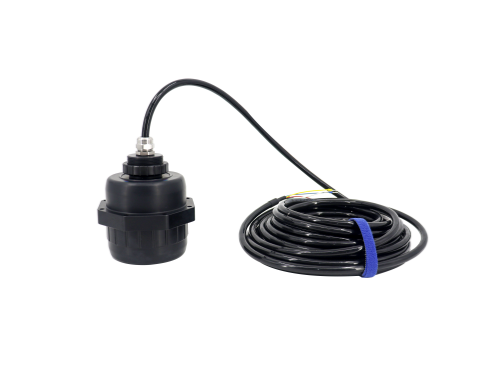
At this point, the transducer plays the role of an "ear," capturing the acoustic wave vibrations in the water and precisely converting them back into weak electrical signals. The receiver then performs a series of processes such as amplification, filtering, and decoding, ultimately restoring the original information from the transmitting end, thereby completing a full underwater communication cycle.
In summary, underwater acoustic communication builds a bridge for underwater information transmission through the precise sequence of "information encoding - electro-acoustic conversion - acoustic wave propagation - acoustic-electric conversion - information decoding." Dayu Electronics has deep expertise in this field, and its ultrasonic underwater communication sensors are deeply optimized based on this reliable principle, committed to providing users with stable and efficient underwater wireless data link solutions, empowering various underwater detection and operation tasks.