
Dayu Electronics: Heat Dissipation Differences and Duty Cycle Requirements for Continuous Transducer Emission in Different Media
In the application development of Dayu Electronics ultrasonic transducers, users often need the transducer to operate in a cyclic mode of "transmit for a period, stop for a period." For example: transmit continuously for 5 minutes, stop for 5 minutes, then transmit for 5 minutes, and stop for 5 minutes again. So, can the transducer withstand such a working regime? Dayu Electronics provides a clear answer—yes, but the duty cycle of the transmitted waveform must be strictly controlled according to the medium.
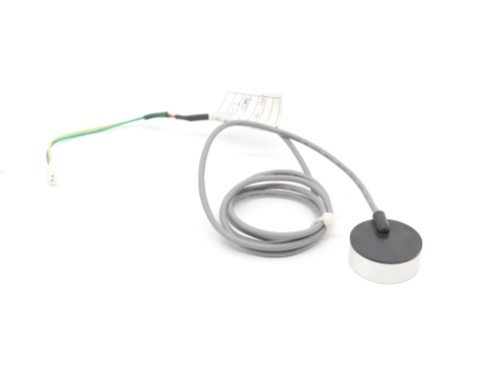
Heat Source: The Inevitable Cost of Electroacoustic Conversion
When a transducer emits ultrasonic waves, only a portion of the driving electrical power is converted into acoustic energy and radiated out; the remaining majority of the energy is dissipated as heat inside the transducer (especially in the piezoelectric ceramic and its matching layer). If the rate of heat accumulation exceeds the heat dissipation rate, the internal temperature of the transducer will continue to rise. Once it exceeds the material's tolerance limit, it can lead to performance degradation, depolarization of the piezoelectric ceramic, or even permanent damage.
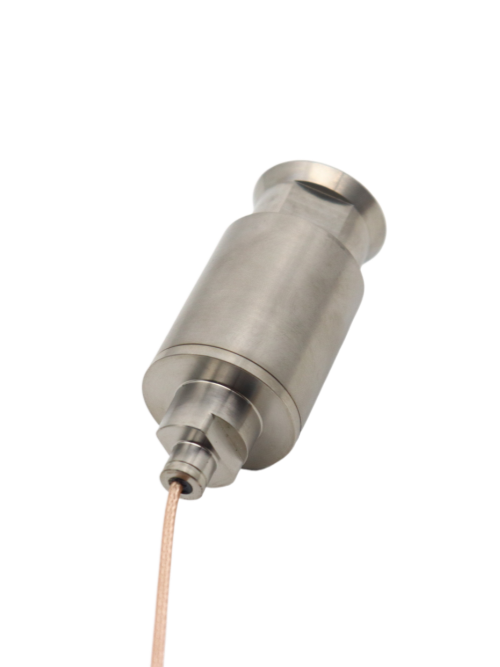
The Medium Determines Heat Dissipation Capability
Operation in air: Air is a poor conductor of heat, so the heat generated by the transducer is difficult to dissipate effectively through air convection or conduction. Therefore, when operating in a "transmit 5 minutes, stop 5 minutes" cycle, the duty cycle of the transmitted waveform must be controlled within 5% (i.e., the total effective time of the transmitted pulses must not exceed 5% of the cycle period) to ensure a balance between heat accumulation and dissipation, avoiding damage.
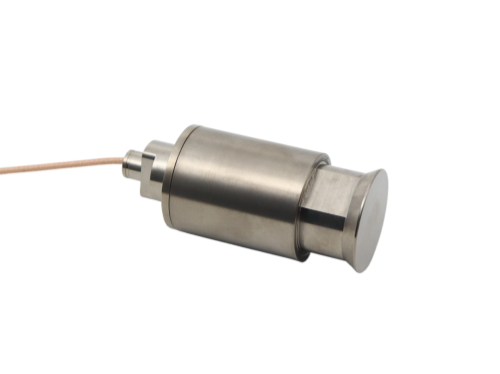
Operation in liquid: The thermal conductivity of water or other liquids is much higher than that of air. When the transducer is immersed in a liquid, the housing is in direct contact with the liquid, significantly improving heat dissipation efficiency. Under the same "transmit 5 minutes, stop 5 minutes" cycle, the allowable duty cycle can be relaxed to within 10%.
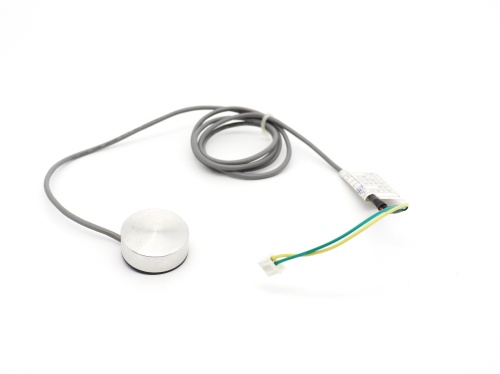
Users need to calculate the duty cycle based on the actual transmitted pulse width and repetition frequency. For example, in air, if each transmitted pulse width is 100μs and the repetition frequency is 100Hz, then the duty cycle is 1% (within the safe range). Dayu Electronics recommends reserving sufficient heat dissipation margin under continuous intermittent transmission conditions. If necessary, active cooling can be added or the duration of each continuous transmission can be reduced. For special high-duty-cycle requirements, please contact us to customize transducers with enhanced heat dissipation structures.