
Dayu Electronics: Key to Measurement Stability – Proper Handling of the Transducer Shield Wire in Echo Sounders
In professional fields such as hydrological surveys and underwater topographic mapping, the stability and reliability of ultrasonic echo sounder data are critical. As the Dayu Electronics technical support team, we frequently receive inquiries about equipment installation. Among these, the connection of the transducer cable—especially the handling of the shield wire—is a technical detail that draws significant attention and has far-reaching implications. Many users, as mentioned in the question, have carefully connected the signal positive and negative wires according to the manual, but are uncertain about the shield wire: is it acceptable to leave it unconnected?
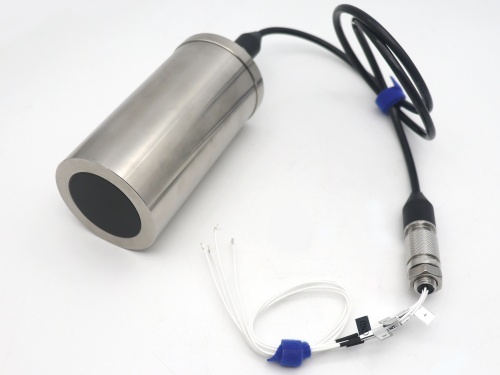
First, let us provide a clear answer to the core question: in most conventional measurement environments, strictly connecting the signal wires by polarity while leaving the shield wire (typically a braided mesh or aluminum foil layer) unconnected may not have a significant impact on test results, and the measurement system will generally still function. This is because the signal loop is already established, enabling the core acoustic-to-electrical conversion. However, this "functional" state is not equivalent to "optimal" or "stable" operation. Leaving the shield wire unconnected means abandoning a crucial anti-interference line of defense built into the cable design.
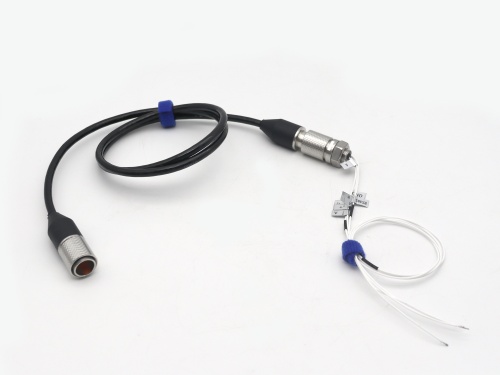
Why is it recommended to connect the negative wire and the shield wire together?
The standard recommendation from the Dayu Electronics technical team—"connect the transducer's negative wire and the shield wire together"—is based on in-depth considerations of electromagnetic compatibility (EMC) and signal integrity.
1. The transducer's negative wire (or signal ground) serves as the reference potential point for the entire signal detection circuit. Connecting it to the shield layer at the transducer end establishes a stable, clean local reference plane for the signal. This helps reduce fluctuations in the signal reference caused by drift or differences in reference potential.
2. Echo sounders often operate in complex field environments where there may be various electromagnetic noise sources such as variable-frequency drives, radios, and large motors. The primary function of the shield layer is to absorb and divert these radiated interferences, preventing them from coupling into the internal signal lines. When the shield layer is connected to the signal ground at the transducer end (single-point connection), interference currents can be conducted through the shield layer to earth (via the host's grounding system) rather than flowing into the signal circuit, thereby significantly enhancing the system's ability to suppress electromagnetic interference (EMI).
3. Suppressing common-mode interference and improving the signal-to-noise ratio: In complex underwater environments, the cable may pick up common-mode noise. Connecting the shield layer to the signal ground effectively short-circuits this noise, preventing it from converting into differential-mode signals that would affect measurements.
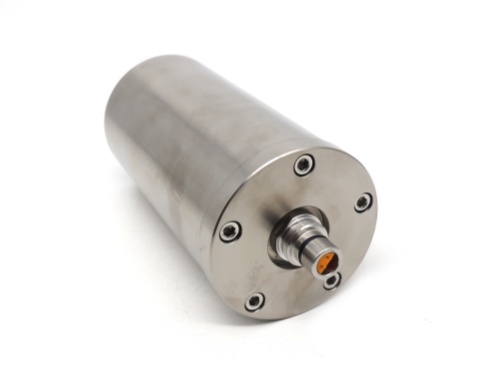
Neglecting or improperly handling the shield wire may go unnoticed in environments with weak interference, but in scenarios such as complex ship electrical systems, proximity to high-power equipment, or areas prone to lightning, it can lead to issues like random jumps in depth data, increased noise, or even intermittent failures. This complicates data filtering and post-processing, ultimately impacting overall operational efficiency and data quality.
Therefore, proper wiring practices—ensuring correct polarity for the positive and negative wires and securely connecting the shield wire to the negative wire at the transducer junction—are not superfluous steps but are essential safeguards for enabling the echo sounder system to perform as designed and maintain long-term stable operation.
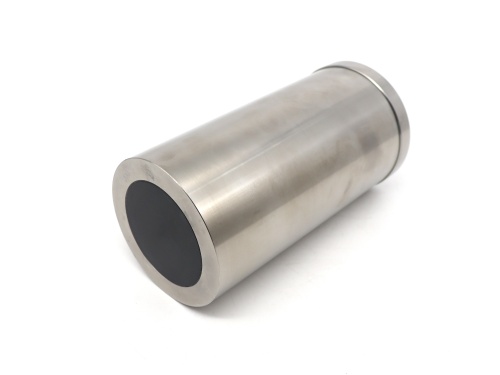
Dayu Electronics always recommends strictly adhering to all specifications, including wiring details, from the initial installation phase. Seemingly minor steps like this lay a solid foundation for obtaining reliable, stable, and accurate water depth data, effectively avoiding many on-site interference issues that are difficult to troubleshoot later, ensuring peace of mind for every measurement.