
Dayu Electronics: Differences in Production Paths for Microtube Flowmeter Transducer Manufacturing
During the development and selection of microtube flowmeter transducers, the core component, the ultrasonic transducer, if manufactured by machining versus injection molding, will its final performance be consistent? Based on in-depth process research and extensive test data, Dayu Electronics clarifies here: even using the same acoustic material (such as PPSU, PI, PFA, etc.), transducers produced by the two different manufacturing processes typically exhibit observable differences in acoustic performance, ranging roughly from 5% to 30%.
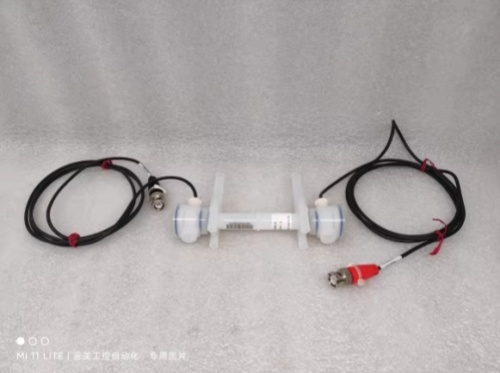
From a fundamental perspective, the performance of an ultrasonic transducer lies in its ability to efficiently convert electrical energy to acoustic energy, which greatly depends on the precision of the overall acoustic structure formed by the piezoelectric ceramic chip and its front and rear radiation blocks (or housing). Machining and injection molding are two distinctly different physical forming processes, and their influence on the material's internal microstructure is the root cause of performance differences.
1. Injection molding process: This process involves injecting molten material into a precision mold cavity under high pressure, followed by rapid cooling and solidification in a single step. Its core advantage lies in extremely high product consistency. Under ideal process parameters (temperature, pressure, cooling rate), all transducer components produced from the same mold are nearly identical in dimensions and shape. More importantly, the injection molding process determines the molecular orientation, crystallinity, and internal stress distribution pattern within the material, which are highly repeatable. This microstructural consistency directly translates into excellent batch-to-batch stability in acoustic performance (such as sound velocity, acoustic impedance, and attenuation coefficient). Parameters like center frequency and sensitivity of each transducer show minimal deviation, making this process highly suitable for large-scale, standardized production applications.
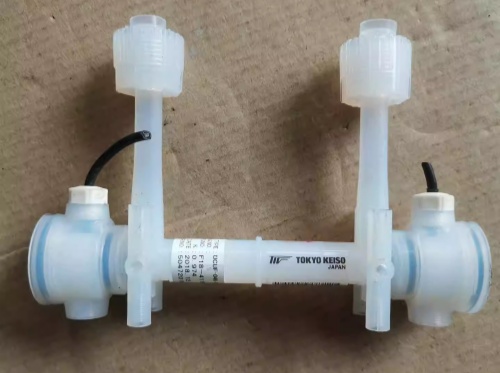
2. Machining process: This process involves subtractive shaping of solid rods or plates through turning, milling, drilling, etc. It offers high flexibility, making it suitable for small-batch, customized, or prototype development. However, this also leads to performance variability. First, the quality and uniformity of the raw material itself are variables. Raw materials from different batches—or even within the same batch—may have inherent deviations in their acoustic properties (e.g., sound velocity). Second, cutting heat, mechanical stress, and tool wear during machining inevitably introduce micro-defects or residual stresses on the component's surface and subsurface layers. These factors alter the local density and elastic modulus of the material, thereby disturbing the propagation characteristics of ultrasound within it, leading to changes in the transducer's resonant frequency, bandwidth, or transmit/receive efficiency. Products produced on different machines, by different operators, or with different machining parameters may exhibit more pronounced performance fluctuations.
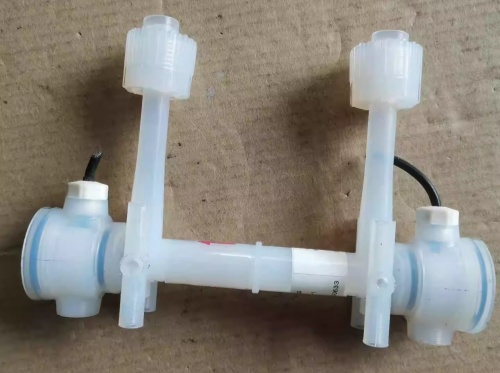
Therefore, the choice between machined or injection-molded transducers is not merely a matter of cost or lead time, but should be based on the required level of performance consistency and stability of the measurement system. For microtube flowmeter projects that demand ultimate measurement repeatability and require large-scale deployment, injection-molded transducers, with their inherent high consistency, are a more reliable choice, ensuring that every flowmeter has nearly identical measurement "hearing". For small-batch prototyping, special-size customization, or R&D testing stages, machining offers irreplaceable flexibility and rapid response capability, where performance differences must be controlled through rigorous post-production screening and matching.
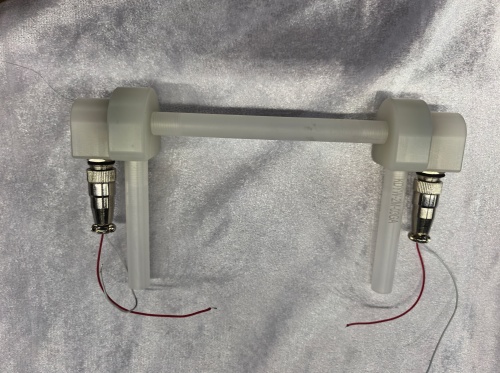
Dayu Electronics simultaneously possesses advanced precision injection molding and machining capabilities, and also performs strict acoustic screening of raw materials. We can not only recommend the most suitable process path tailored to your needs, but also, through professional acoustic testing and matching, ensure that the delivered transducer components—regardless of the process used—meet your precise expectations for microtube flowmeter performance.