
Dayu Electronics: Three Key Factors in Selecting Transducers for Micro-pipe Flowmeters
In the field of precision fluid measurement, micro-pipe flowmeters are highly favored for their exceptional capability in measuring low flow rates with high accuracy. The performance of their core sensing component—the ultrasonic transducer—directly determines the accuracy and reliability of the entire measurement system. However, given the diverse application scenarios and micro-pipe sizes, selecting the appropriate transducer for your micro-pipe flowmeter becomes a critical step in ensuring measurement success.
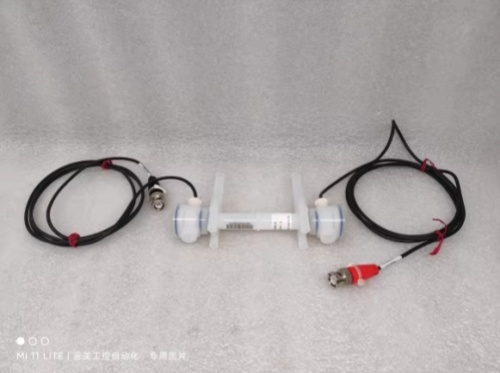
1. Trade-off of Operating Frequency
The operating frequency of the transducer is a fundamental parameter. For micro-pipe flowmeter applications, common frequency options include 2MHz, 3MHz, and 4MHz. The choice of frequency is not simply "the higher, the better"—it requires a comprehensive trade-off. Higher frequencies (e.g., 4MHz) produce shorter ultrasonic wavelengths with focused acoustic beams, offering better spatial resolution within micro-pipes, but they may be more sensitive to tiny bubbles or impurities in the fluid. Moderate frequencies (e.g., 2MHz or 3MHz) generally provide stronger penetration capability and environmental adaptability. The final selection must closely align with the physical properties of the fluid being measured (such as cleanliness and uniformity) and the specific requirements for measurement resolution.
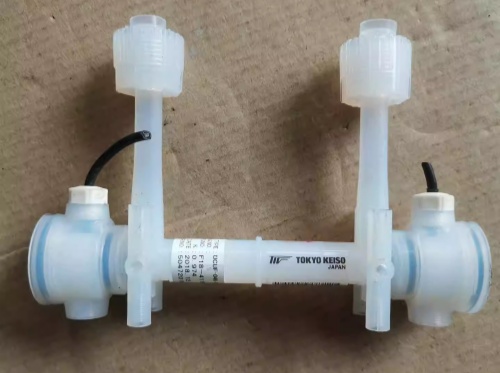
2. Precise Matching of Dimensions to the Pipe
The inner diameter of pipes used in micro-pipe flowmeters is typically small, with common specifications including 4mm, 6mm, 8mm, and 10mm. The dimensions of the transducer (particularly the crystal element size and housing structure) must be precisely matched to the target pipe size. Mismatched selection can lead to a host of problems: if the transducer is too small, the ultrasonic signal energy may be insufficient to effectively penetrate the pipe wall and fluid; if it is too large, installation may be difficult, or its acoustic field characteristics may interfere with measurement accuracy. Correct dimensional matching is the fundamental prerequisite for ensuring efficient transmission and reception of ultrasonic signals, thereby obtaining stable measurement signals with a high signal-to-noise ratio.
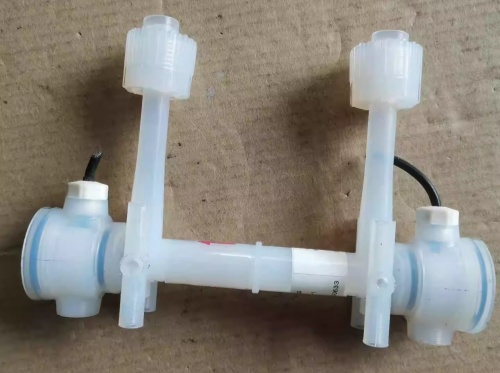
3. Special Considerations for "Recessed" Mounting Structures
To achieve superior measurement performance and convenient installation, some designs incorporate the transducer pre-mounted into a specially fabricated "recessed" base. For such integrated designs, in addition to the frequency and dimension factors mentioned above, extra attention must be paid to the transducer's mounting angle and the precision-machined dimensions of the base recess. The mounting angle (i.e., the incident angle) must be precisely calculated based on acoustic principles and the sound velocity of the pipe material to ensure the ultrasonic wave traverses the fluid along the optimal path. The dimensions, depth, and surface finish of the recess must ensure that the transducer is securely and tightly seated, minimizing signal attenuation and distortion at the coupling layer. This often requires the supplier to possess strong capabilities in customized design and precision machining.
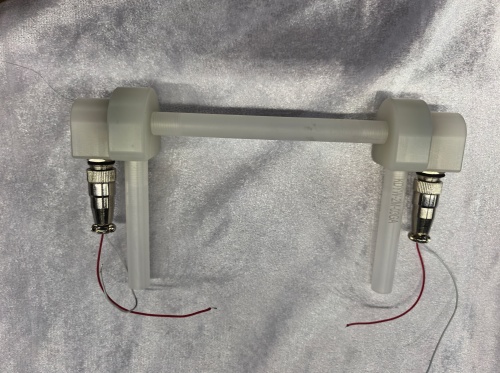
In summary, the selection of transducers for micro-pipe flowmeters is a process that balances frequency characteristics, precisely matches pipe dimensions, and refines the design according to the mounting method. It is far more than a simple component purchase—it is a microsystem design endeavor involving acoustics, mechanics, and fluid measurement. Leveraging its extensive product line of ultrasonic transducers and profound technical expertise, Dayu Electronics can provide comprehensive solutions for your micro-pipe flowmeter projects, ranging from standard product selection support to fully customized design, ensuring that the measurement system establishes a precise and reliable foundation from the core sensing end.