
Dayu Electronics: Selection Guide for Ultrasonic Depth Sounders for Yellow River Water
In the fields of hydrological monitoring, water conservancy engineering, waterway maintenance, and environmental surveys, quickly and accurately obtaining water depth data is a fundamental and critical task. However, when measuring in special water bodies with extremely high sediment concentrations, such as the Yellow River, traditional depth sounders often face challenges such as severe signal attenuation and poor echo quality. In response to the typical user question, "Can it measure Yellow River water with a sediment concentration of 100–200 kg/m³?", Dayu Electronics, based on its deep acoustic technology expertise, provides professional and reliable technical approaches and equipment selection recommendations.
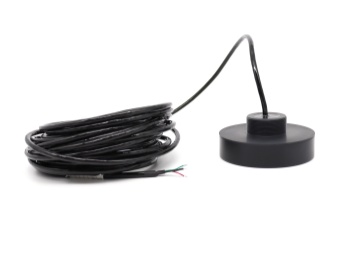
The working principle of an ultrasonic depth sounder is to transmit sound waves underwater through a transducer and receive their echoes, calculating water depth based on the sound wave propagation time. When the water contains a large amount of suspended sediment, the sound waves undergo significant scattering and absorption during propagation, causing a sharp decrease in signal strength, shortening the effective detection range, and even making it impossible to receive clear echo signals. The sediment concentration of Yellow River water varies dynamically, especially during flood season, when local sediment concentrations can reach 100–200 kg/m³, posing extremely high requirements on the penetration capability and anti-interference performance of depth sounding equipment.
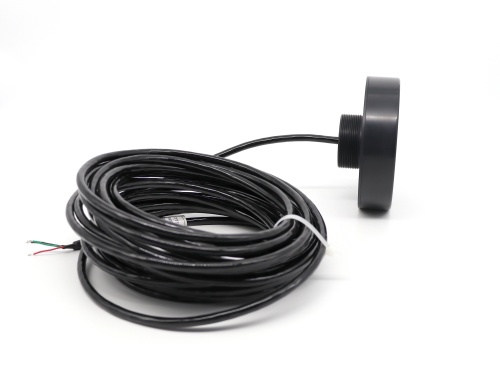
Facing this challenge, Dayu Electronics does not offer a single "universal" device. Instead, based on acoustic physics characteristics, we recommend two proven technical solutions for consideration:
Solution 1: Use an 88kHz array-type handheld depth sounder
Higher-frequency ultrasound (e.g., 88kHz) has shorter wavelengths and narrower beam angles, which help improve directivity and resolution in turbid water. The array-type transducer design enhances signal transmission energy and receiving sensitivity, thereby improving the signal-to-noise ratio within the limited penetration distance. This solution is suitable for rapid surveys in high-sediment waters where portability is a priority and measurement depths are relatively shallow (e.g., from several meters to a dozen or so meters).
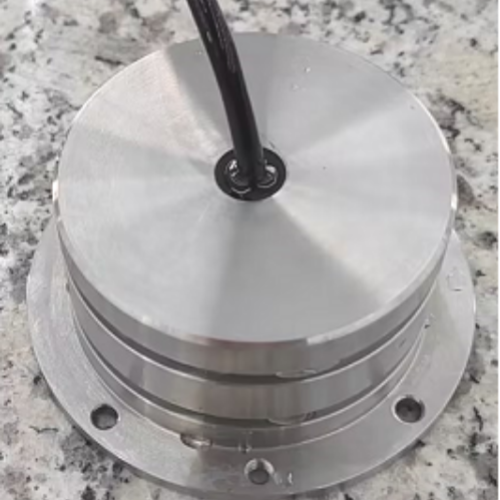
Solution 2: Use a split-type 28kHz depth sounder
Lower-frequency ultrasound (e.g., 28kHz) has longer wavelengths, which experience relatively less attenuation during propagation in water (especially in water containing suspended particles), providing stronger penetration capability. The split-type design separates the transducer from the main unit, allowing the transducer to be deployed in a more optimized manner (e.g., fixed installation or shipboard mounting), making it suitable for scenarios requiring deeper measurements (e.g., tens of meters) or long-term fixed-point monitoring. Its strong penetration capability better addresses complex underwater acoustic environments such as the Yellow River with high sediment concentrations.
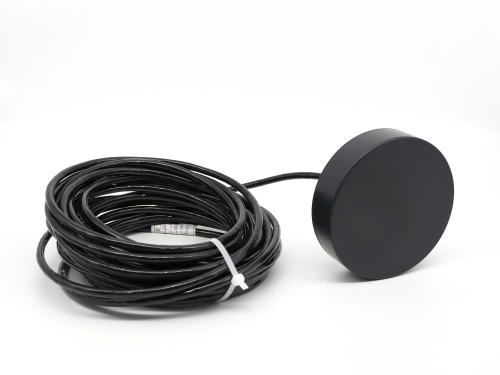
Dayu Electronics always adheres to an application-scenario-oriented approach. We recommend that users conduct field tests during the early stages of a project to determine which frequency and structure of equipment can deliver stable and reliable data under specific sediment concentration, water depth, and flow velocity conditions. Our technical team can provide detailed technical consultation and testing support to help users select the most suitable depth sounding solution.