
Dayu Electronics: The Essential Difference Between Transducer Admittance Curves and Sound Pressure Amplitude Curves
Ultrasonic depth sounder In the application and selection process, a common misconception is to directly correlate the transducer's "admittance curve" with the "sound pressure amplitude vs. frequency curve" it produces during actual operation. With deep expertise in acoustic technology, Dayu Electronics would like to clarify: these two are fundamentally different in nature and have no direct correspondence. The variation in sound pressure amplitude formed by the acoustic waves emitted from the transducer into the medium is the core physical quantity that determines depth sounding performance and accuracy. Its curve shape can only be accurately obtained through rigorous, actual experimental measurement, and cannot be simply inferred from other characteristic curves.
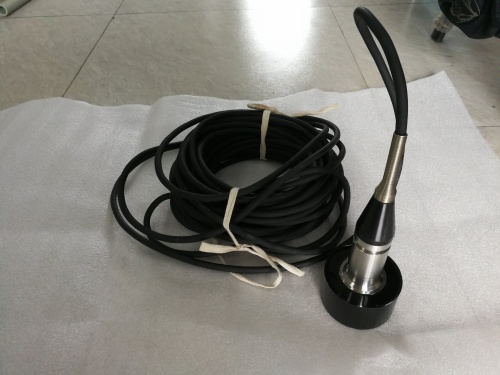
As the "throat" and "ears" of underwater detection, the ultrasonic transducer's core function is to efficiently and accurately convert electrical signals and acoustic wave signals. During operation, the driving electrical signal excites the piezoelectric element of the transducer to vibrate, thereby radiating acoustic wave pulses into the water. The instantaneous sound pressure formed during the propagation of this acoustic wave, along with its variation patterns with frequency and time, constitutes the "sound pressure amplitude vs. frequency curve". This curve directly reflects the transducer's transmission efficiency, directivity, and frequency response characteristics under real operating conditions, and serves as the direct basis for evaluating its detection capability, blind zone size, and resolution.
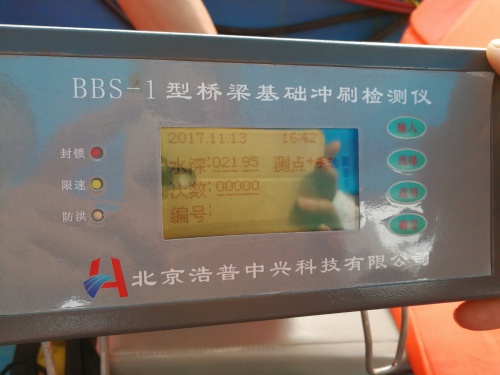
The commonly mentioned "admittance curve" (typically characterized by red or blue lines representing conductance and susceptance), on the other hand, is a tool that characterizes the transducer's electrical impedance properties from the circuit input end. It is primarily used to analyze the circuit matching status of the transducer near the resonance frequency, evaluate its assembly process quality and potential defects, and belongs to the domain of electrical characteristic diagnostics. It depicts impedance variations from a "circuit perspective," not sound pressure output from an "acoustic field perspective." Confusing the two may lead to misjudgment of the product's actual performance.
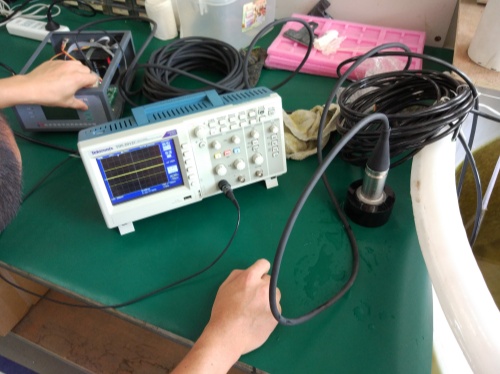
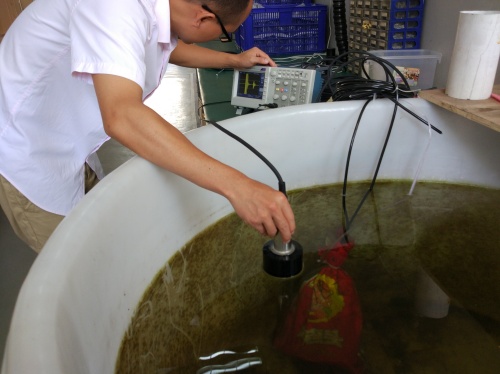
Dayu Electronics understands that reliable depth sounding data is rooted in precise control over every physical step. Therefore, we always adhere to the principle of "defining product performance with measured data." For every ultrasonic depth sounder transducer, we not only rigorously measure its complete acoustic field characteristics — including sound pressure distribution, beam opening angle, and pulse waveform — in a standard experimental water tank during the R&D phase, but we also perform calibration and verification of key performance indicators during the production process. We firmly believe that only through such scientific and rigorous measurement methods, ensuring that the sound pressure curve meets design expectations and is stable and reliable, can the measurement accuracy and long-term stability of the depth sounder in various water environments ultimately be guaranteed.
Dayu Electronics — cultivating the acoustic detection field with scientific rigor. What we deliver is not just high-performance transducer products, but a reliable commitment to precise underwater measurement.