
Dayu Electronics: Technical Factors Affecting the Maximum Measurement Distance of Ultrasonic Level Meters
In the selection and application of ultrasonic level meters, a common and core question is: "What is the maximum measurement range of a given probe specification?" Taking a typical M48 threaded probe as an example, this directly determines whether the instrument can meet the ranging requirements of a specific tank, sump, or channel. However, a rigorous answer often goes beyond a single hardware specification, pointing more deeply to the overall technical integration and design level of the product.
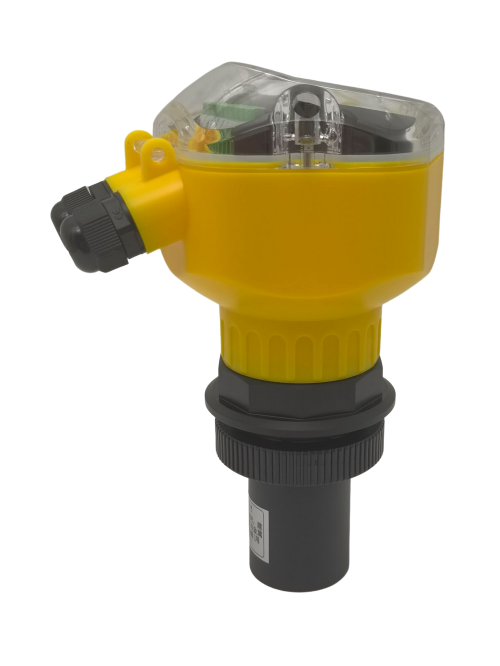
From a hardware foundation perspective, the physical structure of the probe (such as thread size, crystal material and dimensions) indeed sets a theoretical framework for its ultrasonic transmission and reception capabilities. M48, as a commonly used specification, is designed to provide a solid physical foundation for stable and reliable measurement in general scenarios. However, it must be clearly understood that the probe itself does not directly "determine" the maximum range; it is more like the "mouth and throat" of the instrument, whose performance is ultimately governed by the "brain" and "heart" that drive it.
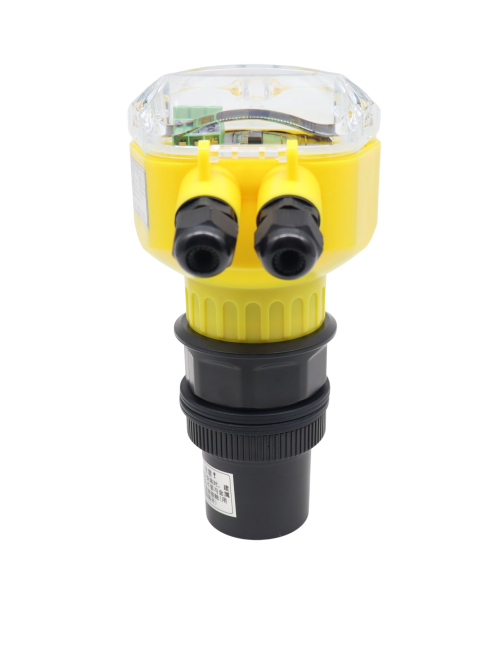
This "brain" and "heart" are precisely the instrument's core circuits and signal processing algorithms. The working principle of an ultrasonic level meter is that the probe, driven by the circuit, emits ultrasonic pulses and receives the echo reflected from the liquid surface, calculating the distance by measuring the sound wave propagation time. Therefore, the boundary of the maximum range essentially depends on whether the circuit can generate a sufficiently strong and clean drive signal to excite the probe, and whether the algorithm can, amid complex electrical noise and environmental interference, extremely sensitively and accurately identify the very weak effective echo returning from the maximum distance.
Based on Dayu Electronics' independently developed dedicated circuits and mature signal processing algorithms, the level meter equipped with an M48 threaded probe can achieve a stable and reliable maximum measurement distance of up to 8 meters for calm liquid surfaces. This data comes from our rigorous testing and extensive real-world application validation, representing the optimized balance we achieve among performance, cost, and reliability under our current technical solution.
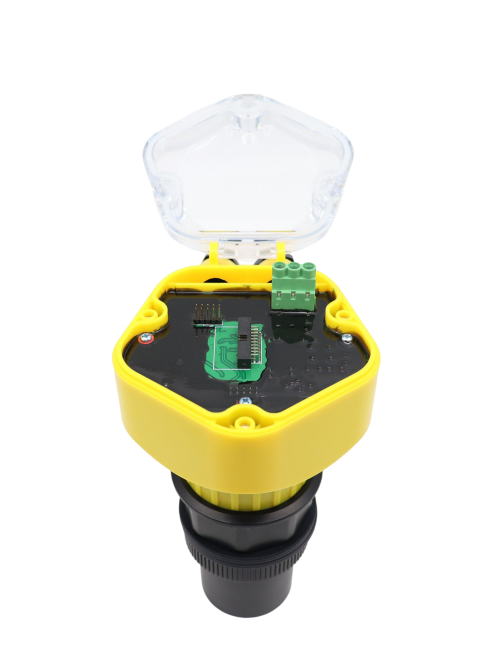
Meanwhile, the industry's technical exploration is endless. We are also aware that through more refined circuit designs, optimized power management, and more advanced digital signal processing (DSP) algorithms, top-tier solutions in the industry are indeed capable of further unlocking the potential of the same hardware specification, extending the effective measurement distance of the M48 probe to 12 meters or even farther under ideal conditions (such as over calm water surfaces). This vividly illustrates that the measurement boundary of ultrasonic level meters is not fixed; it continuously expands with advancements in circuit design and software algorithms.
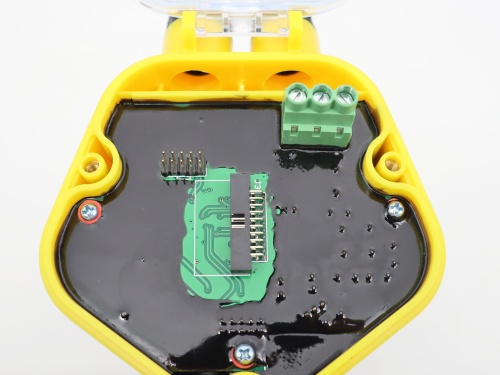
For users, understanding this point is crucial. When selecting a product, one should not only focus on the probe model or nominal parameters, but also evaluate the provider's comprehensive technical strength in underlying circuit design, echo processing algorithms, and overall instrument stability. Dayu Electronics always upholds a professional and pragmatic attitude. We clearly specify the reliable performance boundaries of our products in typical applications, ensuring that every product delivered to each customer performs exactly as described—stable and durable. We continuously invest in research and development, aiming to continuously push the extension of this performance boundary, serving broader application scenarios with more advanced technology.