
Dayu Electronics: High-Reliability Excitation Circuit Design for Ultrasonic Anemometers
In numerous fields such as meteorological monitoring, wind power assessment, environmental sensing, and smart cities, Dayu Electronics' ultrasonic anemometer has become key equipment in modern fluid measurement and control, thanks to its advantages of no moving parts, low starting wind speed, low maintenance, and the ability to measure both wind speed and direction simultaneously. The core working principle is to precisely calculate wind speed and direction by measuring the time difference between ultrasonic pulses traveling with and against the wind along a fixed path. In this precision measurement chain, the high-voltage excitation circuit that drives the ultrasonic transducer to emit stable, powerful acoustic pulses directly determines the measurement accuracy, stability, and environmental adaptability of the entire instrument.
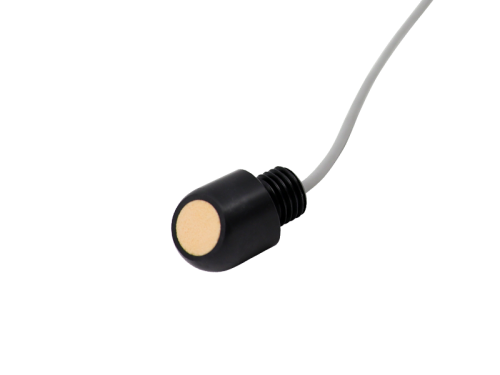
Ultrasonic transducers require high-voltage pulse excitation on the order of several hundred volts to generate ultrasonic signals with sufficient intensity and good directivity. Through in-depth research and long-term engineering practice, Dayu Electronics has established a mature and robust high-voltage excitation circuit design scheme, whose core process is reflected in precise energy conversion and release control:
First, a high-performance microcontroller generates a precise square wave signal at a specific frequency, serving as the reference for the entire transmission timing. Subsequently, this signal controls the back-end power circuit, which efficiently converts input DC low voltage (e.g., 24V) into high-voltage pulses with peaks of several hundred volts through a specially designed high-frequency step-up transformer. This boosting process is not simply voltage amplification, but involves precise management of energy storage, rapid switching, and instantaneous release. Finally, the high-voltage pulse, optimized through an impedance matching network, is applied across the transducer, exciting its resonance to produce ultrasonic signals that meet measurement requirements.
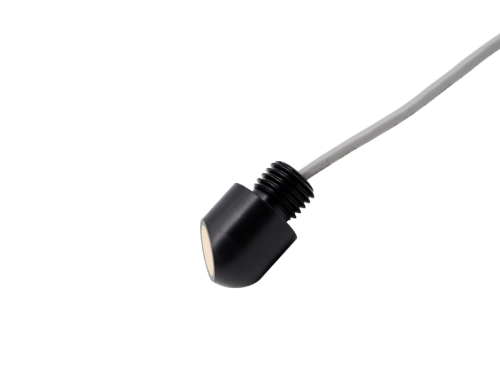
Behind this seemingly simple process lie stringent requirements for circuit design and component selection, which are fundamental to ensuring the long-term stable operation of the instrument in various complex field environments:
1. The energy storage capacitor in the excitation circuit must have sufficient capacity, storing far more electrical energy than required for a single pulse transmission, typically with ample margin. This ensures that even during instantaneous fluctuations in supply voltage, each pulse transmission receives full and consistent energy, guaranteeing signal strength stability.
2. The MOSFET responsible for high-frequency switching must withstand instantaneous peak currents of up to tens of amperes. Its fast switching characteristics and heat dissipation capability directly affect transmission efficiency and long-term circuit reliability.
3. To adapt to various power supply conditions in different industrial sites, the front-end circuit must have a wide voltage input range, for example, compatible with 12V to 40V DC input, ensuring stable operation even during voltage fluctuations, providing a solid "foundation" for the back-end boost circuit.
4. Impedance matching between the step-up transformer output and the transducer is crucial. Good matching maximizes the conversion of electrical energy into acoustic energy, improves transmission efficiency, reduces signal reflection and loss in the circuit, optimizes signal quality, and protects the transducer and drive circuit.
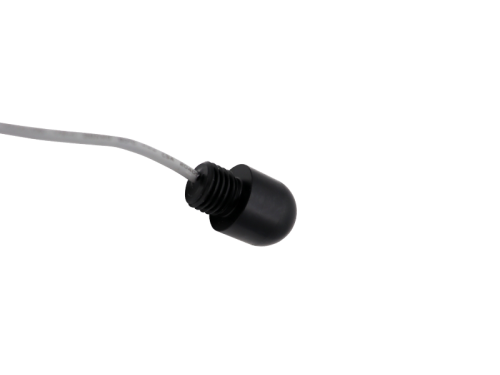
Dayu Electronics deeply understands the principle that "foundations determine height." Through our in-depth development and optimization of every aspect of the excitation circuit, we endow the ultrasonic anemometer with a powerful and stable "heart," enabling it to continuously output accurate and reliable data in various complex electromagnetic and meteorological environments, from coastal high humidity and plateau low temperatures to industrial sites, providing solid and reliable basic sensing support for our customers' monitoring, control, and decision-making systems.